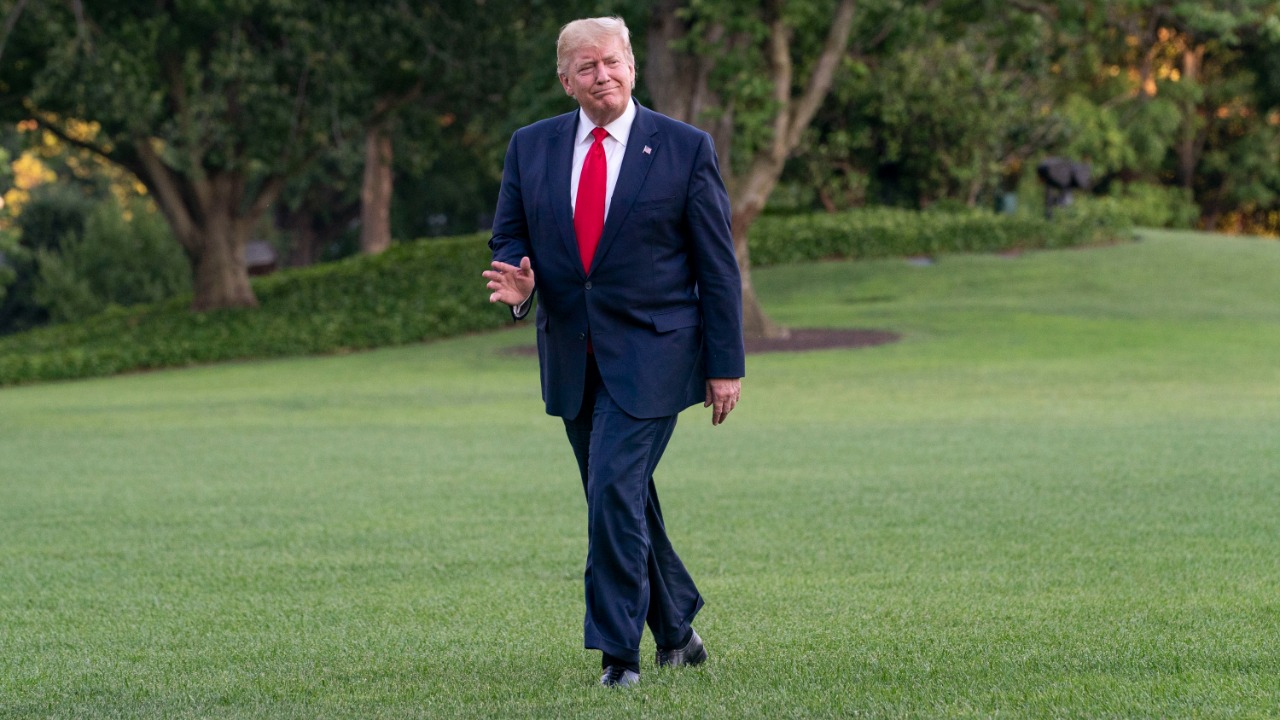
Donald Trump is leaning harder than ever into the idea that the United States should be run like a corporation, with himself as chief executive. Supporters see a hard‑charging dealmaker cutting through bureaucracy, while critics warn that treating a democracy like a private firm risks deepening inequality and global instability. The question is not whether Trump is governing like a CEO, but whether that corporate style can deliver broad‑based gains for America without breaking the political system that surrounds it.
Trump’s second term has sharpened this experiment. He has paired aggressive economic bets with a highly personalized approach to power, inviting comparisons to boardroom leadership at a moment when the stakes, from trade to alliances, extend far beyond quarterly earnings. I see a pattern emerging that looks less like conventional public administration and more like a high‑risk corporate turnaround, with the entire country as the balance sheet.
Personalized power, CEO instincts
At the core of Trump’s governing style is a belief that relationships and leverage matter more than process. Historians such as Jonathan Levy at Scien describe an “unprecedented personalization of government and business dealings,” in which access and outcomes increasingly hinge on direct ties to the president rather than on institutional channels, leaving companies more dependent and even subservient to him than to the state itself, a dynamic detailed in one analysis. That is classic CEO behavior, where a single leader’s favor can make or break a supplier or partner, but it sits uneasily atop a constitutional system built on checks, balances, and predictable rules.
Trump’s own biography reinforces this corporate lens. In 2017, he became the first U.S. president with no experience in paid government work, including the military, arriving in Washington from a career in real estate and entertainment that he and his allies framed simply as “Business.” One detailed profile of his governing style notes that this background has shaped everything from his comfort with tariffs to his preference for informal calls with executives, underscoring how deeply his instincts are rooted in the private sector experience.
Fortune 500 courtship and corporate unease
Trump’s CEO‑style presidency is perhaps most visible in how he manages his relationship with big business. One account describes how Three chief executives of Fortune 500 companies, along with the global chair of another and a major startup leader, all remarked on a pattern of direct outreach, including episodes where he personally called them for feedback on policy, a level of hands‑on engagement that would be familiar inside a conglomerate but is unusual for a head of state outreach. For the executives on the other end of the line, the message is clear: the president expects them to operate as if they are part of his extended corporate network.
Yet the corporate world’s response is far from uniformly enthusiastic. One report that draws on conversations with Fortune 500 leaders captures a mix of opportunism and anxiety, with one CEO remarking that in this environment “you have to win,” a blunt summary of how Trump’s approach rewards those who can navigate his preferences and punishes those who cannot comment. Another account from Davos notes that this pro‑business, deal‑centric posture is explicitly framed as a USA‑Inc. strategy for America, with the outcome still “TBD,” a reminder that even many beneficiaries are unsure whether the long‑term balance sheet will add up outcome.
“Run it hot” economics and who pays
Economically, Trump has embraced what his own advisers describe as a “run it hot” strategy, prioritizing rapid growth and market exuberance even if it risks higher inflation or asset bubbles. A detailed Analysis by Allison Morrow argues that this approach could indeed lift headline indicators but would likely cost Americans dearly, particularly those on the wrong side of widening inequality. In a K‑shaped economy, as another assessment puts it, “the economy” can look strong on paper while a majority of people are left behind, a pattern already visible in the divergence between stock market gains and household stress trend.
Trump’s tariff policy fits the same mold of aggressive, CEO‑style bargaining. Under the International Emergency Economic Powers Act, President Trump has imposed IEEPA tariffs on a range of trading partners, a move that one tax analysis estimates will raise roughly $3.1 trillion over the next decade through higher duties and knock‑on economic effects tariffs. Supporters frame this as tough negotiation in defense of American industry, but for import‑reliant businesses and consumers, it functions more like a sweeping price hike ordered from the top floor.
Workers, unions and the “government as business” debate
For organized labor, Trump’s CEO‑in‑chief persona is not a branding exercise but a lived reality. The AFL‑CIO argues that in the Trump economy, working people are struggling to get by even as billionaire CEOs and big tech companies thrive, accusing President Trump of governing for corporate interests rather than for America’s workers and calling for policies that prioritize wages, protections, and bargaining power instead of shareholder returns workers. That critique goes to the heart of whether a corporate mindset can ever be reconciled with a public obligation to those who will never sit in a boardroom.
The intellectual argument over running government like a business has sharpened in response. In a widely shared video, Robert Reich, a former labor secretary, states bluntly, “Let me make it clear. Government should not be run like a business,” warning that metrics such as profit and cost‑cutting cannot capture the needs of people who rely on programs like Medicaid to make ends meet Reich. A related clip framed around the question of whether America should be run like a business if we let Donald Trump and his allies apply commercial logic to public life underscores how deeply this debate has penetrated mainstream political culture video.
Alliances, trade deals and a transactional world order
Trump’s CEO style does not stop at the water’s edge. Analysts note that he has simultaneously strengthened and weakened U.S. alliances, pressing partners to spend more on defense and shoulder a larger share of regional security while also contributing to a period of increased geopolitical volatility that leaves some capitals questioning Washington’s reliability alliances. In parallel, reporting on a shifting “new world order” describes how the president and his supporters have dismissed traditional multilateralism as inefficient, overly focused on compromise, and unresponsive to what they see as the national interest, preferring instead a series of hard‑nosed bilateral deals that put the United States at the center of every negotiation order.
For Trump, this transactional worldview is evident in specific regional strategies. One recent example is his push for parallel trade pacts with India and Pakistan, a dual‑track approach that, according to regional reporting, is designed to strengthen U.S. influence ahead of the 2026 elections and to showcase his transactional style of diplomacy in South Asia For Trump. It is the foreign‑policy equivalent of a CEO cutting separate deals with key suppliers in a contested market, betting that personal leverage and flexibility will outweigh the benefits of a more predictable, rules‑based system.
More From The Daily Overview
*This article was researched with the help of AI, with human editors creating the final content.

Grant Mercer covers market dynamics, business trends, and the economic forces driving growth across industries. His analysis connects macro movements with real-world implications for investors, entrepreneurs, and professionals. Through his work at The Daily Overview, Grant helps readers understand how markets function and where opportunities may emerge.

