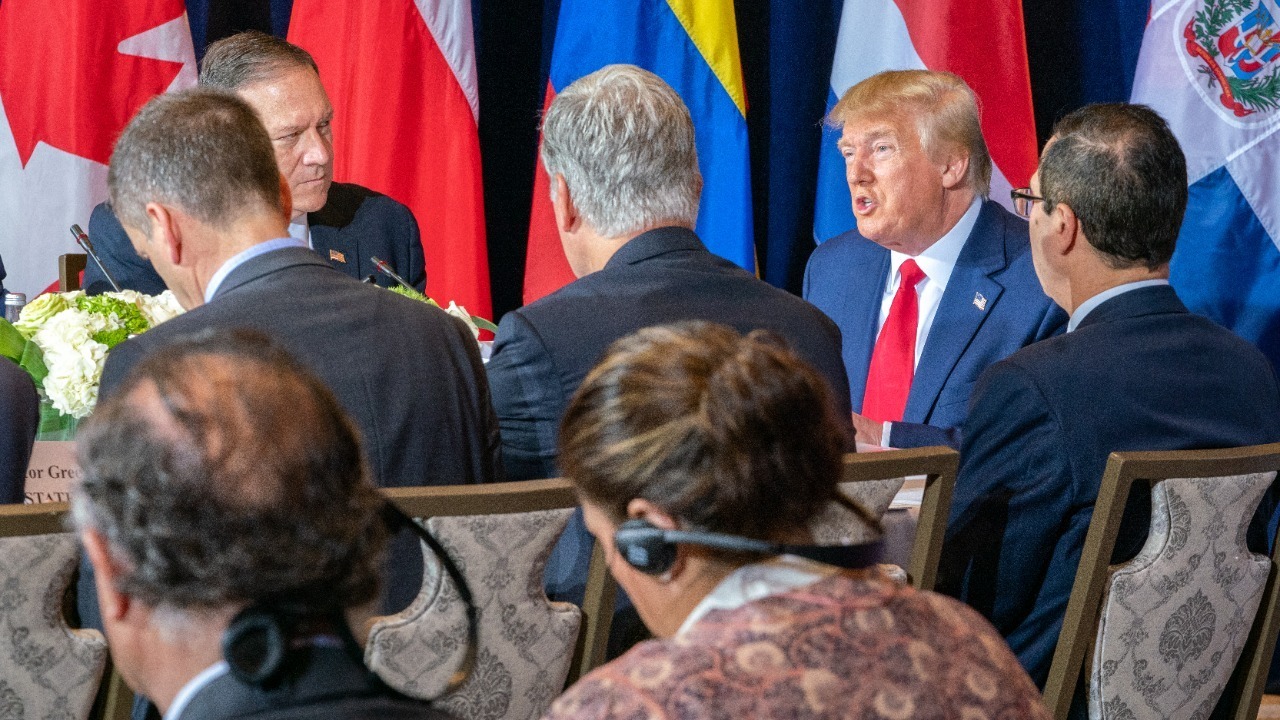
President Trump has signaled he is “inclined” to keep ExxonMobil from pursuing new business in Venezuela after a tense exchange with the company’s chief executive during a White House meeting. The Houston oil CEO described Venezuela as “uninvestable” when pressed by Trump about potential opportunities there, a blunt assessment that cut against earlier conversations about easing sanctions. The exchange points to a hardening U.S. posture on Venezuelan oil investments at a moment when geopolitical tensions and energy security concerns are already tightly intertwined.
The Tense White House Meeting
At the recent White House meeting, President Trump convened a group of energy executives to discuss global supply risks and the role of American producers in politically volatile regions. When the conversation turned to Venezuela, Trump directly questioned the ExxonMobil CEO about whether the company saw viable investment prospects in the country’s oil sector. According to people familiar with the exchange, the president pressed for a clear view of the commercial upside and the political risks, framing Venezuela as a potential source of additional barrels if U.S. policy shifted.
The atmosphere reportedly grew tense as the CEO responded with a stark risk assessment instead of the cautious optimism that had characterized some earlier industry conversations. Trump, who had been weighing whether to soften restrictions on U.S. companies operating in Venezuela, was met with a firm message that the country’s conditions did not meet ExxonMobil’s threshold for new capital. That moment marked a departure from prior signals of possible engagement, and it immediately recast the meeting from a discussion about opening doors to one about whether those doors should remain firmly shut.
CEO’s Assessment of Venezuela
The Houston oil CEO did not hedge his language, describing Venezuela as “uninvestable” when Trump asked about the feasibility of returning to the country’s oil fields. By using that single word, the executive conveyed a sweeping judgment that encompassed political instability, legal uncertainty, and the risk of future expropriation or contract disputes. For a company of ExxonMobil’s scale, labeling a resource-rich nation “uninvestable” signals that the perceived dangers outweigh even the lure of some of the world’s largest crude reserves, and it sends a powerful message to policymakers about the limits of what private capital is willing to tolerate.
This assessment carries significant implications for ExxonMobil’s global strategy, because it effectively removes Venezuela from the company’s near term portfolio of potential growth projects. Instead of positioning itself to move quickly if sanctions were eased, ExxonMobil is signaling that it would keep its distance even if the legal environment improved on paper. That stance also underscores how far conditions in Venezuela have deteriorated compared with earlier periods of industry optimism, when international oil companies still saw a path to profitable operations, and it highlights the time sensitive nature of investment decisions in a market where infrastructure, workforce capacity, and political alignments can shift faster than long term projects can adapt.
Trump’s Policy Inclination
After hearing the CEO’s blunt characterization, Trump told advisers he was “inclined” to keep ExxonMobil out of Venezuela, tying his position directly to the response he received in the room. That phrasing suggests the president has not yet issued a formal directive, but it reflects a clear leaning against granting the company new latitude to operate there. The shift is notable because it comes after earlier discussions inside the administration about potential sanction relief that might have allowed U.S. firms to reenter the Venezuelan oil sector under tightly controlled conditions.
Trump’s inclination signals a broader recalibration of U.S. energy diplomacy, in which the White House appears more willing to forgo potential production gains in favor of maintaining pressure on Caracas. For American oil companies, the message is that political risk assessments will carry significant weight in policy deliberations, and that even a resource base as large as Venezuela’s may not justify the reputational and financial exposure. Stakeholders across the industry are now reading the episode as a sign that Washington is prepared to harden its stance, limiting the room for corporate maneuvering in one of the world’s most contested energy markets.
Broader Impacts on Oil Investments
The fallout from the tense White House meeting is already shaping expectations for ExxonMobil’s operations and for other U.S. producers that had quietly monitored Venezuela for signs of a thaw. By publicly aligning himself with a view that the country is “uninvestable,” Trump has made it more difficult for ExxonMobil to argue internally for any near term reentry, even if commercial terms were to improve. The company is likely to focus instead on jurisdictions where contract sanctity and regulatory frameworks are perceived as more stable, reinforcing a trend in which major oil firms concentrate capital in fewer, lower risk regions rather than chasing every high volume opportunity.
For U.S. policy toward Venezuelan oil, the episode represents a pivot away from earlier engagement prospects and toward a more restrictive posture that treats investment as leverage rather than a bridge. Other Houston based energy players that had hoped to follow ExxonMobil’s lead now face a narrower window, since the political signal from Washington suggests that even exploratory talks could run against the grain of federal policy. The stakes extend beyond corporate balance sheets, because decisions made in this moment will influence how quickly Venezuela can rebuild its production capacity, how global supply balances respond, and how much influence the United States retains over the future of one of the world’s most strategically important oil producers.
More From TheDailyOverview

Grant Mercer covers market dynamics, business trends, and the economic forces driving growth across industries. His analysis connects macro movements with real-world implications for investors, entrepreneurs, and professionals. Through his work at The Daily Overview, Grant helps readers understand how markets function and where opportunities may emerge.

