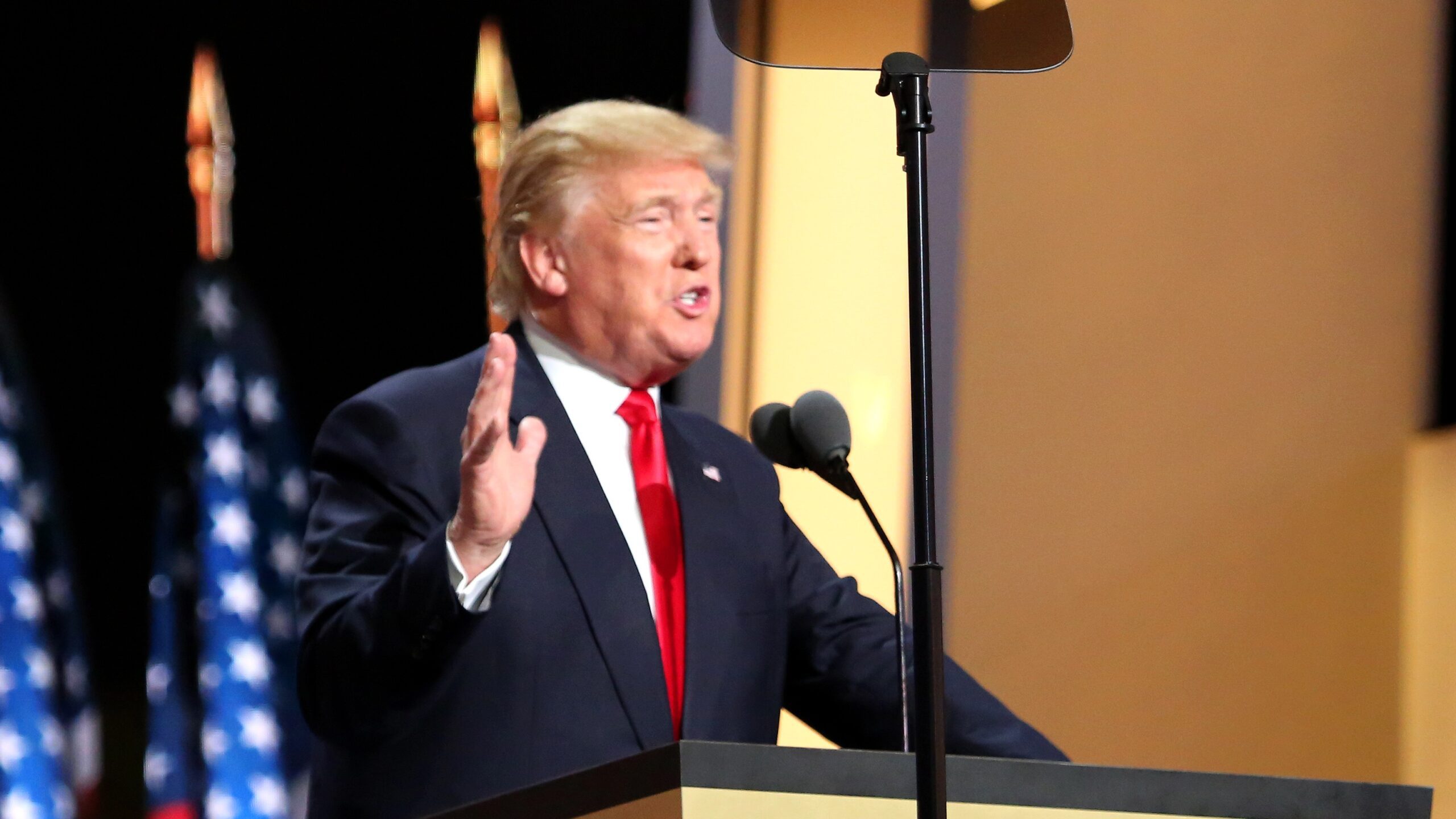
President Donald Trump is treating an upcoming Supreme Court decision on his tariff powers as a make‑or‑break moment for the economy and his own agenda, warning that America could face huge losses if the justices rule against him. Legal and economic experts, however, increasingly see a serious risk that the Court will curb his use of emergency authority, potentially unraveling a signature tool of his trade policy. The result is a rare alignment of political drama and technical law that could reshape how the United States uses tariffs for years.
At stake is whether the president can keep leaning on emergency statutes to impose sweeping levies without fresh approval from Congress, a strategy that has generated substantial revenue but also higher costs for importers and consumers. As the Court delays its ruling and businesses brace for either outcome, the bigger story is the uncertainty that now hangs over trade, investment and prices, regardless of whether Trump wins or loses.
Trump’s dire warnings and political stakes
Trump has chosen to raise the temperature rather than downplay the case, publicly insisting that a loss at the Supreme Court would leave the United States financially exposed. In a recent appearance, he argued that his tariffs have helped trigger a manufacturing boom, claiming that there are now more plants being built in the country than at any time in history and that nobody has ever seen anything like it, a boast captured in a Jan video. He has framed the legal fight as a test of whether America will keep the leverage he believes those tariffs provide in negotiations with rivals.
His language has grown especially stark as the justices move closer to a decision. Trump has warned that America could face huge losses if the Supreme Court strikes down his tariffs, reportedly telling supporters that if the Court rules against him, “WE’RE SCREWED!” and predicting that it would be almost impossible for the Country to pay its bills if the levies are unwound and refunds are ordered, according to Trump and a separate account of his warning that it would be a complete mess if the Supreme Court rules against him and his tariffs, which he said would be almost impossible for the Country to pay, as relayed in another Supreme Court focused report.
The legal fight over IEEPA and presidential power
Beneath the political rhetoric is a technical but consequential question about the International Emergency Economic Powers Act, or IEEPA, and how far it lets a president go in imposing tariffs. The current case centers on whether Trump can continue to rely on IEEPA to justify broad levies that were originally cast as responses to national security threats, rather than as traditional trade measures approved by Congress. The Supreme Court has already signaled caution by delaying its decision on President Trump’s IEEPA tariffs until after its recess, a move that pushed any ruling beyond an earlier internal deadline and underscored how seriously the justices are treating the issue, according to a detailed Supreme Court Delays summary.
Legal analysts increasingly expect the Court to narrow that authority. One major bank’s research arm has noted that legal experts continue to expect the Supreme Court to rule against the use of emergency powers to authorize tariffs, even as they stress that any decision will leave room for future trade actions under more traditional statutes, a view laid out in a Legal analysis. Another legal briefing has pointed out that while questions asked during oral arguments are not always predictive, a majority of the justices appeared skeptical of the broad IEEPA theory advanced by the administration, and it noted that the administration has already converted some emergency tariffs into measures grounded in other trade laws in anticipation of the Supreme Court’s ruling on IEEPA, as described in a Court focused briefing.
Economic exposure: revenue, refunds and importers’ bills
Behind Trump’s warnings about being “screwed” lies a very specific financial concern: the possibility that the government could be forced to reimburse importers for tariffs already collected. One analysis of the Trump trade war has estimated that on a dynamic basis, incorporating the effects of foreign retaliation, the tariffs reduce long run gross domestic product and cut federal revenue by 136,000,000,000 dollars over ten years, with revenue falling more when retaliation is factored in because it shrinks United States output and incomes further, according to a Revenue focused study. If the Supreme Court were to invalidate key tariffs retroactively, the Treasury could face an additional hit as importers seek refunds on duties they have already paid.
Importers are already paying a price for the Court’s slow pace. Trade specialists have warned that although the Supreme Court could technically rule before late February, doing so would require the justices to deviate from their usual procedures, and the delay is likely to cost importers billions more in duties before any decision arrives, especially given the many tariff threats that were issued in 2025 and then partially implemented, as explained in a Although the Supreme focused account. A separate commentary has noted that one of the less shouted aspects of Trump’s tariff onslaught is its revenue earning potential, and that having to reimburse importers would hurt financially, even as some in the administration might quietly feel relieved if the Court forced a reset of the policy, a tension captured in an analysis that described how having to reimburse would hurt but that some officials might be entitled to feel relieved, as set out in a Having focused piece.
Business adaptation and the new normal of uncertainty
While the legal fight unfolds, businesses are not waiting for clarity. Trade consultants report that most companies have already taken steps to diversify their supply chains, recognizing that they are living in a world where tariff risk is now a permanent feature rather than a temporary shock. One trade expert, identified as Lekstutis, has said that most businesses have already taken steps to diversify their supply chains and that they recognize they are living in a world where tariffs and trade tensions are here to stay, with those levies having pushed up consumer prices, according to a Lekstutis focused report. That adjustment has meant shifting production out of China, reworking contracts and, in some cases, passing higher costs on to shoppers.
The visual reality of this new trade environment is captured in the image of stacks of colorful shipping containers arranged in rows at a port, a scene credited to Photo, Matthew Henry and Burst, which has been used to illustrate how global trade flows are being reshaped by tariff policy and continued pressure on prices, as described in a Stacks of focused account. Even small businesses are watching closely, with one national report noting that even as small firms wait for the United States Supreme Court to rule on President Donald Trump’s tariff authority, many have already moved to diversify their supply chains, a shift that reflects how deeply the uncertainty has seeped into planning, according to a The Center Square linked report.
Global reactions and what happens after the ruling
Abroad, trading partners are trying to read the same tea leaves, but some advisers are urging them not to overreact. Trade specialist Sam Lowe, a partner with Flint Global in London and head of its trade and market access practice, has argued that in a sense other nations should just continue as normal even if Trump loses the tariff case, because the main argument for silence is that the United States will still be a difficult negotiating partner and that a ruling under the International Emergency Economic Powers Act of 1977 will not suddenly make existing trade deals easy to redo, according to comments attributed to Sam Lowe. His message is that the structural tensions in United States trade policy will outlast any single court decision.
More From TheDailyOverview
*This article was researched with the help of AI, with human editors creating the final content.

Grant Mercer covers market dynamics, business trends, and the economic forces driving growth across industries. His analysis connects macro movements with real-world implications for investors, entrepreneurs, and professionals. Through his work at The Daily Overview, Grant helps readers understand how markets function and where opportunities may emerge.

