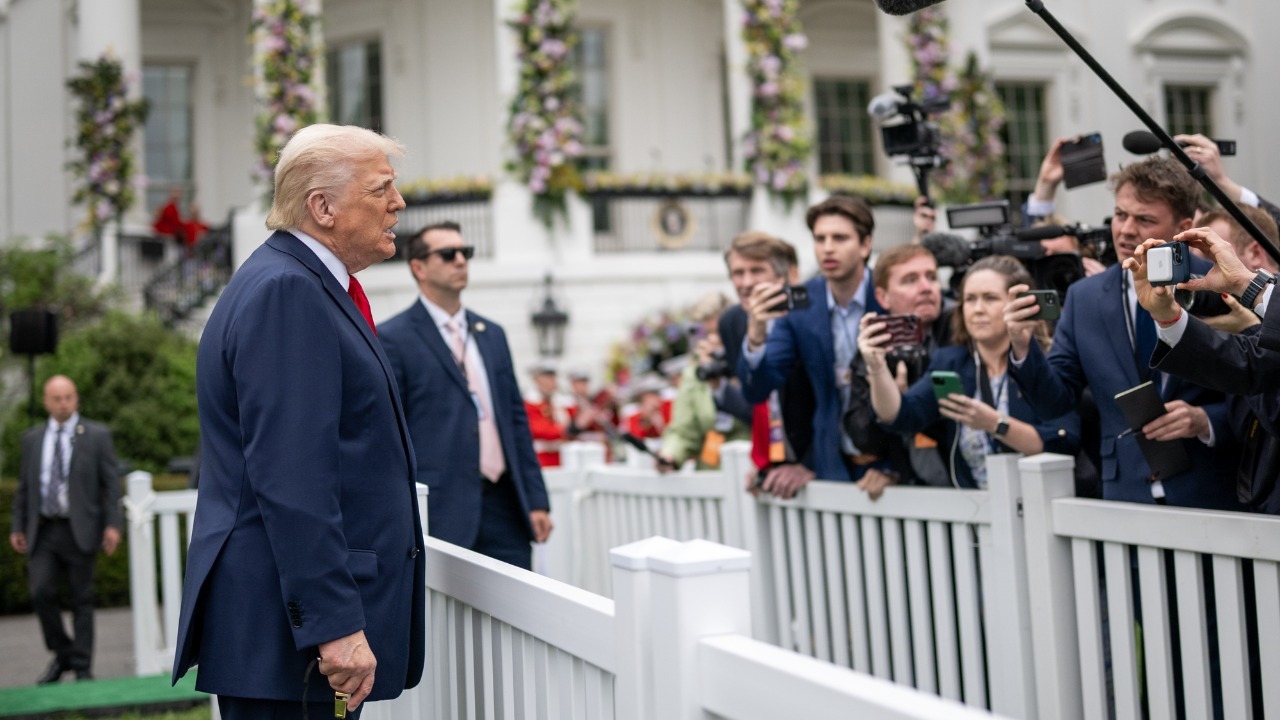
President Donald Trump is signaling that if the Supreme Court clips his tariff authority, he will not retreat from aggressive trade measures but instead move quickly to restore pressure through new tools. As the justices delay a ruling on his existing levies, the White House is quietly sketching fallback options that could keep duties in place on strategic partners and rivals alike. The result is a moment in which legal uncertainty has done little to cool the administration’s appetite for tariffs, particularly those tied to Greenland and broader security disputes.
The Supreme Court’s silence and what it signals
The legal backdrop for Trump’s tariff strategy is unusually opaque, with the Supreme Court repeatedly declining to say whether his current measures pass statutory muster. The Supreme Court Does on Trump’s Tariffs, leaving importers, foreign governments and the administration itself guessing how far the justices are prepared to let the president stretch trade statutes. The US Supreme Court has already passed on multiple opportunities to decide the case, and that pattern has fueled speculation that the justices may be leaning toward upholding at least part of the program rather than rushing out a fractured opinion that could unsettle markets.
From the outside, the wait looks like a power play by the judiciary, but inside the administration it is being treated as a window to prepare. Reporting on US Supreme Court in Washington has underscored that the justices are weighing not only the legality of Trump’s reliance on emergency powers but also the broader implications for future presidents who might invoke similar authority in the name of addressing fentanyl trafficking or other crises. That institutional concern helps explain why the Court has not telegraphed its timing, and it also explains why Trump’s team is treating every nondecision as both a reprieve and a warning.
Inside Trump’s “Plan B” for tariffs
Even as the legal fight drags on, Trump’s advisers are making clear that any court setback would be met with an immediate policy counterpunch. One senior aide has described internal work on contingency measures as a set of Plan B efforts, built on the assumption that “Our expectation is that we’re going to win, and if we don’t win, then we know that…” alternative authorities will have to carry the load. That framing captures the administration’s basic posture: treat a Supreme Court loss not as a reason to unwind tariffs, but as a prompt to repackage them under different legal labels.
The clearest sign of how quickly that pivot could unfold comes from reporting that Trump would quickly after any adverse court action, likely by leaning on other levies that do not depend on the contested statute. That approach would let the White House claim continuity in its hard line on trade even if the original legal theory is partially struck down, and it would shift the fight from the Supreme Court back to the negotiating table, where Trump has always been more comfortable.
Signals from Trump’s trade team
The rhetoric from Trump’s trade lieutenants points in the same direction, suggesting that the administration is not merely bluffing about its readiness to reimpose duties. U.S. Trade Representative Jamieson Greer has said that the response to a tariff court loss would be immediate, and that any new measures would be tailored to the “problems the president has identified.” That language is deliberately broad, leaving room to target sectors from autos to agriculture, but it also underscores that the animating logic is political leverage rather than technocratic trade balancing.
At the same time, the broader economic team is trying to reassure markets that the legal risk is manageable. Treasury Secretary Scott Bessent, speaking on Sunday, said it is “very unlikely” that the Supreme Court will overturn President Donald Trump’s tariff program outright, and he suggested that any ruling would probably leave room for the White House to adjust rather than abandon its strategy. That blend of legal optimism and operational contingency planning is a hallmark of Trump’s approach, and it helps explain why businesses are bracing for continued volatility even if the Court trims his authority at the margins.
Greenland at the center of the tariff chessboard
Nowhere is the fusion of legal brinkmanship and geopolitical ambition clearer than in Trump’s fixation on Greenland. President Trump has been ramping up pressure on Europe to cut a deal on Greenland, and he has threatened to impose tariffs on countries that refuse to support a Greenland takeover plan. Earlier tensions over Greenland tensions already showed how quickly trade tools could be yoked to territorial ambitions, and the current court fight has done little to blunt that instinct.
Trump has now explicitly linked a new round of duties to the island, with President Donald Trump announcing a fresh package of tariffs tied to Greenland and casting them as a necessary response to European foot-dragging. Live coverage of his moves has highlighted how EU capitals have entered discussions after a threat involving a 200 champagne tariff, and how Trump plans to meet with various parties in Davos concerning Greenland. That blend of summit diplomacy and tariff brinkmanship is a reminder that for Trump, trade law is a means to a geopolitical end rather than an end in itself.
How the legal stakes shape global trade politics
Behind the courtroom drama is a fundamental argument about how far Congress meant to let presidents go when it wrote the statute Trump is using. Critics argue that the law does not explicitly authorize tariffs and has never before been used for that purpose, warning that a broad reading would turn emergency powers into a standing license for trade wars. Trump, by contrast, has repeatedly defended his interpretation and even tied it to his plan to acquire Greenland, casting judicial resistance as an attempt to tie his hands on national security.
Legal analysts have stressed Why It Matters that the Court is weighing not just Trump’s current tariffs but the precedent it will set for future administrations. While it is unclear exactly when the ruling will be made because the Court does not reveal when it will hand down decisions, a ruling against the administration could force Congress to revisit the statute or risk seeing presidents test its limits again. Morning coverage in Morning Reads has already framed the case as a bellwether for how aggressively the judiciary will police executive power in trade, and that framing will only grow sharper if the justices split over how to read the law.
More From TheDailyOverview

Grant Mercer covers market dynamics, business trends, and the economic forces driving growth across industries. His analysis connects macro movements with real-world implications for investors, entrepreneurs, and professionals. Through his work at The Daily Overview, Grant helps readers understand how markets function and where opportunities may emerge.

