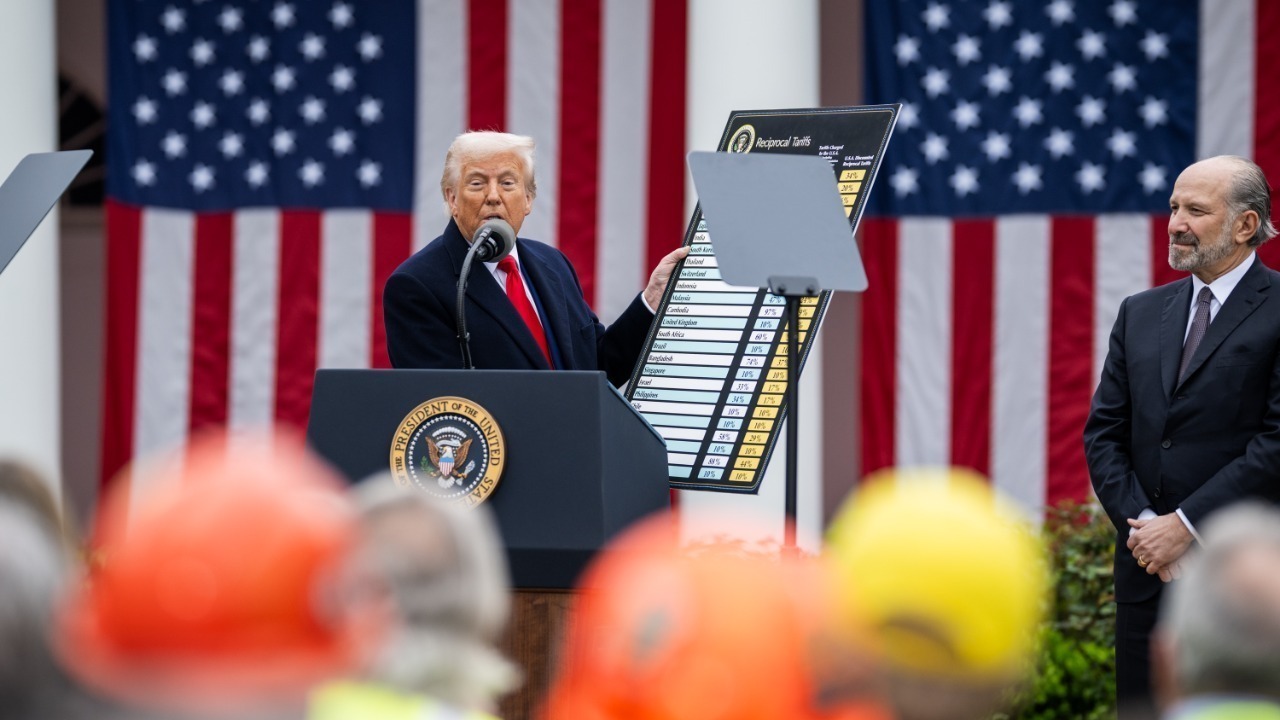
President Donald Trump has turned tariffs into a personal brand, casting himself as the only leader clever enough to wield trade barriers as a political and economic weapon. In his latest outbursts, he has framed duties on foreign goods not as a last-resort tool of economic policy but as proof of his singular toughness and intelligence. That swagger collides with mounting evidence that the costs of his strategy are landing heavily on Americans at home and straining alliances abroad.
Trump’s claim that only he is “smart enough” to use tariffs the way he does is not just bravado, it is a governing philosophy that now shapes relations with allies, rivals, and even fellow Republicans. I see a pattern emerging in which tariffs serve as his default answer to diplomatic resistance, domestic criticism, and complex global supply chains, regardless of who ultimately pays the bill.
Trump’s tariff bravado becomes a governing doctrine
Trump’s self-image as a tariff mastermind is on vivid display in his public appearances, where he boasts that no one else understands how to turn trade barriers into leverage. In one recent clip, he riffs at length about using tariffs as a blunt instrument, treating them as a kind of all-purpose solution to foreign defiance and domestic economic anxiety, a posture captured in a widely shared video. The message is consistent: tariffs are not a technical tool to be calibrated by economists, they are a show of strength that only he is bold enough to deploy at scale.
That bravado spills over into his attacks on critics, whom he brands as weak or corrupt for questioning his approach. Over the summer, President Donald Trump lashed out at what he called “dumb, pathetic, and crooked politicians” while defending his favorite policy, railing against anyone in Washington who doubts the wisdom of his tariff crusade and insisting that his strategy is delivering wins “TO ALL!” in a rant documented in a report. In his telling, skepticism about tariffs is not a policy disagreement, it is proof that opponents are either ignorant or compromised.
From NATO to Greenland, tariffs as geopolitical punishment
The most striking evolution of Trump’s tariff doctrine is how directly he now ties it to geopolitical punishment, even against long-standing allies. In Jan, Trump announced new 10% tariffs on eight NATO allies after they opposed United States control of Greenland, explicitly linking the duties to their refusal to back his push over the Arctic territory and warning that resistance would carry a price, according to detailed coverage. The move signaled that, for this White House, alliance politics and security cooperation are now entangled with tariff threats in ways that would have been unthinkable in previous administrations.
Trump has also used the specter of tariffs to pressure individual partners like the United Kingdom, treating trade access as a reward or punishment for political alignment. In Jan, Trump had been threatening to place a 10% tariff “on any and all goods” sent from the UK to the United States from 1 February, with the rate set to rise further if London did not fall in line, a stance that British officials described as a hardball tactic during talks over a “framework of a future deal,” as recounted in a report. The message to allies is clear: cross the president on issues from Greenland to China and the response will not just be harsh words, it will be new costs on your exports.
Threats, escalation, and the 100% tariff talk
Trump’s rhetoric around tariffs has grown more extreme as he leans on them to shape global behavior, particularly when it comes to China and other major trading partners. In a recent warning, he said that if allies “do a deal with China” that undercuts his strategy, “we’ll do something very substantial,” a phrase that left little doubt he was talking about new trade barriers and was captured in a recording. He has floated the idea of tariffs so sweeping that they would effectively wall off parts of the U.S. market from countries that do not align with his China policy.
That same clip shows how casually Trump now talks about extreme measures, including a suggestion that 100% tariffs on Canadian goods could be on the table if Ottawa crosses certain red lines, a threat that would double the price of affected imports overnight and risk a full-blown trade war with a neighbor. The escalation fits a broader pattern in which he uses the possibility of massive tariffs as a first move rather than a last resort, betting that the shock value alone will force concessions from partners who fear losing access to the American consumer base, a dynamic that has been a recurring theme in his public negotiations.
“I set the deal”: tariffs as personal leverage
Trump’s confidence in his tariff strategy is rooted in a belief that he alone can bend trading partners to his will, a view he has articulated repeatedly when describing his approach to negotiations. Earlier in his presidency, he declared that “We’re negotiating with many countries, but at the end of this I’ll set my own deals because I set the deal, they don’t set the deal,” a line that captured his conviction that traditional trade diplomacy is too constrained and that he can simply dictate terms, as reflected in contemporaneous accounts. Tariffs, in this framework, are not just economic tools, they are the leverage that lets him impose those deals.
That mindset has only hardened as he has raised duties to levels not seen in generations, turning the United States into one of the most tariff-reliant major economies. By Jan, President Donald Trump had raised tariffs to the highest level in nearly a century, a shift that brought in record amounts of revenue for the federal government and reshaped incentives for companies weighing where to source goods, according to an extensive analysis. He has pointed to that revenue as proof that his approach is working, even as economists warn that the same policies are distorting supply chains and inviting retaliation.
Who really pays: Americans and the 96% problem
For all of Trump’s boasts about making foreign countries pay, the clearest data so far suggest that the burden of his tariffs falls overwhelmingly on people inside the United States. Jan brought a stark reminder when a new study found that, Despite claims by the Trump administration, Americans are absorbing about 96% of the costs of President Donald Trump’s tariffs, meaning that the duties function less as a tax on foreign companies and more as a surcharge on U.S. consumers and businesses, a finding highlighted in a widely circulated post. That figure undercuts one of his central talking points, that tariffs are a way to make other countries “pay for” American priorities.
Economists tracking the policy have noted that while the tariffs have generated record revenue, they have also raised costs for importers and in some cases forced companies to delay investment or pass higher prices on to customers. A detailed review of the tariff regime concluded that President Donald Trump has raised duties to the highest level in nearly a century and that They have brought in record amounts of revenue, but also created pressure on sectors that rely on imported components and limited the ability of some firms to take on more workers, as laid out in a comprehensive assessment. The contrast between Trump’s rhetoric about foreign governments footing the bill and the reality of higher costs at home is now one of the central tensions in the tariff debate.
More From TheDailyOverview
*This article was researched with the help of AI, with human editors creating the final content.

Grant Mercer covers market dynamics, business trends, and the economic forces driving growth across industries. His analysis connects macro movements with real-world implications for investors, entrepreneurs, and professionals. Through his work at The Daily Overview, Grant helps readers understand how markets function and where opportunities may emerge.

