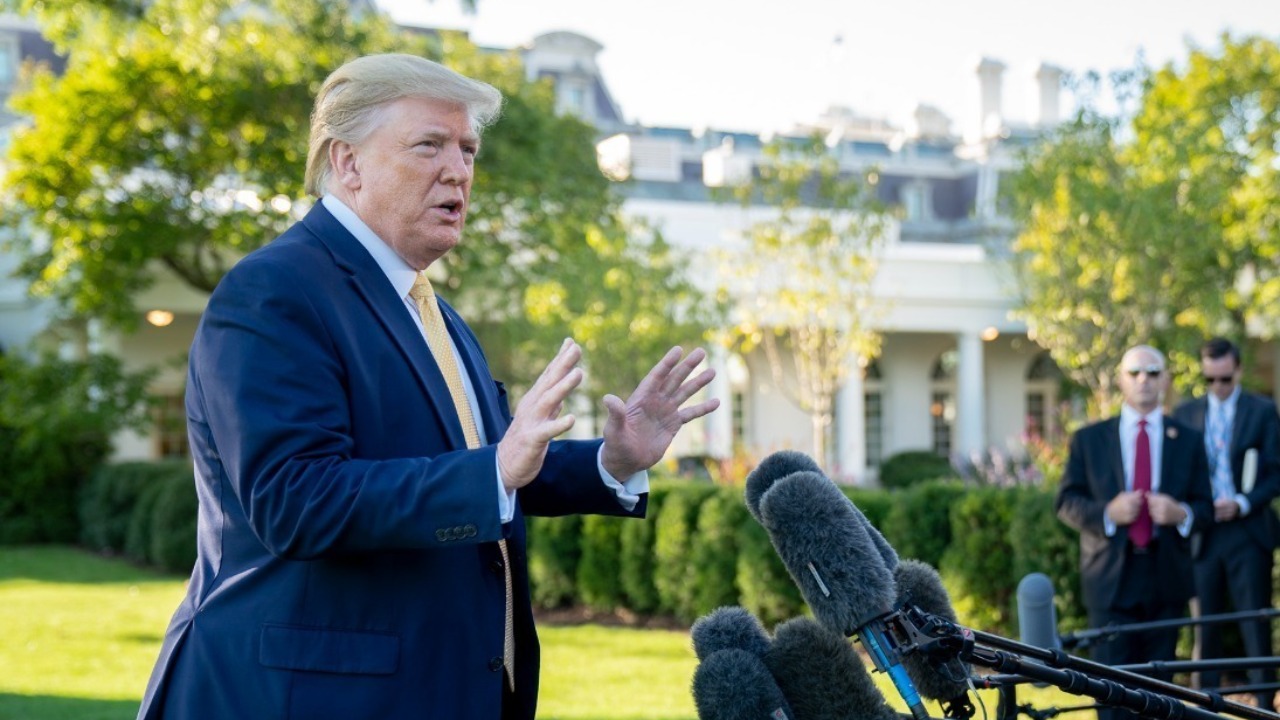
President Donald Trump has started telling voters that grocery prices are “falling rapidly,” pointing to cheaper eggs and a handful of eye catching examples as proof that the supermarket squeeze is finally over. The official inflation data, however, paints a more complicated picture in which some items are down, others are still climbing, and overall food costs remain well above their pre pandemic level. I want to unpack that gap between the political message and the numbers shoppers actually face in the aisles.
To do that, I am looking at how government price indexes track food, what they show about the past few years of inflation, and how those trends line up with the president’s latest claims. The result is less a story of prices “dropping fast” than of inflation cooling from a boil to a simmer, with households still living in a world where the new normal is significantly more expensive than it used to be.
Trump’s new grocery talking point
In his recent prime time address, Trump leaned heavily on the idea that the cost of living is finally bending in consumers’ favor, highlighting a sharp decline in egg prices and then insisting that “everything else is falling rapidly” too. He framed this as proof that his economic stewardship is taming inflation and easing the burden on families that have spent years watching their grocery receipts climb. The political logic is clear, because food prices are one of the most visible and emotionally charged indicators of how the economy feels on the ground.
Fact checkers who parsed that address noted that Trump’s sweeping claim about “everything else” does not match the broader data on supermarket costs. One detailed Grocery prices: After analysis acknowledged that egg prices have indeed fallen sharply from their avian flu spike, but it also stressed that the 82% drop Trump cited was exaggerated and that many other staples have not followed the same trajectory. When the president moves from a specific example like eggs to a blanket assertion that supermarket costs are broadly collapsing, he is stepping well beyond what the official numbers support.
What the CPI actually measures in your cart
To understand how far Trump’s rhetoric diverges from reality, I need to start with how inflation is measured in the first place. The Consumer Price Index is the government’s main yardstick for tracking how much households pay for a fixed basket of goods and services, including a detailed breakdown of food at home, food away from home, and individual categories like meat, dairy, and produce. Rather than cherry picking a single product, the index blends thousands of prices into a composite picture of what it costs to live and eat in the United States.
The agency that compiles this data explains that the CPI includes average price data for select utility, automotive fuel, and food items, and that it publishes regular Average figures that let analysts track trends over time. Within that framework, the food component is built from a wide range of items, not just headline grabbers like eggs or bacon, and it is updated using information on about 80,000 items each month. That breadth is precisely why economists rely on the index to judge whether grocery inflation is easing, rather than on isolated examples that may be moving in the opposite direction of the overall basket.
Latest CPI food data: cooling, not collapsing
When I look at the most recent Consumer Price Index summary, the story is one of moderation rather than a sudden plunge. The latest release notes that the index for food has continued to evolve even as some data gaps emerged, and it explicitly flags a Note that The Oct and Nov figures are not available because of the 2025 lapse in appropriations. Even with that caveat, the broader pattern over the year has been that food inflation has slowed from its earlier peaks, but the level of prices remains elevated compared with a few years ago.
The same summary makes clear that Food The index is still being tracked as part of the overall CPI, and that other categories like natural gas rose 9.1 percent over the relevant period, underscoring that price pressures have not vanished from the economy. In other words, the official data does not show grocery costs “dropping fast” across the board. Instead, it shows a gradual cooling in the rate of increase, which is a very different experience for shoppers than the kind of rapid deflation Trump is describing.
November’s grocery snapshot: inflation slows but prices rise
Zooming in on November’s grocery data, I see more evidence that inflation is easing without reversing the run up in prices. A detailed breakdown of the U.S. consumer price index in November 2025 reports that Consumer prices rose at a 2.7% annual pace in November from 3% in September, a clear sign that the overall inflation rate is cooling. That is good news for households, but it still means the price level is climbing, just more slowly than before, and it does not translate into a broad based fall in supermarket bills.
The same report notes that Data on the CPI basket is built from about 80,000 items each month, which gives a granular view of how different categories are behaving. Within that universe, some grocery items have indeed seen price cuts or discounting, while others continue to edge higher, leaving the average shopper with a mixed experience at the checkout. When Trump characterizes that environment as one in which prices are “falling rapidly,” he is glossing over the fact that the official numbers still show an upward drift in costs, even if the pace has slowed.
How economists track “grocery inflation”
Part of the confusion around Trump’s claim comes from how people talk about grocery inflation versus how it is actually measured. In everyday conversation, it is easy to latch onto a few memorable items, like a dozen eggs or a gallon of milk, and treat their price swings as a stand in for the entire supermarket. Economists, by contrast, build their view from a composite of many products, weighting them according to how much households typically buy and tracking how that basket changes over time.
One detailed explainer on the president’s remarks points out that grocery inflation is typically measured by combining prices for many products rather than singling out individual items, and it stresses that But grocery inflation is typically assessed over a period of months or years rather than day to day. That same analysis notes that while some categories are cheaper than earlier in the year, the overall grocery index has climbed during President Donald Trump’s administration, contradicting the idea that supermarket prices are broadly tumbling. When I apply that framework, it becomes clear that the president’s focus on a few falling prices obscures the more stubborn reality of the full basket.
What the data says about Trump’s record on food prices
When I step back and look at the entire span of President Donald Trump’s current term, the numbers show that grocery costs have risen, not fallen. A comprehensive review of the CPI food index during his administration finds that the cumulative increase in supermarket prices is significant, even after accounting for the recent slowdown in inflation. That means households are paying more for the same mix of groceries than they did when this term began, which is the opposite of the story implied by talk of prices “falling rapidly.”
One synthesis of the official data lays out Key Takeaways that are hard to square with the president’s rhetoric, including the finding that Grocery prices have climbed during President Donald Trump’s administration, contrary to his claim that they are dropping. That analysis, which is anchored in the same CPI figures used by policymakers, is accessible through a Key Takeaways summary that walks through the numbers. When I compare that record with Trump’s recent speeches, the gap between the data and the political message becomes impossible to ignore.
Eggs versus everything else in the aisle
Trump’s focus on eggs is not accidental, because they offer a dramatic example of a price that spiked and then fell as supply conditions normalized. Earlier in the inflation cycle, avian flu outbreaks and higher feed costs sent egg prices soaring, turning them into a symbol of the broader cost of living crisis. As those pressures eased, egg prices dropped sharply, giving the president a vivid statistic to highlight when he wants to argue that his policies are working and that the worst of the grocery pain is behind us.
However, the same fact check that scrutinized his prime time remarks emphasized that while egg prices have indeed fallen, the 82% drop Trump cited was overstated and, more importantly, not representative of the rest of the supermarket. The Trump analysis stressed that many other categories, from meat to cereals, have not seen comparable declines and in some cases continue to edge higher. When I compare eggs with “everything else in the aisle,” the data shows a patchwork of movements rather than a synchronized fall, which undercuts the president’s attempt to generalize from one dramatic example to the entire grocery experience.
Why Trump’s economic message is being challenged
The tension between Trump’s upbeat narrative and the official numbers has not gone unnoticed, especially among analysts who track food prices closely. In a recent critique of his economic messaging, one report described how Trump’s Statements About The Economy Immediately Undercut By Latest Food Prices, highlighting the disconnect between his claims of rapidly falling costs and the stubborn reality of the CPI data. That piece argued that the president’s rhetoric risks eroding trust when shoppers do not see the promised relief at their local supermarket.
The same analysis pointed out that Trump’s broader economic story hinges on convincing voters that he has brought inflation under control, even as categories like food remain a source of frustration. By juxtaposing his speeches with the latest readings on grocery costs, the Trump, Statements About The Economy Immediately Undercut By Latest Food Prices report underscored how vulnerable that narrative is to hard data. From my perspective, this clash between political messaging and measurable outcomes is central to understanding why his comments about “falling rapidly” prices are drawing such intense scrutiny.
Data gaps, technical notes, and what they mean for shoppers
One wrinkle in the current inflation debate is that some of the most recent CPI data come with caveats that can be easy to misinterpret. The official summary of the latest index release includes a prominent Note explaining that The Oct and Nov 2025 data values are not available due to the 2025 lapse in appropriations, which temporarily disrupted the normal publication schedule. That kind of disruption can create openings for political actors to cherry pick partial information or to fill in the gaps with their own narratives about what is happening to prices.
At the same time, other detailed breakdowns of the November CPI emphasize that the underlying trend is still one of rising prices, even if the pace has slowed. One report published Thursday explains that the document does not include one month percent changes for November 2025 because of the missing data, but it still makes clear that Thursday Consumer prices rose at a 2.7% annual pace and that the CPI basket is built from about 80,000 items each month. For shoppers, the key takeaway is that technical notes and data gaps do not change the lived reality that most groceries cost more than they did a few years ago, even if some individual items have become cheaper.
More From TheDailyOverview

Grant Mercer covers market dynamics, business trends, and the economic forces driving growth across industries. His analysis connects macro movements with real-world implications for investors, entrepreneurs, and professionals. Through his work at The Daily Overview, Grant helps readers understand how markets function and where opportunities may emerge.

