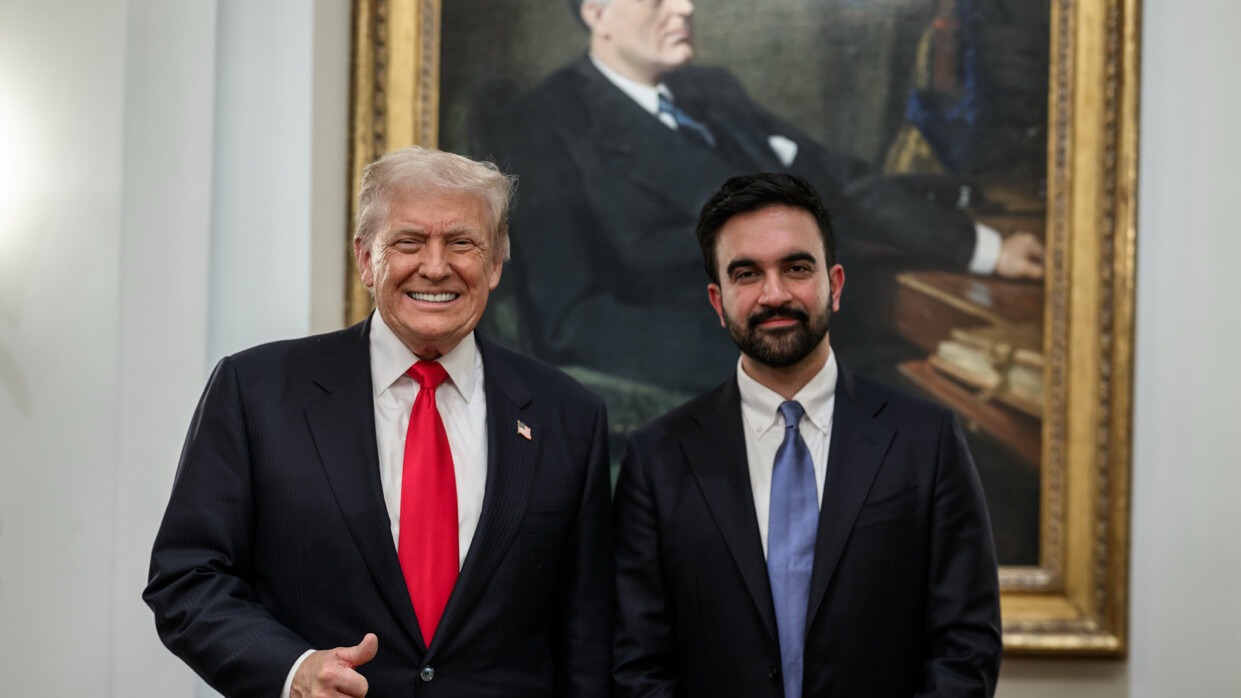
President Donald Trump has turned the New York Stock Exchange’s push into Texas into an early stress test for New York’s new mayor, Zohran Mamdani. By casting the NYSE’s Dallas expansion as a “big test” for City Hall, he is tying a technical market shift to a broader question about whether New York can still hold on to its status as the country’s financial capital.
At stake is more than symbolism. The NYSE’s decision to relocate a key electronic exchange to Dallas, and to brand it around Texas, gives physical form to a migration of finance jobs and capital that has been building for years. Trump is betting that framing this as a political failure for Mamdani will resonate with New Yorkers who worry that the city is losing ground to Texas.
Trump’s warning shot at Mamdani
Trump has been explicit that he sees the NYSE’s Texas move as a referendum on Zohran Mamdani’s leadership. In recent remarks, he said Mamdani is facing a “big test” from a Dallas-based stock exchange, arguing that the mayor of New York must prove he can keep markets and high-paying jobs anchored in the city as the New York Stock Exchange builds out a trading outpost in Texas. In tying the fate of the NYSE’s Texas venture directly to the performance of Mayor of New York Zohran Mamdani, Trump is elevating what might otherwise be a niche market story into a defining early challenge for the new administration, a point underscored in his comments about the Texas trading outpost.
He has not softened his language. Trump has described the NYSE’s Texas expansion as “unbelievably bad” for New York and has publicly called out “new Mayor Zohran Mamdani” by name, warning that allowing a marquee institution to grow more in Texas than in Manhattan would send a damaging signal to investors and employers. By labeling the Dallas project “a big test for the new Mayor,” he is positioning himself as a watchdog over New York’s economic competitiveness and making clear that, in his view, Mamdani will be judged on whether he can counter the Texas expansion.
What NYSE Tex in Dallas actually is
Behind the political rhetoric is a concrete structural change in how the New York Stock Exchange operates. The NYSE has relocated its Chicago-based electronic exchange to Dallas, Texas, and rebranded that platform as NYSE Tex, effectively shifting a key piece of its trading infrastructure from the Midwest to the Sun Belt. The move plants a permanent NYSE flag in Dallas and reflects a strategic bet that Texas can support a deeper concentration of NYSE-listed companies and market activity, according to legal analysis of how NYSE comes to.
Trump has seized on that shift to argue that the country is effectively “building a New York Stock Exchange in Dallas,” a phrase he used to dramatize the idea that a core Wall Street institution is now physically and symbolically rooted in Texas as well as in New York. In his telling, the Dallas operation is not just a back-office server farm but a rival center of gravity that could, over time, pull listings, trading volume, and related jobs away from Manhattan. His criticism of “building a New York Stock Exchange” in Dallas, delivered as President Donald Trump on a Monday earlier this month, was aimed squarely at the optics of a flagship New York brand deepening its presence in Dallas.
Texas’s bid to be America’s next financial hub
Trump’s attack lands in a state that has been actively courting Wall Street for years. Texas leaders have pitched their cities as lower-cost, business-friendly alternatives to New York, and there is now a “growing list of Wall Street names betting on Texas,” drawn by low taxes, lighter regulation, and cheaper housing and office space. That trend has already produced major expansions of Texas operations by financial firms that once concentrated almost entirely in Manhattan, part of a broader push by Wall Street in.
In that context, NYSE Tex is not an isolated experiment but a high-profile example of how Texas is trying to become America’s next financial hub. By hosting a Dallas-based stock exchange tied directly to the New York Stock Exchange, Texas gains prestige and leverage in the competition for listings, data centers, and trading talent. For New York, the risk is that each incremental move, from bank back offices to full-fledged exchanges, normalizes the idea that the country’s financial infrastructure can be split between coasts and the interior, rather than anchored in lower Manhattan.
The politics of timing and blame
One complicating factor for Mamdani is that the NYSE’s Texas strategy did not begin on his watch. Reporting on Trump’s criticism notes that the decision to expand into Texas and relocate the electronic exchange predates Zohran Mamdani’s tenure as mayor of New York, even as Trump now frames it as a failure of his leadership. In other words, the Dallas project was already in motion before Mamdani took office, a point that undercuts any suggestion that he personally greenlit the Texas expansion predating.
Trump has nonetheless chosen to make the Dallas exchange a political litmus test, arguing that a strong mayor would find ways to counter or offset the shift. By repeatedly highlighting that the stock exchange is now Dallas-based and calling it a “big test” for Mamdani, he is less interested in the original decision than in how City Hall responds. That framing allows him to criticize the mayor even if the underlying corporate strategy was set earlier, and it puts pressure on Mamdani to show he can influence future decisions by the Dallas-based stock exchange.
What is really at stake for New York and Mamdani
For New York, the immediate impact of NYSE Tex is more symbolic than catastrophic, but symbols matter in capital markets. The New York Stock Exchange still runs its iconic trading floor in Manhattan, yet the decision to relocate a Chicago-based electronic exchange to Dallas and rebrand it as NYSE Tex signals that the institution is comfortable dispersing its operations across the country. If Texas continues to attract a concentration of NYSE-listed companies and trading infrastructure, the center of gravity for certain types of market activity could gradually tilt away from New York, validating Trump’s warnings that the Texas move is “unbelievably bad” for the city’s long-term clout.
For Zohran Mamdani, the challenge is to turn that narrative around without overstating what City Hall can control. He cannot reverse a corporate relocation that was set in motion before he took office, but he can use tax policy, infrastructure investment, and regulatory posture to make New York more attractive for future expansions by the NYSE and its peers. Trump’s decision to frame the Dallas exchange as a personal test for Mamdani raises the political stakes, yet it also clarifies the task: if the mayor can show that New York is still the place where exchanges want to list, trade, and grow, then the NYSE’s Texas venture will look less like an existential threat and more like a regional complement to the city’s enduring role at the heart of global finance.
More From TheDailyOverview

Elias Broderick specializes in residential and commercial real estate, with a focus on market cycles, property fundamentals, and investment strategy. His writing translates complex housing and development trends into clear insights for both new and experienced investors. At The Daily Overview, Elias explores how real estate fits into long-term wealth planning.