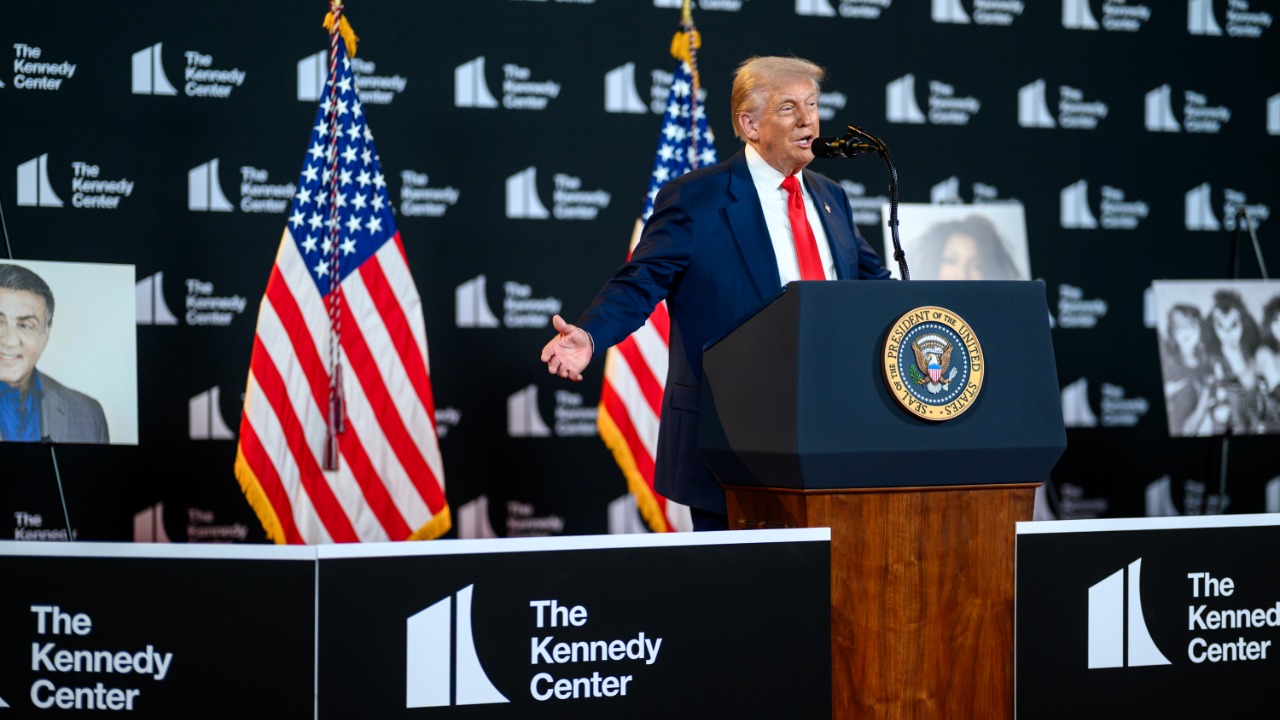
President Donald Trump is brushing aside mounting alarm over a growing deficit at the Kennedy Center, even as his takeover of the institution triggers artist boycotts, plunging ticket sales and political scrutiny. He has framed the red ink as a problem created by predecessors and donors, not by his own decisions to recast the nation’s flagship arts complex in his image. The result is a collision between cultural prestige and hard politics, with the balance sheet caught in the middle.
Trump’s posture matters because the Kennedy Center is not just another Washington venue, it is a federally chartered symbol of national culture whose fortunes are closely watched by Congress, artists and foreign partners. His insistence that the deficit is someone else’s mess, even as he consolidates control and slaps his name on the building, is rapidly turning a financial challenge into a test of governance and credibility.
The Trump takeover and a renamed landmark
The current crisis began when President Trump moved aggressively to seize control of the Kennedy Center’s leadership structure. He named an all-new board that, in an unprecedented move, elected him as the new Kennedy Center Board, giving the sitting president direct control over programming, fundraising and executive hiring. That consolidation set the stage for a broader rebranding push that critics say treated a public cultural institution like a private trophy.
The most visible symbol of that shift came when the board voted to rename the complex as Donald J. Trump, a hybrid title that elevated Trump’s name alongside John F. Kennedy’s on the façade and in official materials. Supporters framed the change as overdue recognition of a president who, in their telling, was rescuing a mismanaged institution. Detractors saw it as a politicization of a space meant to transcend partisan branding, and the renaming quickly became a rallying point for artists and audiences uneasy with the new regime.
Deficit blame game and disputed mismanagement
As the financial picture darkened, Trump and his allies began arguing that they had inherited a fiscal mess from prior administrators. New Leadership at the center accused previous managers of mismanaging funds and leaving behind structural problems that were only now coming to light. Those claims prompted a sharp rebuttal from the Former Kennedy Center, who said he was “deeply troubled” by New Leadership’s Allegations of Financial Mismanagement and defended the previous management’s stewardship.
That clash over responsibility is not just about reputations, it shapes how the public understands the emerging deficit that Trump now disowns. Senate Democrats have opened an inquiry into the center’s finances, citing an analysis by The Washington Post that found that ticket sales at the Kennedy Center have taken a nosedive and that on average, 43% of tickets have not been sold since early September. Trump, for his part, has publicly washed his hands of the “deficit,” insisting that any shortfall is the product of hostile media, disloyal artists and a donor class he claims is out of touch with “real people.”
Ticket sales plunge and a wave of cancellations
The numbers tell a different story from Trump’s shrug. After his takeover, Ticket sales at, a collapse that would strain any performing arts budget even in calmer times. Separate reporting on the center’s finances has described how the institution has struggled to fill seats for flagship events, including the annual honors broadcast, undermining both revenue and the prestige that once made the venue a magnet for sponsors.
Those financial pressures have been compounded by a steady drumbeat of artist withdrawals. Before the renaming, Before the name change, Trump’s aggressive push to reshape the Kennedy Center had already prompted some artists to back away from the institution or threaten legal action to challenge the name change. After the board added Trump’s name, more performers publicly pulled out of scheduled shows, citing discomfort with appearing at what they now saw as a politicized stage.
Renaming backlash, artist boycotts and institutional fallout
The backlash has been especially visible in the performing companies that once anchored the Kennedy Center’s calendar. In one widely discussed case, a dance company became the latest group of performers to pull out of a show at the Trump Kennedy Center, citing the building controversy around the renaming and the broader direction of the institution. Other ensembles have quietly shifted premieres or gala appearances to alternative venues in Washington and beyond, eroding the center’s status as the default national stage.
The damage is not limited to individual tours. Washington’s most iconic cultural institution is now facing a reckoning as the Washington National Opera walks away after more than half a century as a resident company, a move that strips the complex of one of its signature partners. At the same time, reporting has detailed how Related stories of canceled programs, rule changes before the vote to add Trump’s name and More musicians dropping out have fed a narrative that the Jan turmoil is not a passing storm but a structural unraveling.
Politics, messaging and Trump’s shrug at Davos
Trump’s response to the cultural and financial fallout has followed a familiar pattern from his broader foreign and domestic policy playbook. When confronted with criticism from allied leaders over his approach to Europe, he has brushed off concerns, with one Jan account describing how he turned up the temperature over Danish-owned Greenland while aides dismissed the chilly reception as something “people have.” The same instinct to minimize dissent and reframe backlash as proof of his own strength now colors his rhetoric about the Kennedy Center deficit.
At a global gathering in the Alps, Trump used a high-profile stage to unload on Biden policies and warn European leaders to change course, while coverage of that appearance noted that in the More in Politics section he was also described as having Trump Washes Hands of Kennedy Center Deficit After Takeover. The juxtaposition underscored how he treats the arts controversy as just another front in a larger political war, not as a distinct stewardship responsibility. In his telling, the deficit is a talking point to be swatted away, not a warning sign that the Trump-branded cultural experiment is faltering.
More From TheDailyOverview
*This article was researched with the help of AI, with human editors creating the final content.

Grant Mercer covers market dynamics, business trends, and the economic forces driving growth across industries. His analysis connects macro movements with real-world implications for investors, entrepreneurs, and professionals. Through his work at The Daily Overview, Grant helps readers understand how markets function and where opportunities may emerge.

