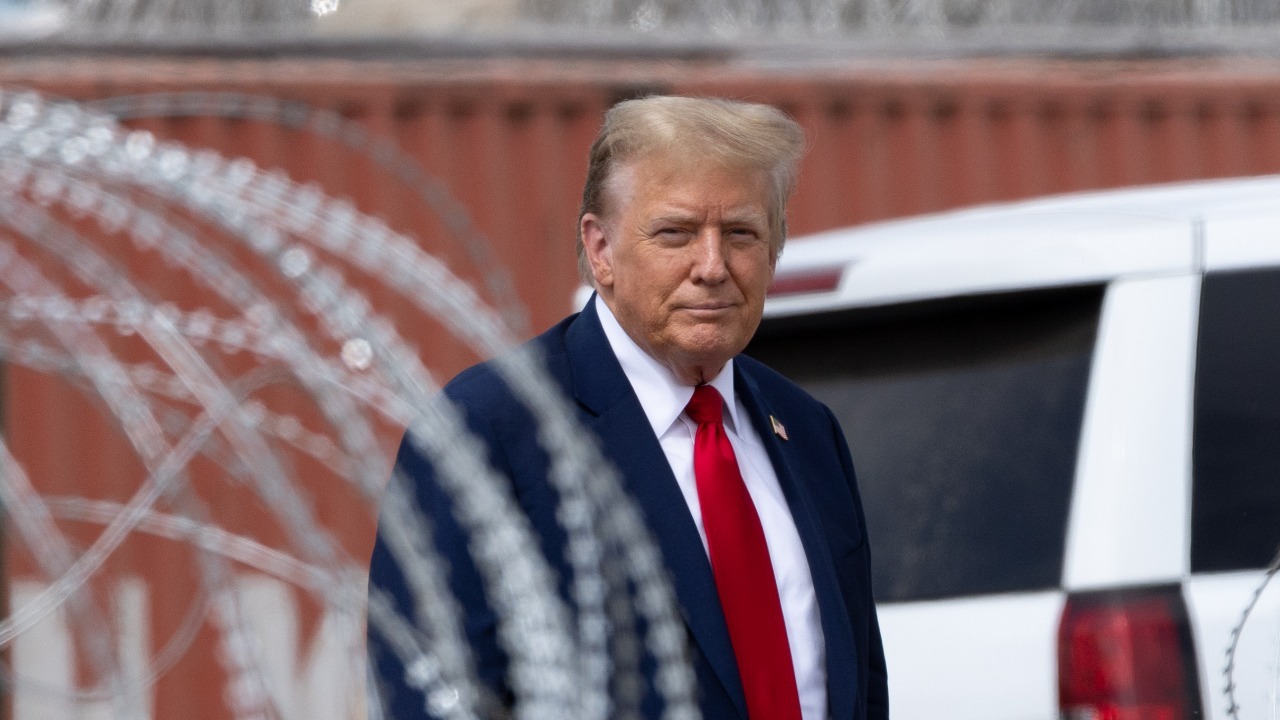
President Donald Trump is trying to turn a familiar political promise into a sweeping tax revolution, arguing that aggressive tariffs can both bankroll direct payments to households and eventually wipe out the federal income tax. The pitch blends populist anger at foreign competitors with the allure of $2,000 checks and a future in which wage earners keep every dollar of their pay.
At its core, the plan asks Americans to believe that taxing imports at much higher rates can replace the personal income tax that currently underpins federal finances, while still covering new “tariff dividend” payments. The numbers behind that vision, and the political path to making it real, are far murkier than the applause lines suggest.
Trump’s vision: tariffs as a cure for income tax
Trump has steadily escalated his rhetoric from using tariffs as a bargaining chip to casting them as the backbone of a new tax system. In public remarks, President Donald Trump has said that Americans may “not even have income tax to pay” in the future, describing a shift in which the federal government relies on levies at the border instead of wage taxes on workers, a claim he tied directly to the idea that Americans could soon pay “no income tax” at all as the White House studies alternative revenue streams for the government instead of wage taxes on workers, a message captured in his comments about Americans. He has framed this as a near-term possibility rather than a distant aspiration, telling supporters that the current system is on the verge of a fundamental reset.
That message has grown more explicit in recent days. President Donald Trump has said he believes the federal income tax will be abolished in the near future and replaced entirely by tariff revenue, arguing that the United States can fund the government by taxing imports instead of paychecks and that the current income tax burden, which he has described as roughly 13 percent of GDP, can be shifted onto foreign producers and global supply chains, a sweeping claim highlighted in his renewed call to eliminate the levy in comments reported as President Donald Trump. In his telling, tariffs are not just a negotiating tactic but the foundation of a new social contract in which workers are freed from filing annual returns and foreign exporters foot the bill.
The $2,000 “tariff dividend” checks
Alongside the promise of ending income taxes, Trump is dangling immediate cash in the form of what he calls tariff-funded rebates. Trump has promoted a plan to send every eligible household a $2,000 payment financed by tariff receipts, presenting it as both economic relief and proof that his trade policy can deliver tangible benefits at home, a timeline that surfaced when $2,000 tariff rebates became a centerpiece of his public schedule. He has described these checks as a kind of dividend from the nation’s trade policy, a way to show that higher import taxes can flow directly back to voters rather than disappearing into the federal bureaucracy.
Inside the administration, aides have been working to translate that slogan into a concrete program. A report that carried the headline “White House Official Confirms $2,000 Tariff Checks Are Planned, But Potential Roadblocks Are Ahead” described how a senior official confirmed that $2,000 tariff checks are indeed part of the policy blueprint, while also warning that legal and logistical hurdles could slow or shrink the payouts, a tension captured in the account of how Tariff Checks Are Planned. The piece noted that Terry Lane and other observers have raised doubts about whether the revenue will be sufficient and whether Congress will sign off on a new entitlement-style benefit tied to volatile trade flows.
How much money tariffs can really raise
The political appeal of Trump’s plan rests on a simple story: tax foreign goods heavily, then use the proceeds to fund both government operations and household checks. The fiscal math is far more complicated. Analysts who have studied Trump’s past trade actions have found that the tariffs he imposed in his first term generated tens of billions of dollars in revenue but also raised costs for domestic firms and consumers, with one detailed review of the trade war estimating that the duties functioned as a tax on imports that ultimately fell on U.S. buyers and that the overall impact on growth and household budgets was negative, a pattern documented in research on Trump tariffs. That history suggests that even if tariffs can raise money, they do so by making a wide range of goods more expensive, from electronics to basic household items.
Trump is now proposing to go much further. He has embraced the label “Tariff Man” and floated the idea of a 60% tariff on goods from China, a level that would represent a dramatic escalation from previous rounds of trade conflict and that economists warn could sharply increase prices and disrupt supply chains, as detailed in an examination of how Tariff Man wants to handle China. Separate modeling has found that Trump’s tariffs could cost American households hundreds of dollars per year in higher prices and weigh on U.S. foreign relations, with one estimate warning that the duties could significantly increase costs for U.S. consumers, workers, and businesses, a concern laid out in an analysis of what What Will Trump tariffs do for consumers, workers, and businesses. Those findings cut against the idea that tariffs are a free lunch paid entirely by foreign exporters.
Can tariffs replace the income tax?
Even if Trump could push through his preferred tariff hikes, the question is whether they can plausibly replace the federal income tax, which currently accounts for a large share of Washington’s revenue. Economic policy experts who have run the numbers say the gap is enormous. Analyses of Trump’s proposal to swap income taxes for border duties conclude that the volume of imports, even at much higher tariff rates, is unlikely to generate enough money to cover existing federal obligations, let alone new spending, a skepticism reflected in assessments that ask whether Could Trump tariffs really replace the income tax. Those reviews stress that the income tax is deeply embedded in the fiscal system and that replacing it would require either unprecedented tariff levels, massive spending cuts, or entirely new revenue sources.
Trump has tried to reassure supporters that the numbers will work out, pointing to what he describes as surging tariff receipts and future growth dividends. In remarks delivered in PALM BEACH, Fla, President Donald Trump told service members that tariff revenue may allow the United States to eliminate the income tax, suggesting that duties could bring in about $200 billion in 2025 and that this stream could be used not only for checks but also to pay down debt and fund investments, a sweeping claim recounted in coverage from PALM BEACH, Fla. Yet when stacked against the trillions of dollars the federal government spends each year, even optimistic tariff projections fall far short of what would be needed to fully replace income tax receipts.
Checks now, structural change later
For now, the more immediate test of Trump’s tariff-first agenda is whether he can deliver the promised checks. Trump has said that tariff dividend refund checks will be issued in 2026 and that tariff revenue will also be used to reduce the income tax burden, arguing that “Tariff” receipts can both fund direct payments and allow the existing tax to be drastically reduced, a sequence laid out in a briefing that described how The Brief framed the coming $2,000 tariff dividend check update. But turning that promise into law will almost certainly require Congress to authorize a new program that earmarks tariff revenue for household payments, a step that legal experts say is not automatic under current statutes.
One account of the internal deliberations noted that for such a plan to take effect, congressional approval would probably be required, underscoring that the White House cannot unilaterally redirect tariff revenue into a permanent rebate scheme, a constraint spelled out in reporting that explained why congressional approval is central to any tariff refund. Trump himself has acknowledged that he is “banking on tariffs” to eventually supplant income taxes, telling supporters that at some point in the not too distant future, tariff revenue will cover tax refunds and then allow the income tax to be phased out, a vision he laid out in remarks captured in a segment that showed how Still, Trump is staking his case on tariffs. Whether voters embrace that trade-off may depend less on the long-term theory than on whether the $2,000 checks actually arrive in their mailboxes.
More From TheDailyOverview
- Tennessee loses $2.6B megafactory and faces major layoffs
- Retired But Want To Work? Try These 18 Jobs for Seniors That Pay Weekly
- What to do with your pennies after the U.S. stops minting them
- Home Depot CEO warns of a troubling customer trend in stores

Silas Redman writes about the structure of modern banking, financial regulations, and the rules that govern money movement. His work examines how institutions, policies, and compliance frameworks affect individuals and businesses alike. At The Daily Overview, Silas aims to help readers better understand the systems operating behind everyday financial decisions.

