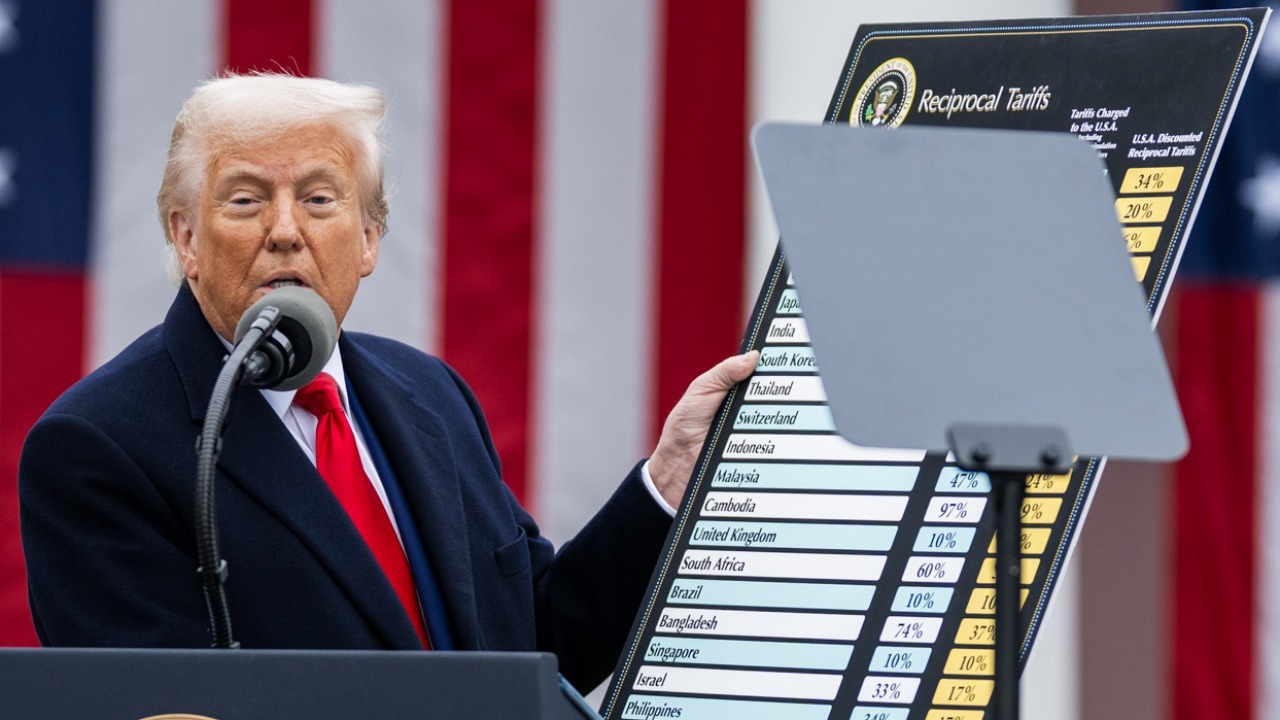
Prices on everything from sneakers to smartphones are climbing again, and a big reason is President Donald Trump’s renewed tariff offensive. What was billed as a way to punish foreign competitors is increasingly showing up as a surcharge on everyday American life, as businesses warn that they have little choice but to pass higher import costs straight to shoppers.
Instead of fading into the background, the trade fight has become a defining feature of the economic landscape, shaping inflation, corporate strategy, and household budgets. I see a pattern emerging in the data and corporate disclosures: tariffs are functioning less like a negotiating tactic and more like a standing tax on consumption.
The new tariff wave and how it hits the checkout line
President Trump has leaned heavily on the International Emergency Economic Powers Act, or IEEPA, to impose a sweeping set of import taxes on major trading partners, targeting sectors from steel and aluminum to autos and consumer electronics. Analysts at the Tax Foundation estimate that Trump’s imposed tariffs will raise taxes on trade, reduce employment, and lower economic output, a combination that tends to show up as weaker growth and higher prices at the mall. The same research details how these levies, introduced under the International Emergency Economic Powers Act, have become a central pillar of the administration’s economic strategy rather than a short-lived bargaining chip.
Those macro moves are now filtering directly into household budgets. The Tax Foundation’s Key Findings project that the tariff package will cost the average household $1,300 in 2025 and $1,500 in 2026, effectively functioning as a stealth tax increase on consumers who never voted for it. Another analysis from the same organization finds that the broader set of Key Findings includes higher costs on goods like steel, aluminum, and copper, which ripple through to finished products from cars to kitchen appliances. When the raw materials for a Ford F-150 or a Whirlpool refrigerator get more expensive, the final sticker price rarely moves in the shopper’s favor.
Inflation, “turbulence tax,” and the macroeconomic squeeze
Economists who had hoped inflation would glide back to target are now reworking their forecasts to account for tariff-driven price pressures. In its latest outlook, one major forecast notes that Inflation Set to Rise in 2026 as Tariff Costs Hit Consumers, with the projection showing inflation ticking up to 2.7 percent and Our outlook also pointing to GDP growth slowing. That combination, higher prices and softer output, is precisely what critics of the tariff strategy warned about when the first duties were announced.
Some analysts have started calling this effect a “turbulence tax,” a nod to the way trade shocks buffet the broader economy. One detailed assessment finds that The Trump administration’s tariffs are on track to cost the typical household an average of $2,400 per year, according to the Yal-linked analysis, a figure that dwarfs the benefit of many tax cuts or wage gains for middle income families. When I line that up with the Tax Foundation’s estimate of hundreds of dollars in annual costs and the projected 2.7 percent inflation rate, the picture that emerges is of a policy mix that systematically erodes purchasing power.
From factory gate to store shelf: how businesses pass on the pain
In theory, companies could absorb some of the tariff hit in their profit margins, but the evidence suggests that much of the burden is being shifted to shoppers. A study from Yale’s budget lab finds that Tariff Revenue from New 2025 tariffs has reached $88 billion year to date, and there is suggestive evidence that goods prices are rising in line with earlier studies around consumer price passthrough. That is a technical way of saying what shoppers already feel in their wallets: when the government taxes imports, the final price tag in the aisle tends to climb.
Major brands are no longer shy about saying so. Retailers such as Abercrombie, Fitch, Walmart, and Nike have told investors that Abercrombie & Fitch, Walmart, Nike, and other major brands are raising prices or planning to do so because Trump’s tariffs are squeezing their costs. The Federal Reserve’s latest Beige Book, which surveys economic conditions across its districts, reports that businesses warn Trump’s tariffs are being passed on to American consumers, reinforcing what corporate earnings calls have already signaled. When both central bank anecdotes and big box chains point in the same direction, it is hard to argue that tariffs are being quietly absorbed behind the scenes.
Holiday shoppers, small businesses, and sector-specific shocks
The impact is especially visible in seasonal and discretionary spending, where even small price moves can change buying behavior. A Dec survey from the Footwear Distributors and Retailers of America for the second quarter found that 55 percent of respondents expect their average retail prices to rise, with 55% of those surveyed bracing for higher tags on tariff affected shoes and apparel. Economists caution that these tariffs, layered on top of other cost pressures, are pushing holiday shopping budgets to the breaking point, particularly for families already stretched by rent and food inflation.
Small businesses, which lack the pricing power of national chains, are caught in a vise. One analysis warns that Trump‘s tariffs will cost global businesses upward of $1.2 trillion in 2025, with most of the cost being passed onto consumers, and highlights a small business selling Christmas products that is struggling to stay competitive. Another report on holiday spending notes that Economists warn Trump’s tariffs are having an uneven effect on holiday prices and purchases, with some categories seeing sharp increases while others remain relatively insulated. For a toy store owner or a local electronics shop, that unevenness can be the difference between a profitable season and a painful one.
Global turmoil, consumer price hikes, and what comes next
Internationally, the tariff campaign has rattled trading partners and investors alike. One detailed account notes that Trump was accused of throwing the global economy into turmoil when he announced the first tariffs of his second presidential term, with trade volumes and business confidence starting to decline during the period. The Tax Foundation’s broader analysis of the trade war underscores that these measures are not limited to a single country or product line, but instead span a wide range of imports that underpin modern supply chains.
For consumers, the most tangible question is what this means for specific items in their carts. A detailed breakdown of Examples of Potential Tariffs shows how, due to President Trump’s trade wars, Americans can expect to pay more for everyday goods, with one illustration noting that a product costing $8.30 now could cost $9.13 once tariffs are fully priced in. When I connect that micro level math to the macro projections of slower GDP growth and higher inflation, the throughline is clear: tariffs are no longer an abstract geopolitical tool, they are a line item on every receipt, and the bill is coming due for American shoppers.
More From TheDailyOverview

Silas Redman writes about the structure of modern banking, financial regulations, and the rules that govern money movement. His work examines how institutions, policies, and compliance frameworks affect individuals and businesses alike. At The Daily Overview, Silas aims to help readers better understand the systems operating behind everyday financial decisions.

