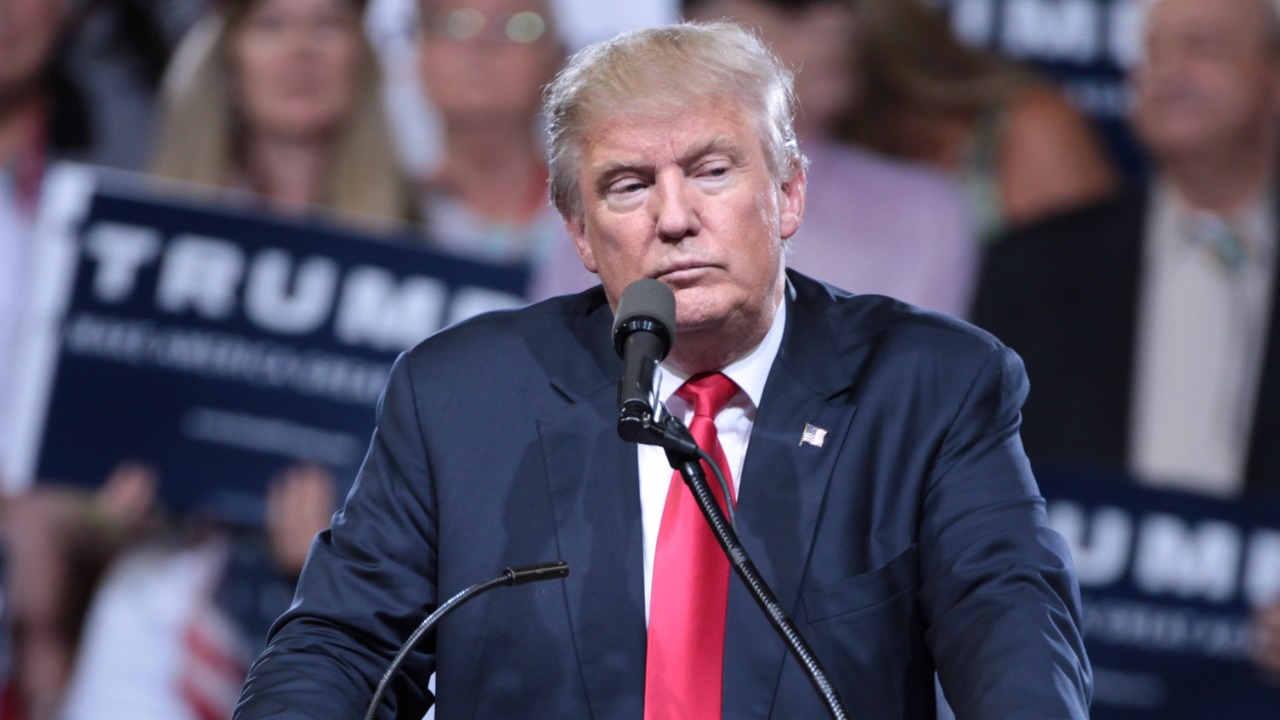
Working households are being told to brace for a rare kind of tax season surprise: bigger checks from the Internal Revenue Service instead of smaller ones. The Trump administration’s latest tax adjustments are expected to translate into refunds in the ballpark of $1,600 to $2,000 for a typical worker, a shift that could briefly ease the pressure of high prices and stubborn borrowing costs.
Those promised windfalls do not arrive in a vacuum. They sit on top of an ongoing political push to lock in earlier tax cuts, reshape the code around work and investment, and redefine who benefits most from federal tax policy in the Trump era.
Refunds as the new centerpiece of Trump’s tax message
The White House has clearly decided that cash in hand is the most persuasive argument it can make about its economic record. Rather than leaning only on abstract growth figures or stock market milestones, officials are now centering the story on how much money a typical family might see flow back into its bank account when they file their return. Framing the policy around a $1,600 to $2,000 refund range gives working Americans a concrete number to weigh against rising rent, car payments, and grocery bills.
That pivot is not just about messaging, it is about timing. The administration is aligning the tax calendar with the political calendar, betting that a surge of larger refunds will land while memories of high inflation and elevated credit card balances are still fresh. By making the promise of “very large” refunds the headline, the Trump team is trying to turn a complex tax overhaul into a simple, pocketbook test that voters can apply when they sit down with their W‑2s and tax software.
What “very large refunds” really mean for working Americans
The phrase “very large refunds” sounds like campaign rhetoric until you drill into what it implies for a typical paycheck. For a worker earning around the national median, a refund in the $1,600 to $2,000 range can easily exceed a month’s rent in many smaller cities or cover several car payments on a used 2021 Toyota Corolla or 2020 Honda Civic. In practical terms, that kind of lump sum can be the difference between catching up on a lingering medical bill and watching interest charges snowball for another year.
Treasury Secretary Scott Bessent has told working Americans to expect “very large refunds” of up to $2,000 per household, explicitly casting the policy as a reward for people who earn their income from wages rather than from capital gains or complex tax planning. By putting a ceiling on the figure and tying it to “households,” Bessent is signaling that the biggest relative gains are aimed at families who rely on a couple of paychecks and have little room in their monthly budgets. That framing underscores the administration’s attempt to present the tax tweaks as a direct response to the squeeze on workers rather than a windfall for the investor class.
How the new tweaks build on Trump’s earlier tax cuts
To understand why refunds are suddenly swelling, it helps to look back at the structure of the Trump tax agenda. The original 2017 package lowered individual rates, nearly doubled the standard deduction, and reshaped child and family credits, all of which reduced tax liability for many wage earners. The latest adjustments do not reinvent that architecture so much as fine tune it, adjusting withholding formulas and credit thresholds so that more of the benefit shows up at filing time rather than being spread thinly across each paycheck.
That design choice matters. When tax relief is delivered in small increments through lower withholding, it can be hard for workers to notice the change amid fluctuating hours, overtime, or health insurance deductions. By contrast, a larger refund is unmistakable. The Trump team is effectively rebalancing the mix between ongoing paycheck relief and year end reconciliation, leaning into the psychological impact of a single, sizable payment that families can use to make a down payment on a used 2022 Ford Escape, replace a failing refrigerator, or finally clear a lingering balance on a high interest store card.
Congressional Republicans move to lock in the 2017 framework
While the administration tweaks the mechanics of refunds, congressional Republicans are working to cement the broader tax structure that underpins them. Earlier this year, The Ways and Means Committee advanced legislation to make the 2017 individual tax cuts permanent, a move that would prevent key provisions from expiring and keep marginal rates lower for households across the income spectrum. That push reflects a belief inside the party that the Trump era tax code has become a core part of its economic identity.
In WASHINGTON, the debate is not just about rates but about the long term shape of the economy. Supporters on The Ways and Means Committee argue that preserving the 2017 framework will continue to support job creation, including an estimated 1.1 million manufacturing jobs tied to the broader package of tax and investment incentives. By voting to extend those provisions and layer on additional relief for workers, the committee is trying to ensure that the refund surge is not a one off event but part of a durable policy architecture that keeps rewarding work and domestic production, as reflected in its detailed tax relief blueprint.
Who stands to gain the most from a $1,600–$2,000 refund
Not every taxpayer will see the same benefit from the Trump tax tweaks, and the $1,600 to $2,000 range is best understood as a typical outcome for working households rather than a universal guarantee. Families with steady W‑2 income, children at home, and mortgage or student loan interest to deduct are likely to see the largest relative boost, because the code now leans more heavily on credits and targeted relief that scale with dependents and earned income. A married couple with two kids and combined earnings of around $80,000, for example, is positioned to capture a sizable share of the new refund space.
By contrast, high income professionals who already max out itemized deductions or rely heavily on stock based compensation may see a smaller change in their final refund, even if their overall tax liability remains lower than it would have been under pre Trump law. Retirees who live primarily on Social Security and modest pension income may also see limited movement, since their taxable income is already relatively low. The policy is calibrated so that the most noticeable gains accrue to people who are still in the workforce and feeling the monthly strain of child care, commuting costs, and rising insurance premiums.
How families are likely to use a sudden cash infusion
When a household that has been juggling bills suddenly receives a $1,600 to $2,000 refund, the money rarely sits idle. In survey after survey, working families report that unexpected cash tends to flow first toward overdue obligations, whether that is a utility bill that has been rolled from month to month, a lingering balance on a 2018 Honda CR‑V loan, or a medical copay that was put on a high interest credit card. In that sense, the Trump refund surge is less about luxury spending and more about catching up on the basics.
There is also a clear link between lump sum payments and big ticket life decisions. A larger refund can provide the down payment needed to move from renting a small apartment to buying a starter home in a lower cost suburb, or to replace a 2012 sedan that has become a constant repair risk with a more reliable 2019 Subaru Outback. Some parents may use the money to prepay for a semester of community college tuition, sign a child up for a travel soccer league that was previously out of reach, or finally upgrade to a newer smartphone that can handle remote work apps like Zoom and Slack without constant crashes. In each case, the refund functions as a rare moment of financial breathing room in an otherwise tight budget.
The economic ripple effects of a refund boom
When millions of households receive larger refunds at roughly the same time, the impact extends well beyond individual bank accounts. Retailers, auto dealers, and service providers often see a springtime bump in sales as tax season payments hit, and a shift from a few hundred dollars to closer to $2,000 per household can magnify that effect. For local economies built around small businesses, that can translate into more foot traffic at independent repair shops, family owned restaurants, and neighborhood childcare centers.
At the macro level, a refund driven spending wave can provide a short term lift to consumer demand, which remains the largest component of U.S. economic activity. That said, the effect is inherently temporary. Once the refunds are spent or saved, the underlying pressures of housing costs, student debt, and health care expenses reassert themselves. The Trump administration is effectively using the tax code as a seasonal stimulus tool, injecting cash into the economy at a predictable moment each year while relying on the broader tax structure to support investment and job creation over a longer horizon.
The political stakes for Trump and his opponents
For President Donald Trump, the refund surge is both an economic policy and a political bet. He is wagering that voters will credit his administration for the checks they receive, even if the underlying tax mechanics are complex and the benefits are uneven across income groups. The White House is likely to highlight stories of workers who used their refunds to pay off a lingering payday loan, fix a transmission on a 2017 Chevrolet Malibu, or finally schedule a long deferred dental procedure, turning individual anecdotes into a broader narrative of economic relief.
Opponents, meanwhile, are poised to argue that a one time or even recurring refund boost does not fix deeper structural issues, from wage stagnation to housing affordability. They will point out that a $2,000 payment, while meaningful, can be quickly swallowed by a single emergency room visit or a few months of child care in cities where costs routinely top $1,500 per month. The political fight will center on whether voters see the refunds as a sign of a tax system that is finally working for them, or as a temporary sweetener layered on top of a status quo that still leaves them one missed paycheck away from crisis.
What taxpayers should watch for as filing season approaches
For individual filers, the most important step now is preparation rather than celebration. Workers should pay close attention to their year end pay stubs, W‑2 forms, and any 1099s to ensure that withholding and reported income line up with expectations. Using reputable tax software or a trusted preparer can help translate the new rules into an accurate return, especially for households that juggle multiple jobs, side gigs through apps like Uber or DoorDash, or a mix of W‑2 and freelance income.
It is also wise to think ahead about how to deploy a larger refund if it materializes. Setting priorities before the money arrives can prevent it from being absorbed into day to day spending without addressing bigger financial vulnerabilities. For some, that might mean paying down the highest interest credit card first, even if it is not the largest balance. For others, it could mean building a small emergency fund in a high yield savings account so that the next unexpected car repair or medical bill does not immediately go on plastic. The Trump tax tweaks may deliver a rare financial tailwind, but how far that wind carries each household will depend heavily on the choices they make once the check clears.
More From TheDailyOverview

Julian Harrow specializes in taxation, IRS rules, and compliance strategy. His work helps readers navigate complex tax codes, deadlines, and reporting requirements while identifying opportunities for efficiency and risk reduction. At The Daily Overview, Julian breaks down tax-related topics with precision and clarity, making a traditionally dense subject easier to understand.