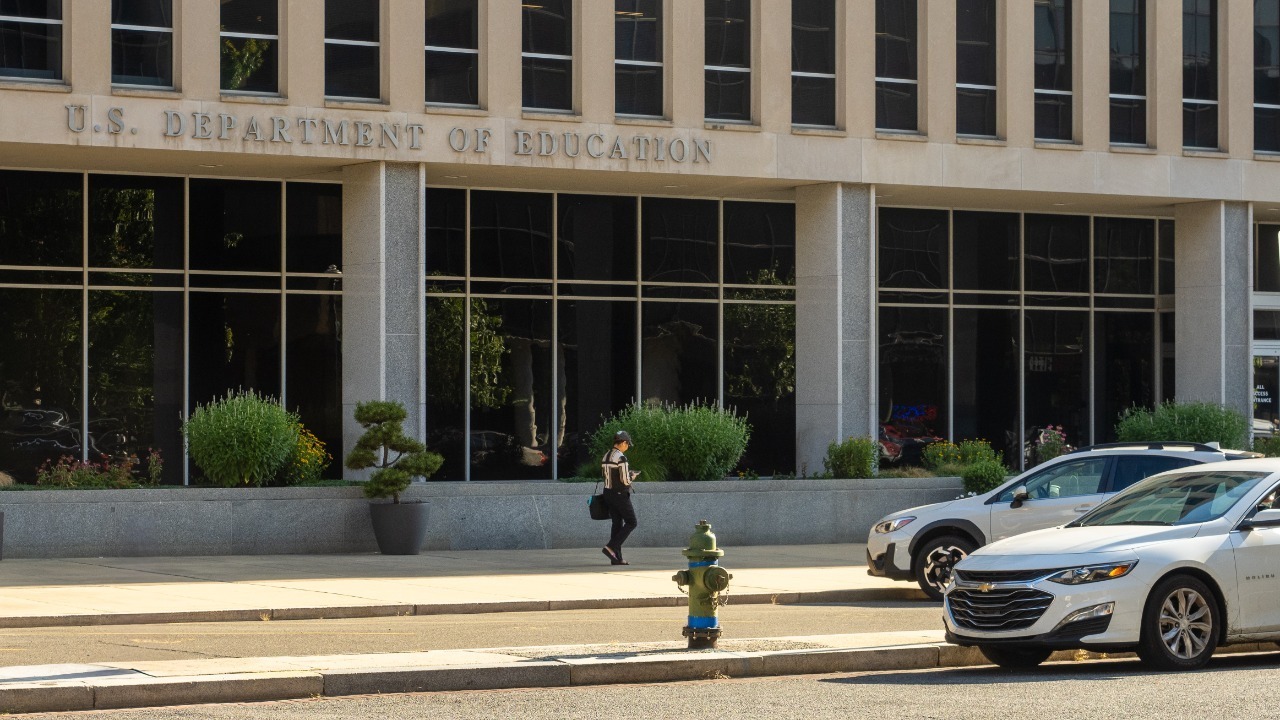
The Trump administration’s Education Department has identified thousands of additional borrowers who may qualify for student loan discharge, according to a recent court filing in ongoing federal litigation. The updated eligibility figures, submitted as part of a sequence of status reports in the case brought by the American Federation of Teachers, suggest that years of processing backlogs are slowly being addressed. Yet the disclosure also raises hard questions about why so many borrowers were left waiting in the first place, and whether a looming tax policy shift in 2026 could undercut the financial relief these borrowers expect.
Court Filing Reveals Expanded Discharge Counts
The latest status report in the case, filed as ECF 61 on the federal docket, updates the court on how many borrowers the Education Department has newly flagged as eligible for loan forgiveness under income-driven repayment plans. These filings are part of a series of monthly reports the department has been required to submit, with earlier entries and procedural history documented on the public docket for American Federation of Teachers v. U.S. Department of Education, No. 1:25-cv-00802-RBW. While the precise tally in the latest report is technical and heavily redacted in places, the narrative accompanying the figures makes clear that the pool of borrowers now deemed eligible for discharge is substantially larger than what officials had previously acknowledged.
The significance of these filings goes beyond a simple headcount. Each status report functions as a public accountability mechanism, forcing the department to show whether it is meeting the commitments it made after the AFT sued. According to an Associated Press account of the negotiations, the administration pledged to accelerate certain categories of student loan relief in response to the lawsuit and related political pressure. The updated numbers in the latest filing offer the clearest measure yet of whether those promises are translating into concrete action or remaining largely aspirational, and they provide a rare, data-driven window into how quickly, or slowly, the department can move when compelled by a court order.
How IDR Plans Create a Path to Forgiveness
The borrowers flagged in these court filings are enrolled in income-driven repayment plans, a category that includes Income-Based Repayment (IBR), Income-Contingent Repayment (ICR), and Pay As You Earn (PAYE). Under these arrangements, monthly payments are capped at a percentage of a borrower’s discretionary income, and any remaining balance is forgiven after 20 or 25 years of qualifying payments, depending on the specific plan and loan type, as outlined by Federal Student Aid. In theory, these programs are designed to prevent borrowers from being crushed by unaffordable monthly bills while still providing a predictable endpoint to repayment.
In practice, many borrowers who should have reached those forgiveness thresholds years ago were stuck in administrative limbo. Servicer errors, miscounted payment periods, and incomplete or mishandled paperwork all contributed to a system where eligibility existed on paper but not in reality. Some borrowers were steered into forbearance instead of qualifying plans, effectively resetting their progress; others discovered that years of payments had not been properly credited. The court-ordered reporting in the AFT case functions as a forced audit of that broken pipeline. Each new batch of flagged borrowers represents people who were already entitled to discharge but had not received it because the system failed to track their progress accurately or to apply the rules consistently.
Litigation Forced the Department’s Hand
The AFT lawsuit did not emerge in a vacuum. It followed a period in which litigation, policy whiplash, and administrative disruptions had blocked borrowers from applying for income-driven repayment plans or maintaining their progress toward Public Service Loan Forgiveness. Amid legal battles over broader debt cancellation and shifting guidance to loan servicers, the Education Department at one point halted or restricted certain repayment applications, leaving borrowers in a holding pattern. The agency eventually reopened key application channels, but only after sustained pressure from borrower advocates, unions, and the courts underscored the human cost of prolonged uncertainty.
What makes the AFT case distinct is its ongoing enforcement structure. Rather than a one-time settlement that could fade from view, the monthly status reports create a rolling obligation for the department to demonstrate measurable progress. This framework matters because it helps prevent the kind of quiet backsliding that has historically plagued student loan administration, where reforms are announced with fanfare and then undermined by implementation failures. When the department identifies thousands more borrowers as eligible for discharge in a single filing, it confirms two things simultaneously: the system is now working better than it was, and it was broken far worse than officials had previously conceded. The litigation has effectively converted what might have been an internal clean-up effort into a public reckoning with years of mismanagement.
A Tax Cliff Threatens Borrowers in 2026
Even as the administration flags more borrowers for forgiveness, a separate policy change threatens to reduce the value of that relief. Federal loan rules are scheduled to shift in 2026 in a way that could make many forms of student loan forgiveness taxable again, according to a financial aid advisory from The College of New Jersey. Under current law, most discharged federal student loan balances are temporarily excluded from federal taxable income through the end of 2025. The advisory notes that this exemption is unlikely to be extended, meaning that borrowers receiving forgiveness after that date could once again face tax bills on amounts they never actually see as cash.
For borrowers on income-driven repayment plans, this creates a painful timing problem. Someone who has spent 20 or 25 years making reduced payments could see the remaining balance forgiven, only to receive a tax bill for tens of thousands of dollars. The irony is sharp. The same court process that is finally delivering overdue forgiveness may be racing against a tax policy deadline that could turn that forgiveness into a new financial burden. Borrowers who receive discharge in 2025 would be shielded from federal income tax on the forgiven amount, but those whose cases are processed even slightly later could face a dramatically different outcome. For low- and middle-income households, that kind of unexpected liability could trigger new debt, wage garnishment, or the need for payment plans with the IRS, undercutting the stability that loan forgiveness is supposed to provide.
Systemic Delays Expose a Bipartisan Blind Spot
Much of the current coverage frames the AFT litigation as a straightforward clash between a teachers’ union and the Trump administration. That framing misses a deeper structural problem. The backlog of unprocessed forgiveness cases spans multiple administrations and reflects failures that neither major party has fully addressed. Income-driven repayment plans have existed for decades, yet the infrastructure to track qualifying payments and execute timely discharges has never kept pace with enrollment or policy complexity. Successive administrations expanded or tweaked repayment options without investing in the data systems, oversight, and staffing necessary to make those promises real for borrowers.
The court filings in this case are exposing that gap with unusual precision. Each monthly status report captures not only the number of borrowers newly identified for discharge, but also the incremental pace of progress and the sheer scale of the remaining backlog. That level of detail makes it harder for policymakers to dismiss problems as isolated glitches or to blame them solely on political opponents. Instead, the record points to a bipartisan blind spot, a willingness to tout generous repayment and forgiveness options without ensuring that servicers and federal systems can deliver them accurately and on time. As the 2026 tax cliff approaches, the stakes of that oversight failure are rising. Unless Congress and the executive branch address both the administrative bottlenecks and the looming tax treatment of forgiven loans, thousands of borrowers who were promised a fresh start may find that their long-awaited relief arrives late (incomplete), or with an unexpected bill attached.
More From The Daily Overview
*This article was researched with the help of AI, with human editors creating the final content.

Silas Redman writes about the structure of modern banking, financial regulations, and the rules that govern money movement. His work examines how institutions, policies, and compliance frameworks affect individuals and businesses alike. At The Daily Overview, Silas aims to help readers better understand the systems operating behind everyday financial decisions.

