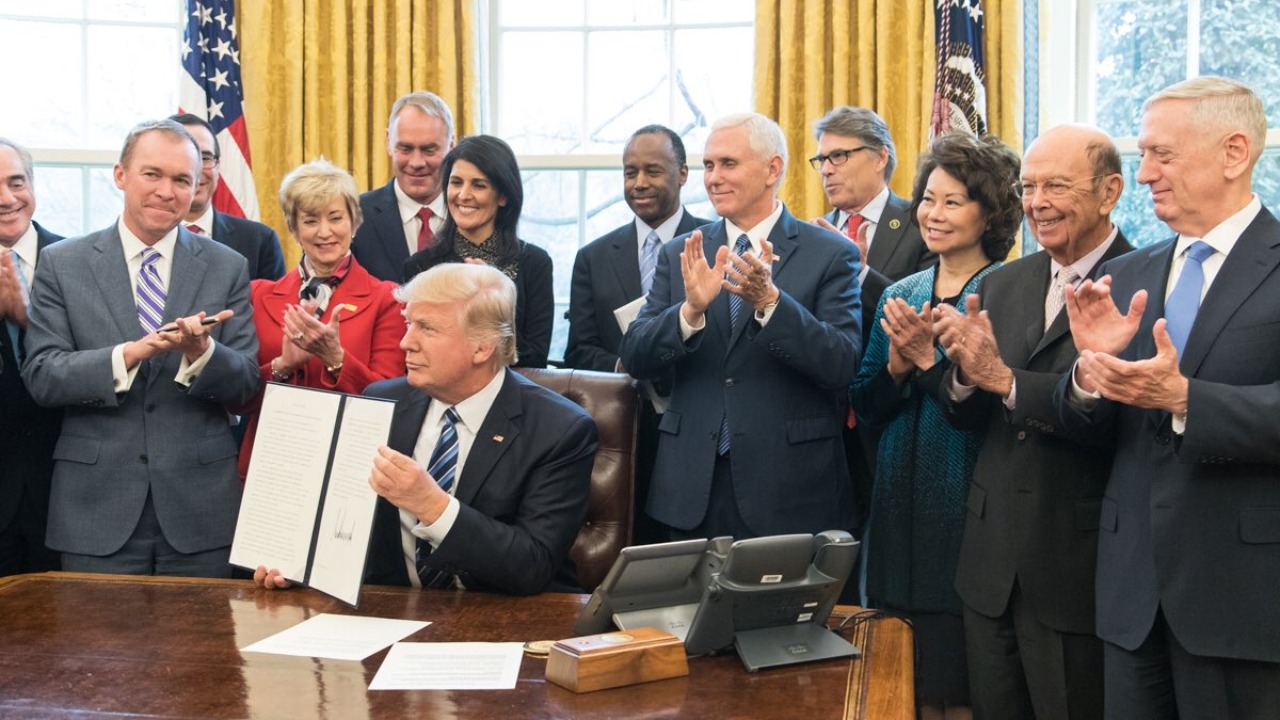
President Donald Trump has recently proposed issuing $2,000 tariff rebate checks to Americans, a plan that has sparked significant debate. This idea, which gained attention in early November 2025, aims to mitigate the impact of his proposed tariffs. However, economists and critics, including those focused on Missouri’s economy, argue that the U.S. cannot afford such a plan, labeling it economically unsound. Anti-MAGA Republicans have also criticized the proposal, emphasizing the political challenges Trump faces as he prepares for his term.
Trump’s Initial Pitch for Tariff Rebates
Trump’s proposal for $2,000 tariff dividend checks emerged as a stimulus measure tied to his tariff policies. Public statements around November 9, 2025, outlined his vision of using tariff revenues to fund these rebates directly to households. This idea was floated just days before his inauguration, aiming to make tariffs more acceptable to voters who might face higher import costs. According to Axios, the plan was presented as a way to return tariff revenues to the American people, positioning it as a populist move to gain support.
Initial reactions to the proposal, reported on November 10, 2025, suggest it is an attempt to soften the blow of increased import costs due to tariffs. As CNBC highlights, the rebate checks are intended to offset the economic burden on American consumers, but the feasibility of this plan remains in question. The timing of the announcement, so close to Trump’s inauguration, indicates a strategic move to align economic policy with campaign promises.
Economic Critiques and Affordability Concerns
Economists have raised significant concerns about the affordability of Trump’s tariff rebate checks. An analysis by a Missouri-based economist, reported by Missourinet, argues that both Missouri and the broader U.S. economy cannot sustain such payouts due to insufficient revenue from tariffs. The economist points out that the expected income from tariffs does not match the scale of $2,000 payouts to millions of Americans, making the plan financially untenable.
Further analyses published on November 11, 2025, underscore why the plan “makes so little sense.” According to MSNBC, the mismatch between projected tariff revenues and the proposed rebate amounts highlights a fundamental flaw in the plan’s economic logic. The potential impact on states like Missouri, which could face disrupted trade and economic instability, adds to the growing fiscal warnings surrounding this proposal.
Political and Legal Obstacles to Implementation
Trump’s proposal faces significant political and legal hurdles, as he cannot implement the rebate checks unilaterally. Congressional approval is necessary for such distributions, as detailed by AOL. This requirement presents a major obstacle, given the current political climate and the skepticism from both sides of the aisle.
Criticism from an anti-MAGA Republican, reported on November 9, 2025, further complicates the proposal’s prospects. As noted by Yahoo News, this Republican dismissed the $2,000 tariff payouts, stating they “just doesn’t work.” This early bipartisan skepticism highlights the challenges Trump faces in garnering support for his plan.
Broader hurdles include legislative timelines and executive limitations. Recent coverage on November 11, 2025, reveals that these obstacles are becoming more pronounced compared to Trump’s initial rhetoric. The complexities of passing such a measure through Congress, coupled with the need for bipartisan support, underscore the difficulties in turning this proposal into reality. As Trump prepares for his term, navigating these challenges will be crucial in determining the feasibility of his economic agenda.
More From TheDailyOverview
- Dave Ramsey says these two simple questions show whether you’re rich or poor
- Retired But Want To Work? Try These 18 Jobs for Seniors That Pay Weekly
- IRS raises capital gains thresholds for 2026 and what’s new
- 12 ways to make $5,000 fast that actually work

Julian Harrow specializes in taxation, IRS rules, and compliance strategy. His work helps readers navigate complex tax codes, deadlines, and reporting requirements while identifying opportunities for efficiency and risk reduction. At The Daily Overview, Julian breaks down tax-related topics with precision and clarity, making a traditionally dense subject easier to understand.

