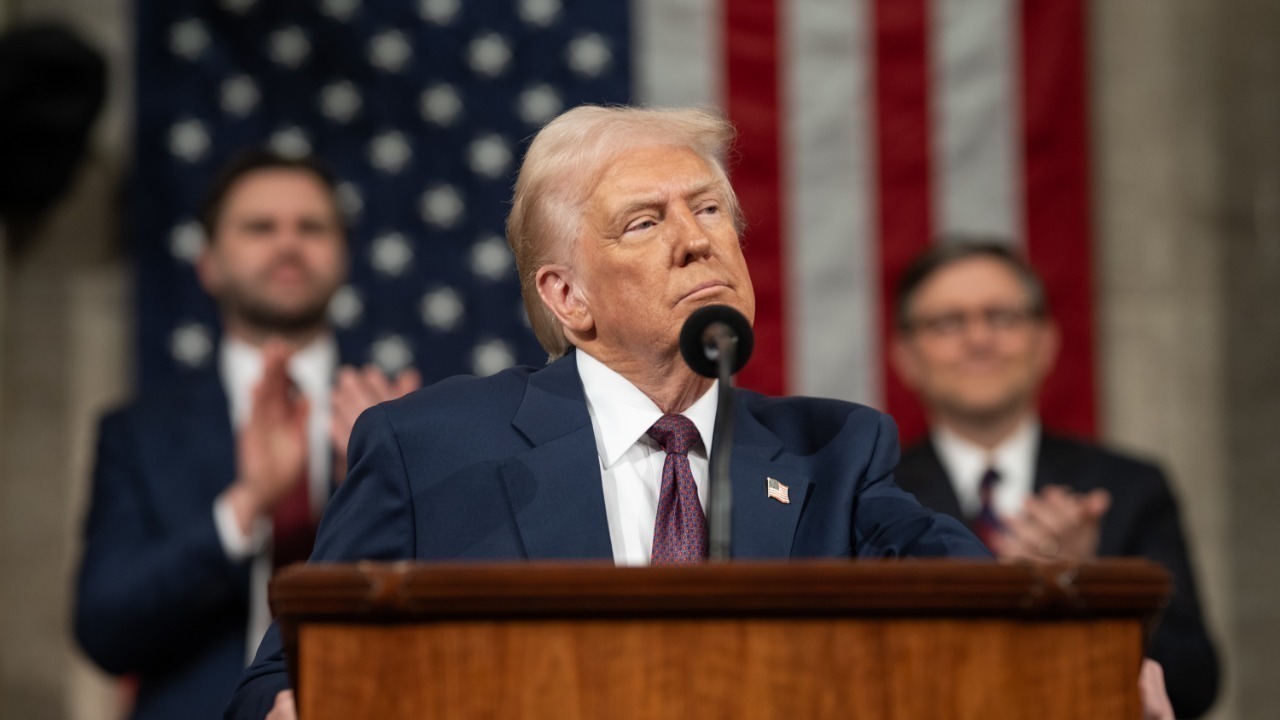
President Trump has publicly floated a plan to send every American a $2,000 “tariff dividend” check, suggesting he could do it without congressional approval. The idea, described in an Associated Press report, has drawn sharp criticism from fiscal analysts who call the math unworkable and the legal theory constitutionally suspect. If the money somehow arrives anyway, the practical question shifts fast: what should you actually do with it?
What the $2,000 Tariff Dividend Actually Promises
The core idea is straightforward on its surface. Tariff revenue collected by Customs and Border Protection would be redirected from the federal treasury into individual checks mailed to American households. Trump framed the proposal as a direct benefit of his trade policy, positioning tariff income as a kind of national profit-sharing program. The comparison to Alaska’s Permanent Fund Dividend, which distributes oil royalties to state residents, has floated around the idea since it first surfaced. But Alaska’s program draws on a dedicated state-owned resource fund with decades of legal precedent behind it. No federal equivalent exists for tariff receipts.
The scale of the promise is where the concept starts to buckle. Sending $2,000 to every American adult would carry a projected cost of roughly $600 billion, according to expert estimates cited by the AP. That figure far exceeds what annual tariff collections have typically generated. The gap between what tariffs bring in and what the checks would cost is not a rounding error. It is hundreds of billions of dollars wide, and no official feasibility assessment from the Treasury Department or Congressional Budget Office has been published to close it.
The Constitutional Wall: Why “Without Congress” Hits a Dead End
Trump’s claim that he can deliver the checks without Congress runs headfirst into the Appropriations Clause of the Constitution, which grants the legislative branch sole authority over federal spending. Tariff revenue, once collected, flows into the general fund of the U.S. Treasury. It does not sit in a discretionary executive account. The libertarian-leaning Cato Institute published an analysis calling the proposal “pure fiscal fantasy” and concluded that congressional action would be required before any checks could be issued. That assessment aligns with longstanding constitutional interpretation: presidents collect revenue, but only Congress decides how to spend it.
No direct statements from administration officials have surfaced in official records explaining how the executive branch would bypass appropriations law. As the AP notes, the proposal’s viability is also entangled with the scope of presidential tariff authorities that have faced court scrutiny in recent years. If courts narrow that authority, the revenue base that supporters point to for funding a hypothetical dividend could shrink dramatically.
Tariff Revenue on Paper vs. Tariff Revenue in Practice
The federal government does track tariff income in near-real time. The Daily Treasury Statement, published by the Bureau of the Fiscal Service, reports receipts and outlays on a daily basis, and tariff-related deposits appear in those cash operations figures. The DTS is the closest thing to a live scoreboard for federal revenue, and it can be used to monitor customs duties receipts over time. But “rising” and “sufficient to fund $600 billion in direct payments” are two very different things.
Even aggressive tariff collection would be unlikely to generate enough revenue to cover the proposed dividend without either massive new duties or significant cuts elsewhere in the federal budget. The Cato Institute’s analysis situated the dividend against the existing fiscal year 2025 deficit, noting that the program would add enormously to an already strained balance sheet. Framing tariff income as free money available for redistribution ignores the fact that those dollars are already accounted for in federal budgeting. Pulling them out for checks would open a hole somewhere else.
The Fallback Authority and Its Tight Limits
If broad tariffs are struck down or narrowed by federal courts, the executive branch does have alternative statutory tools, but they come with significant constraints. Section 122 of the Trade Act of 1974 grants the president temporary import surcharge authority, but it caps any surcharge at 15% and limits its duration to 150 days. That is a far cry from the sweeping tariff rates that would be needed to generate hundreds of billions in new revenue.
The practical difference matters enormously. Under broad tariffs, an administration can point to large headline collection numbers. Under Section 122, the math collapses further. A 15% surcharge applied for five months would produce a fraction of the revenue needed, and the authority could expire before a single dividend check could be designed, printed, and mailed. The fallback, in other words, is less a viable alternative and more a demonstration of how dependent the entire proposal is on tariff authorities that may face legal constraints.
Why the “Dividend” Framing Changes the Political Calculus
Strip away the fiscal arithmetic for a moment and consider what the proposal accomplishes as a political message. By attaching a dollar figure to trade policy, Trump has personalized an abstract economic debate. Tariffs are typically discussed in terms of trade deficits, supply chains, and retaliatory cycles. A $2,000 check makes the argument tangible. It tells voters that protectionism has a direct personal upside, which is a framing that traditional economic arguments against tariffs have struggled to counter.
More broadly, the dividend proposal may never become law, but it can shift the burden of proof in the public debate. Opponents may have to explain why Americans should not receive money that the government is collecting. That can be a harder argument to win in public than “tariffs raise consumer prices,” even though both statements can be true simultaneously. The rhetorical move is effective precisely because it does not need to be implemented to influence how voters think about trade policy. It reframes tariffs as a benefit rather than a cost, and that reframing could outlast the proposal itself.
If a Check Actually Arrives: Practical Steps
Suppose, against the odds, some version of this payment materializes. The first thing to understand is that the tax treatment of government payments depends on how Congress structures them in law and how the IRS classifies them. The COVID-era Economic Impact Payments were structured as advance tax credits, which is why they were not taxed. If a future “tariff dividend” were not set up similarly, it could be taxable for some recipients. Before spending the money, consider setting some aside until you can confirm the tax treatment (for example, by checking IRS guidance or consulting a tax professional).
Beyond taxes, the best use of an unexpected windfall depends on individual circumstances, but a few principles hold broadly. Paying down high-interest debt, particularly credit card balances, delivers an immediate guaranteed return. For those without outstanding debt, parking the money in a high-yield savings account preserves optionality while earning interest. A common mistake is treating it as found money and spending it on discretionary purchases before understanding any tax implications.
The Gap Between Promise and Delivery
The distance between a social media announcement and a check in your mailbox is measured in constitutional law, congressional votes, and federal budgeting realities. No mechanism currently exists for the executive branch to redirect tariff revenue into individual payments without legislative authorization. The projected cost of the program exceeds plausible tariff collections by a wide margin. And if courts narrow key tariff authorities, that could reduce the revenue supporters cite for funding a dividend.
None of that means the idea disappears. Political proposals that resonate with voters have a way of evolving into legislative negotiations, even when the original version is unworkable. A scaled-down version, perhaps a smaller payment tied to specific revenue targets, could theoretically be debated in Congress if lawmakers chose to pursue it. But the $2,000 figure, delivered without Congress, funded entirely by tariffs? Based on the critiques outlined by the AP’s sources and the Cato Institute analysis, that version exists today as a political promise rather than an implementable plan.
More From The Daily Overview
*This article was researched with the help of AI, with human editors creating the final content.

Cole Whitaker focuses on the fundamentals of money management, helping readers make smarter decisions around income, spending, saving, and long-term financial stability. His writing emphasizes clarity, discipline, and practical systems that work in real life. At The Daily Overview, Cole breaks down personal finance topics into straightforward guidance readers can apply immediately.

