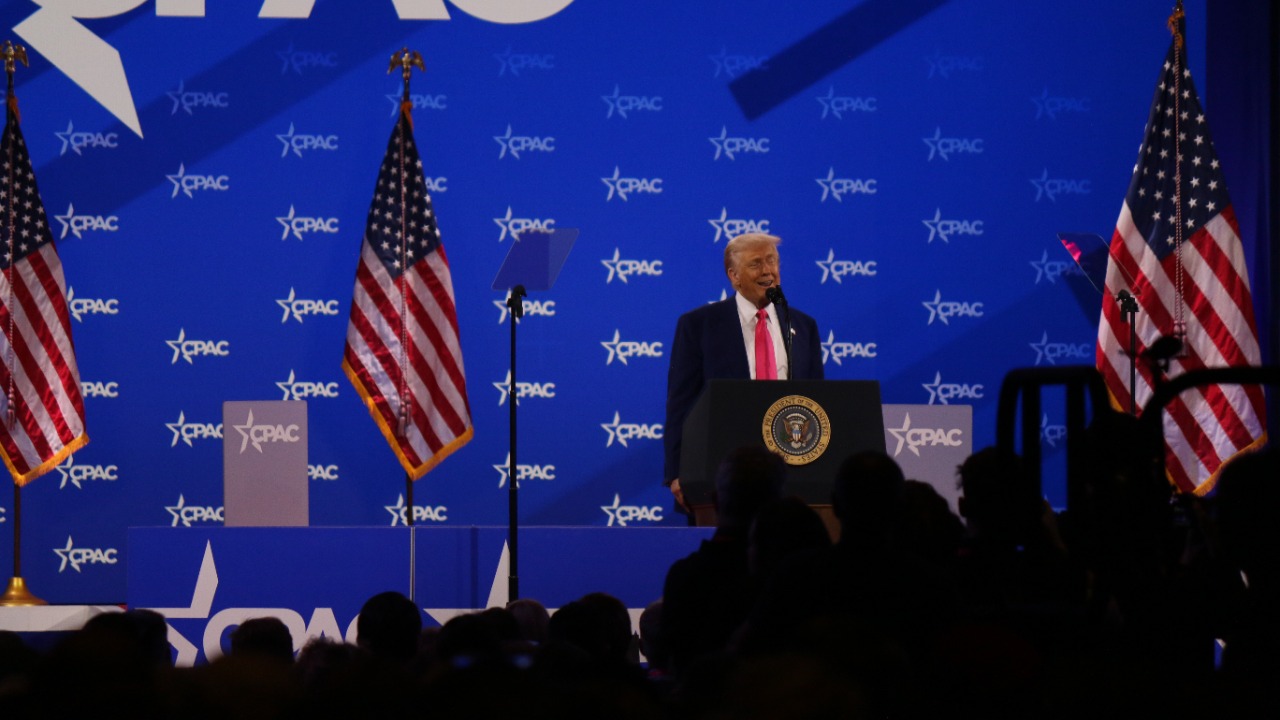
When President Donald Trump promised voters he would cut energy prices in half within a year, he turned a kitchen-table worry into a central test of his second term. Nearly twelve months on, the reality facing households is more complicated, with some costs easing at the pump while electricity and other bills keep grinding higher. The gap between the sweeping pledge and the stubborn numbers is now one of the clearest measures of how hard it is to bend global energy markets to a political timetable.
What Trump actually promised on energy
The starting point for judging the record is the scale of the promise itself. On the campaign trail, Trump told supporters that his administration would “slash prices by half within 12 months, maximum of 18 months,” turning a broad complaint about inflation into a specific benchmark for electricity, gasoline and home energy bills. At rallies in Sep, he framed the goal as a near-immediate payoff from loosening regulations on oil, gas and power producers, presenting it as a straightforward matter of political will rather than a complex mix of global supply, infrastructure and weather risk.
That message resonated with voters who had watched utility bills and fuel costs climb, but it also set an unusually rigid clock on a sector that typically moves in cycles measured in years. Analysts who follow power markets warned early that the math did not add up, pointing to the long lead times for new drilling, pipelines and power plants, and to the fact that many electricity contracts are locked in well ahead of time. Even before Trump took office for his second term, experts were already questioning whether any president could deliver a 50 percent cut in such a short window, a skepticism that would only grow as the details of his plan came into focus.
Electricity prices: rising instead of falling
Nowhere is the gap between rhetoric and reality more visible than on the monthly power bill. Instead of falling by half, electricity prices have continued to climb, and in some regions they are rising at roughly twice the pace of overall inflation. The cost of natural gas for power generation is projected to stay elevated, and utilities are passing through higher expenses tied to fuel, grid congestion and new equipment to harden lines against storms. Rather than a sudden windfall for consumers, the early effect of Trump’s policies has been to collide with structural pressures that were already pushing electricity costs higher, a trend detailed in reporting on power prices.
Those structural pressures are not easily reversed by executive orders. Utilities are investing heavily in grid upgrades after a series of extreme weather events, and those capital costs are baked into rates for years. At the same time, demand for electricity is growing as more homes add air conditioning, more drivers plug in electric vehicles and more data centers chew through power for artificial intelligence and cloud computing. Professor James Sweeney, an energy economist cited in one analysis, put it bluntly, saying “It was technically impossible [to halve prices] at the time he made the promise,” a judgment that reflects how locked-in many of these costs are for both utilities and large industrial users of electricity. That assessment of what was feasible for electricity underscores why the pledge was always on a collision course with the underlying economics.
Gasoline and home energy: some relief, not a halving
At the gas pump, the story is more mixed. Drivers have seen some relief compared with the spikes that helped fuel voter anger, and Trump’s allies point to expanded drilling approvals and a friendlier posture toward domestic oil production as reasons for that easing. But the numbers still fall far short of the promise to cut energy prices in half. Analyses of retail fuel costs show that while gasoline has retreated from its peaks, it has not dropped by 50 percent across the board, and in many parts of the country prices remain well above pre-pandemic norms. A detailed look at pump prices under Trump’s second term concludes that “Gasoline Prices Show Some Relief” but explicitly notes they are not “in half as Trump promised,” a verdict laid out in coverage of where energy prices are today.
Home heating and broader household energy costs tell a similar story of partial improvement rather than dramatic transformation. Natural gas prices for residential customers have moderated from their worst spikes, and some families have benefited from milder winters or efficiency upgrades like better insulation and newer furnaces. Yet when I look across the full basket of energy expenses that matter to a typical household, from the fuel in a 2022 Ford F-150 to the electricity that keeps a heat pump running, the data show incremental shifts rather than the sweeping halving that Trump Said He would deliver. Nearly a year into his second term, reporting on how energy costs under Trump have evolved describes a landscape where some bills are less punishing than they were at their peak, but the overall burden remains high enough that voters still feel squeezed.
Why experts doubted the pledge from day one
The skepticism that greeted Trump’s vow did not come from partisan reflex alone. Energy economists and industry executives pointed out that even a president who is determined to unleash fossil fuel production cannot control the global price of oil, the pace of investment by private companies or the weather patterns that drive demand. In Sep, as Trump repeated his promise to cut energy costs in half within 12 months, analysts were already warning that the plan underestimated how quickly shale producers could ramp up drilling and how reluctant Wall Street had become to finance new long-lived projects. Their view was that the pledge ignored the lag between policy shifts and actual barrels of oil or cubic feet of gas reaching the market.
Those doubts were captured in early coverage that noted how Few experts believed the target was realistic, even before the administration began rolling back environmental rules and fast-tracking permits. Industry voices argued that companies would not sink billions into new wells or refineries if they feared prices would crash, and that some marginal projects were already too unprofitable to bother with, regardless of who occupied the White House. Reporting on how Few see that happening laid out a basic contradiction: the same market forces that Trump hoped would flood the world with cheap American energy also made it unlikely that producers would voluntarily drive prices down to the point where profits vanished.
The political and economic scorecard so far
Nearly a year into this experiment, the political stakes are as clear as the economic ones. Voters heard a simple promise that their energy bills would be slashed in short order, and many now judge the administration against that yardstick rather than against a more nuanced baseline of what might have happened without Trump’s policies. When I weigh the evidence, I see a record that mixes modest successes, like some easing in gasoline prices, with stubborn failures, like electricity bills that keep climbing despite the rhetoric. The net effect is that the headline pledge to halve energy costs has not been met, even if some individual line items on the household budget have stopped rising as fast.
That gap between promise and outcome carries risks for Trump as he looks ahead. Voters who built their expectations around a 50 percent cut may not be impressed by arguments that prices would have been even higher under a different administration, and they may be even less interested in hearing that global markets or extreme weather limited what the White House could do. The political lesson is that bold, time-bound guarantees on something as volatile as energy can backfire when reality intrudes. The economic lesson, underscored by experts like Professor James Sweeney and by the detailed reporting from Sep and Nov, is that no president can simply will complex systems like electricity grids, oil fields and natural gas markets to heel on a 12-month schedule.
More From TheDailyOverview

Grant Mercer covers market dynamics, business trends, and the economic forces driving growth across industries. His analysis connects macro movements with real-world implications for investors, entrepreneurs, and professionals. Through his work at The Daily Overview, Grant helps readers understand how markets function and where opportunities may emerge.

