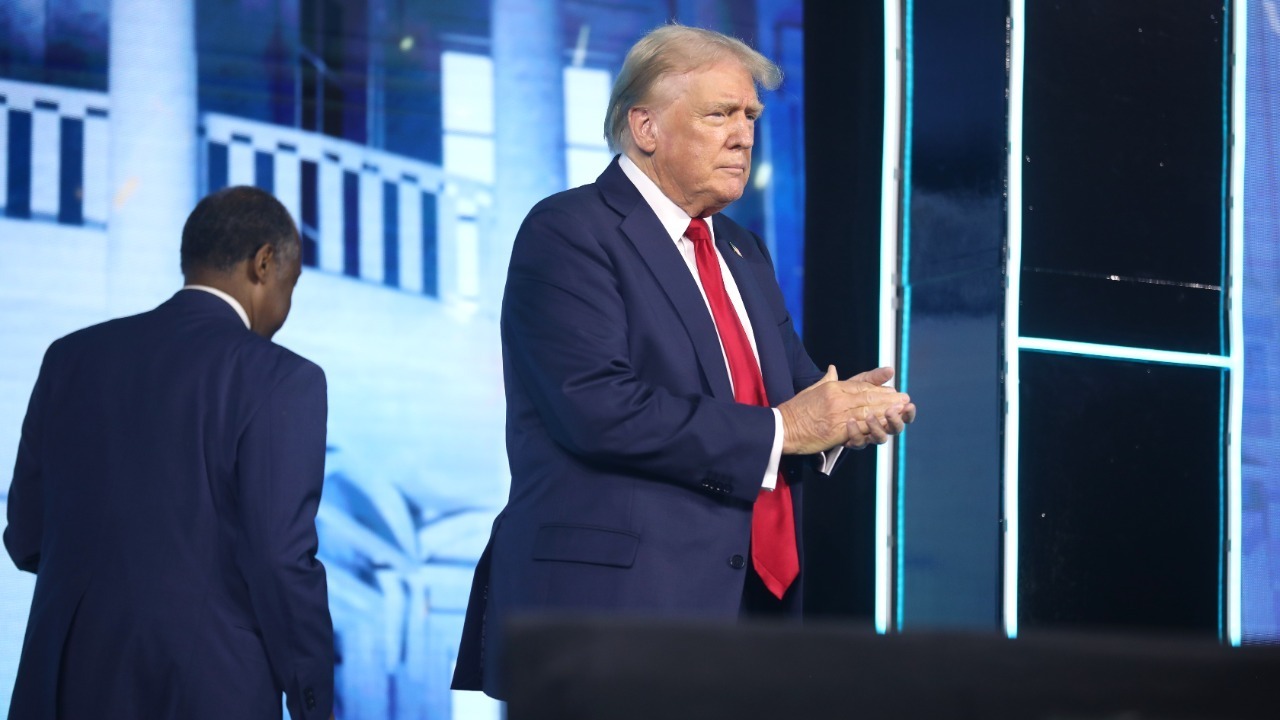
President Donald Trump is escalating his confrontation with Europe just as global investors revive the “Sell America” trade that first rattled markets in 2025. His warning of “big retaliation” if European governments dump U.S. bonds comes alongside a widening blacklist strategy that now stretches from foreign ports to political rivals and corporate giants. Together, these moves are reshaping how allies, markets and domestic opponents calculate the risks of crossing the White House.
The result is a feedback loop: as Trump threatens more punishment, investors and foreign leaders look for exit ramps from U.S. exposure, which in turn fuels even harsher rhetoric about retaliation. I see a presidency increasingly defined by lists, lawsuits and leverage, with the “Sell America” mood serving as both a symptom and a catalyst of that shift.
From tariffs to “big retaliation” against Europe
Trump’s latest warning of “big retaliation” if European governments offload U.S. Treasury holdings crystallizes how far his trade brinkmanship has moved from tariffs into the core of global finance. In his recent comments, President Donald Trump acknowledged that European countries hold significant U.S. Treasury securities, then threatened severe countermeasures if they coordinate a selloff, a stance that directly links foreign reserve management to political loyalty and raises the stakes for any move to diversify away from dollar assets linked to the Treasury.
That threat lands on top of renewed tariff salvos that have already put European equities under pressure and pushed investors toward safe-haven currencies. Earlier this week, renewed tariff threats by the United States against European goods helped drive a pullback in U.S. stocks as European equities fell, the dollar weakened and investors reassessed how far a new round of trade conflict could go. Just as European companies were getting used to last year’s hard-won tariff arrangements, President Donald Trump has now put them back on edge, with European manufacturers again bracing for higher costs and disrupted access to the U.S. market.
The “Sell America” trade returns to center stage
Those policy shocks are reviving a pattern that traders started calling Sell America in 2025, when global funds began cutting exposure to U.S. stocks, corporate bonds and Treasuries in response to political and economic uncertainty. The term Sell America describes a broad investment trend, beginning in April 2025, in which investors reduced holdings of U.S. assets including equities and government bonds, a shift that reflected growing doubts about the stability of American policy and is now resurfacing as Trump’s confrontations with allies intensify, according to the Sell America definition.
Over the past week, that mood has been amplified by Trump’s threats to blow up NATO over his revived push to acquire Greenland, a gambit that has unsettled both diplomats and traders. Markets do not panic easily, but talk of undermining NATO in the context of an attempted island purchase has been enough to jolt risk sentiment, with Markets suddenly questioning whether the current transatlantic relationship is sustainable over the long run. On Wall Street, coverage framed the president’s stance toward Europe as so tough that it is unsettling investors in “Your Money” segments, with one report noting that the president’s posture toward Europe is angling for a deal but instead is driving a fresh wave of selling in U.S. assets.
Blacklists move from rhetoric to governing tool
While markets focus on tariffs and bonds, Trump is also expanding his formal power to blacklist foreign infrastructure that touches the U.S. economy. A new bill moving through Congress would give him authority to bar ships from using certain foreign ports and terminals if they are deemed security risks, as long as those facilities are accessible through land owned, held or controlled by a U.S. citizen or corporation, a structure that effectively extends U.S. leverage deep into foreign ports. Under the leadership of Mexico’s current government, some cross-border terminals that were not included in the original bill have now been pulled into the debate, highlighting how the measure could reshape logistics networks that rely on Jan agreements and binational infrastructure.
At the same time, Donald Trump’s administration has tightened export controls on Chinese companies, making it harder for them to circumvent existing rules and increasing the likelihood that any firm caught violating restrictions will be automatically added to a U.S. blacklist. Semiconductor industry groups have warned that the latest measures, adopted under Donald Trump, could accelerate the decoupling of supply chains and push Chinese manufacturers to develop alternatives outside the reach of U.S. regulators. I see these moves as part of a broader pattern in which blacklists are no longer exceptional tools but a routine instrument of economic statecraft.
Retribution lists at home: from governors to bankers
Abroad, Trump is threatening allies with tariffs and bond-market retaliation; at home, he is building a different kind of list. In the year since Trump’s return to office, his administration has targeted a range of individuals, including Federal Reserve Governor Lisa Cook, in ways that critics see as fulfilling his campaign pledge that he would seek retribution if reelected, a pattern documented in a Jan review of those singled out. The list spans civil servants, regulators and political opponents, reinforcing the perception that loyalty to Trump personally is becoming a key filter for who faces scrutiny from federal power.
That logic has now reached Wall Street. It was reported that U.S. President Donald Trump filed a $5 billion damages lawsuit against JPMorgan Chase and CEO Jamie Dimon, accusing the bank of discriminating against him and his businesses because of their association with a particular political orientation, a claim that turns a private banking dispute into a high-profile political confrontation with Chase and CEO. In a separate account, the case was framed as part of a broader pattern in which Trump Sues JPMorgan Chase for Billions as Revenge Quest Continues, with commentator Hafiz Rashid noting that the bank had previously told Trump it was closing his accounts, a move that helped set the stage for the current legal clash described as Trump Sues JPMorgan Chase for Billions as Revenge Quest Continues by Hafiz Rashid on a Thu analysis.
The political retribution theme is not confined to financial elites. Trump’s list of targeted opponents has grown longer with action against Minnesota’s governor, a move that followed his vow that “The vicious, violent and unfair weaponization of the Justice Department and our government will end,” a line he delivered while promising to turn the tables on those he accuses of persecuting him. Reporting on that episode noted that the president’s allies have cheered his willingness to go after state leaders in the Minneapolis–St. Paul area, even as critics warn that the use of the Justice Department and other levers of federal power risks turning routine policy disputes into existential political battles, with 202 style score-settling overshadowing normal governance.
Markets, allies and the risk of a spiral
Financial markets are already signaling how uneasy they are with this mix of external threats and internal scorekeeping. Live coverage of global trading this week highlighted how tariff tensions briefly cooled only after business leaders told CNBC that Europe must consider retaliating against what they described as Trump’s “blackmail,” a warning delivered on the sidelines of a high-profile meeting in Davos and captured in CNBC market updates. That kind of language from corporate leaders, who usually prefer diplomatic phrasing, shows how Trump’s tactics are forcing even cautious executives to talk openly about the risk of a transatlantic rupture.
More From TheDailyOverview
*This article was researched with the help of AI, with human editors creating the final content.

Grant Mercer covers market dynamics, business trends, and the economic forces driving growth across industries. His analysis connects macro movements with real-world implications for investors, entrepreneurs, and professionals. Through his work at The Daily Overview, Grant helps readers understand how markets function and where opportunities may emerge.

