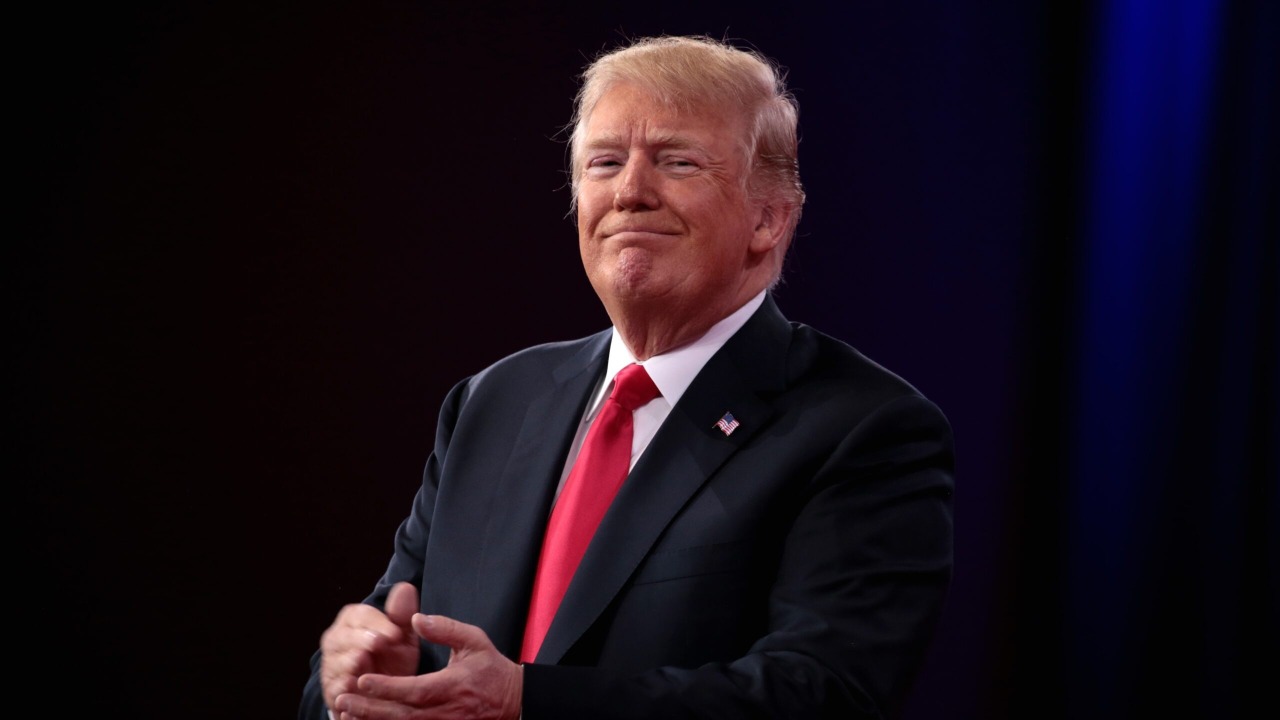
President Donald Trump responded to a stinging Supreme Court defeat over his global tariffs by immediately signing a proclamation to impose new import duties under a different legal authority, vowing to push rates as high as 15 percent. The rapid pivot, which came within hours of a 6-3 ruling that struck down his broader trade measures, has left businesses uncertain about billions of dollars in potential refunds and raised fresh questions about the legal and economic durability of the administration’s trade agenda.
A New Legal Pathway After the Court’s Rebuke
Rather than accept the Supreme Court’s decision as a constraint, the administration turned to Section 122 of the Trade Act of 1974, a statute that permits the president to impose temporary import surcharges and quantitative restrictions when the country faces balance-of-payments problems or “large and serious” trade deficits. The law caps any surcharge at 15 percent and limits its duration to 150 days unless Congress votes to extend it. It is a narrow tool, designed for short-term economic emergencies, and it had never been deployed at this scale, making the move a test of how far a president can stretch a little used provision to sustain an expansive trade confrontation.
Trump’s new proclamation framed the surcharge as a response to fundamental international payments problems caused by persistent U.S. trade deficits. A companion White House fact sheet described the measure as an effort to incentivize domestic production and reduce reliance on foreign suppliers. At the same time, officials signaled they are exploring alternative pathways under other trade statutes, including Sections 301 and 232, suggesting the Section 122 order may be a bridge to longer-lasting tariff authority. That combination of legal improvisation and escalatory rhetoric is what has unsettled markets and trading partners alike, who now must parse a complex menu of possible future restrictions.
Conflicting Signals on the Tariff Rate
One source of confusion for businesses and investors is the gap between what Trump said and what the initial order appears to do. According to reporting from the Associated Press, Trump stated he would raise tariffs to 15 percent after the Supreme Court ruling. The Section 122 statute does allow surcharges up to that ceiling. Yet multiple reports described the signed order as imposing a 10 percent global tariff under different authority, with the 15 percent figure framed as a target the administration intends to reach if economic conditions or political calculations warrant. The Supreme Court’s 6-3 ruling, described as a rare instance of the judiciary imposing a check on presidential trade power, did little to clarify how quickly the administration might escalate to the higher rate.
That discrepancy matters because it shapes how importers calculate costs and whether companies adjust supply chains. If the rate starts at 10 percent and climbs to 15 percent, the timeline and triggers for that increase are unclear, complicating contract negotiations and pricing decisions that often stretch months into the future. If the surcharge expires after 150 days with no congressional extension, businesses face the prospect of paying elevated duties now only to see them vanish in roughly five months, a horizon that is too short for many firms to justify costly re-shoring or supplier shifts. The uncertainty is compounded by the possibility that the administration layers Section 301 or 232 actions on top of the Section 122 surcharge, creating overlapping tariff regimes with different legal foundations, coverage lists and expiration dates that could vary by country and product.
$133 Billion in Limbo and the Refund Question
The court’s ruling did not just block future tariffs. It also cast doubt on duties already collected. According to analysis from the Wall Street Journal, the decision puts $133 billion in tariff revenue in a state of limbo, with companies already engaged in litigation seeking to recover what they paid under the now-invalidated authority. If courts ultimately order the government to refund a significant share of that sum, the fiscal consequences could be severe, forcing the Treasury either to cut other spending, raise additional debt, or find new revenue sources at a time when the deficit is already elevated.
An analyst quoted by the New York Times captured the worry directly: “The move probably reflects heightened fiscal concerns,” the analyst said, as markets fret over potential refunds that could create a fiscal hole at a time when federal borrowing costs remain elevated. The refund question is not abstract. Companies that paid duties on goods imported over the past year are now calculating whether they have legal standing to claw that money back, and the administration has offered no public guidance on how or whether refunds would be processed. Trade lawyers expect a wave of new claims and class actions, adding years of legal wrangling to an already complex policy reversal.
Wall Street’s Muted Relief and Deeper Anxiety
The initial market reaction to the Supreme Court ruling was positive but short-lived. U.S. stock indexes surged briefly on the news, with the Dow Jones Industrials ending up 231 points, or 0.8 percent, and the S&P 500 closing up 0.6 percent on February 20, according to contemporaneous market coverage. Traders had largely priced in a Supreme Court defeat for the president, and the ruling removed the immediate threat of even broader tariffs that some investors had feared. Shares of large import-dependent retailers and manufacturers rose on hopes that at least part of their cost burden might be lifted if duties were unwound or refunded.
But the calm in equity markets obscures a deeper anxiety about what comes next. The rally reflected relief that the most aggressive tariff regime had been struck down, not confidence in the replacement. Bond markets, where fiscal risk tends to show up more quickly, have been less sanguine. Yields on longer-dated Treasurys remained elevated, reflecting concerns that tariff-related uncertainty, coupled with the potential $133 billion refund overhang, could complicate an already delicate fiscal outlook. In currency markets, data from major trading platforms showed only modest moves in the dollar, suggesting that investors are still weighing whether the new surcharges will meaningfully alter trade flows or simply reshuffle the timing and composition of imports.
Global Repercussions and the Policy Road Ahead
Abroad, the response has been wary rather than openly confrontational. Trading partners that had braced for a prolonged legal battle over the original tariffs are now digesting a narrower but still sweeping surcharge that, by design, is temporary. Some officials fear that even a 150-day measure could become a rolling fixture if Congress repeatedly extends it or if the White House quickly pivots to more durable authorities like Section 301. Others worry that the United States is normalizing the use of emergency trade tools for long-term structural aims, eroding the credibility of commitments made at the World Trade Organization and in bilateral agreements.
Central banks and finance ministries are also watching the interaction between trade policy and monetary conditions. A research service focused on policy-sensitive investors noted that clients are tracking how tariff uncertainty feeds into inflation expectations and term premiums, with tools like the Monetary Policy Radar highlighting that policymakers are reluctant to ease if supply-side shocks re-emerge. For now, officials see the new surcharges as more of a confidence shock than a direct inflationary impulse, given their temporary design and the possibility that some duties will ultimately be refunded. Yet if the administration follows through on threats to ratchet rates up to 15 percent and layer additional measures on top, the line between short-term bargaining tactic and semi-permanent protectionism will blur, forcing both markets and policymakers to adjust to a more volatile trade regime.
More From The Daily Overview
*This article was researched with the help of AI, with human editors creating the final content.

Grant Mercer covers market dynamics, business trends, and the economic forces driving growth across industries. His analysis connects macro movements with real-world implications for investors, entrepreneurs, and professionals. Through his work at The Daily Overview, Grant helps readers understand how markets function and where opportunities may emerge.

