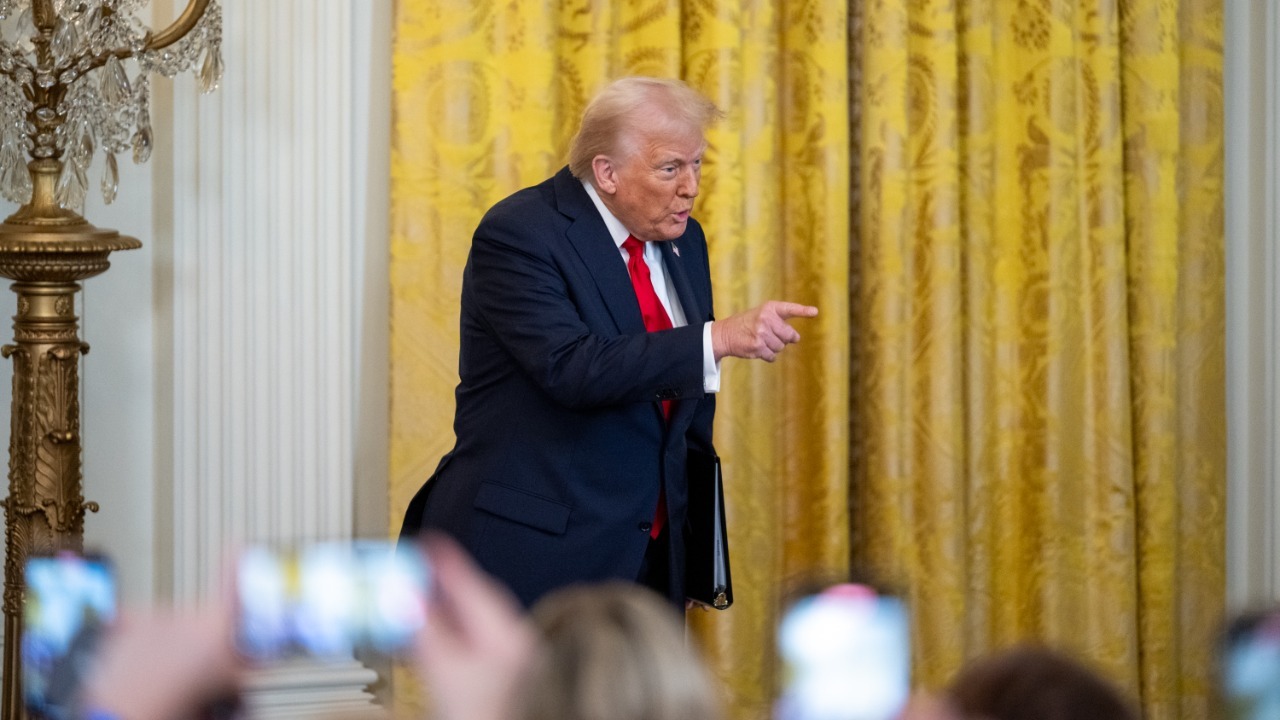
President Donald Trump has escalated his hard line on immigration with a sweeping promise to “permanently pause” migration from what he calls “Third World Countries,” turning a long-running political fight into an existential test of how the United States defines its borders and its values. His vow, delivered in the wake of a deadly shooting involving National Guard members, goes far beyond past travel bans or refugee caps and points toward a fundamental reshaping of who is allowed to enter the country at all. The pledge is already rippling through asylum processing, visa policy, and the broader debate over whether the US remains a nation that welcomes immigrants.
Trump’s language is deliberately blunt, casting poorer nations as a security and cultural threat and promising to shut off migration from them as a matter of national survival. I see this as both a policy marker and a political signal, one that aligns with his earlier efforts to restrict legal immigration while leaving many of the legal and practical details unresolved.
Trump’s vow and the shock of a “permanent” pause
Trump’s latest promise is striking not only for its scope but for its permanence. He has said he will “permanently pause migration from all Third World Countries to allow the U.S. system to fully recover,” framing the move as a kind of emergency brake on a system he argues is overwhelmed. That language, reported as part of his pledge on Nov 27, 2025, signals a shift from temporary crisis measures to a standing doctrine that treats entire categories of countries as permanently off-limits.
In a separate formulation of the same promise, Trump’s words were quoted as “I will permanently pause migration from all Third World Countries to allow the US system to fully recover,” a line that appeared in coverage grouped under Recommended Stories and tied to the same Nov 27, 2025 timeline. I read that repetition as intentional: the phrase “permanently pause” is doing political work, reassuring his base that this is not another short-lived executive action but a long-term reordering of migration flows, even as the legal path to making such a pause truly permanent remains uncertain.
The National Guard shooting and a fast-moving policy response
The immediate trigger for Trump’s vow was a violent episode that his allies have seized on as proof that the current system is broken. Reporting describes “a suspected shooter who targeted two National Guard members on Wednesday” in Washington, a detail that anchors the pledge in a specific act of bloodshed rather than in abstract fears. That connection is explicit in coverage noting that Trump’s promise to “permanently pause migration from all Third World Countries” came after the National Guard shooting on Wednesday, which he has used to argue that the risk of admitting migrants from poorer nations is intolerable.
Other accounts echo that sequence, describing how Trump said he would “permanently pause” migration from “third world countries” after a national guard shooting, and identifying him as “Donal” Trump in one instance that still clearly refers to the president. That framing, captured in a report dated Nov 27, 2025, underscores how quickly a single violent act can be leveraged into sweeping national policy. I see a familiar pattern here: a high-profile crime, followed by a rapid pivot to broad restrictions that reach far beyond the individuals involved.
From social media screed to governing agenda
Trump’s promise did not emerge from a formal policy rollout so much as from a burst of online rhetoric that has since hardened into an agenda. One account describes how President Donald Trump used a social media “screed” to vow that he would “permanently pause” migration from poor nations, presenting the idea as a direct response to perceived chaos at the border and in US cities. That description, tied to coverage dated Nov 27, 2025, highlights how the president’s online posts now function as de facto policy announcements, with agencies and allies scrambling to interpret and operationalize them.
In another detailed breakdown, reporter Liz Landers notes that Trump’s post included “a series of pledged reforms, including, but not limited to a permanent pause on migration” from poorer countries, again pegged to Nov 27, 2025. I read that as evidence that the “permanent pause” is part of a broader package, not a standalone idea: it sits alongside promises to tighten asylum, cut benefits, and reshape who counts as welcome in the United States, even as the administration has yet to spell out how each piece would work in practice.
What “Third World Countries” means in practice
Trump’s use of the phrase “Third World Countries” is both politically charged and operationally vague. In one detailed explainer, the policy is described as a pause on immigration from “Third World” countries, with coverage dated Nov 27, 2025 and noting that countries with a full ban could face an “irreversible condition.” That phrase suggests a blacklist that is not easily lifted, raising the stakes for any nation that ends up on it and for families with ties across those borders.
At the same time, the reporting that groups his vow under “Third World Countries” in Nov 27, 2025 coverage makes clear that Trump is not using a technical development index but a political shorthand for poorer nations. In that account, he is quoted saying “I will permanently pause migration from all Third World Countries,” while also insisting that people already in the United States “should be given due process.” I see a tension here: the rhetoric paints entire regions as unsafe or incompatible, while the nod to due process acknowledges legal constraints that will complicate any attempt to turn that rhetoric into a blanket ban.
Immediate fallout: asylum and visas in the crosshairs
Even as the legal architecture of a permanent pause remains hazy, the federal bureaucracy is already shifting in ways that reflect Trump’s priorities. One report describes how the U.S. government has halted all asylum decisions and paused visas for individuals traveling on Afghan passports, with the decisions coming a day after President Donald Trump vowed to “permanently pause migration from all Third World Count” on Nov 28, 2025. That sequence, detailed in an account of how the U.S. halts all asylum decisions, shows how a broad political vow can quickly translate into specific administrative choke points.
Another report notes that, in parallel, the State Department has “immediately” paused issuing visas for travelers with Afghan passports, a move tied to the same Nov 27, 2025 timeline and described as part of how the administration plans to accomplish Trump’s goals. That detail appears in coverage explaining that Additionally, State Department officials have been instructed to align visa policy with the president’s vow. I read these steps as early test cases: by targeting asylum adjudications and Afghan travelers first, the administration can claim it is acting decisively while it works out how far it can push the broader “Third World” pause under existing law.
Legal migration under pressure and details still scarce
Trump’s promise is not limited to people crossing the border without authorization. He has also threatened aggressive actions to curtail legal migration, signaling that family reunification, employment visas, and humanitarian programs could all be squeezed. A detailed analysis dated Nov 27, 2025 notes that President Donald Trump has pledged strict immigration curbs even as the specifics remain scarce, with “Takeaways” compiled by Bloomberg AI highlighting how far-reaching the impact could be if the administration follows through.
That scarcity of detail is itself a feature of Trump’s style. By sketching a maximalist goal and leaving the implementation fuzzy, he keeps supporters energized while giving his team room to test the limits of executive power. I see echoes of earlier fights over travel bans and refugee caps, where the administration pushed out sweeping orders, then adjusted under court pressure. The difference now is the scale of the ambition: a “permanent” pause on migration from poorer nations would touch everything from student visas to green cards, even if the legal system ultimately forces the White House to settle for narrower, more targeted restrictions.
Ending benefits, denaturalization, and a broader ideological project
Trump’s vow is not just about who can enter the country, it is also about reshaping the status and rights of those already here. In one account, he is reported to have said he would end all federal benefits and subsidies for “noncitizens,” a sweeping promise that would reach into programs from Medicaid to housing assistance. That same report notes that Trump added he would “denaturalize migrants who are not compatible with Western civilization,” a phrase that appears in coverage dated Nov 27, 2025 and underscores how ideological this project has become.
Those ideas go far beyond traditional debates over border security or visa quotas. Stripping “noncitizens” of federal benefits and threatening to denaturalize people who have already become Americans would mark a sharp break with long-standing norms, and would almost certainly trigger intense legal challenges. I read this as a sign that the “permanent pause” is part of a larger effort to redraw the boundary between citizen and noncitizen, and even to revisit the security of citizenship itself for people Trump deems culturally suspect. It is a vision of immigration policy that treats economic status, national origin, and cultural fit as grounds not only for exclusion at the border but for retroactive punishment inside the country.
Political theater in WEST PALM BEACH and the message to the world
Trump’s choice of venue and language underscores how much of this is aimed at a domestic political audience, even as the consequences will be felt globally. One report describes how President Donald Trump, speaking in WEST PALM BEACH, Fla, said he wants to “permanently pause migration” from poorer nations, even as he acknowledged that the United States has long defined itself as welcoming immigrants. That account, dated Nov 27, 2025, captures the tension between the country’s self-image and the hard edge of Trump’s rhetoric.
By staging the message in WEST PALM BEACH, Fla, a place associated with his political brand and his base, Trump is signaling that this is as much a campaign promise as a governing directive. Yet the words travel far beyond that audience. For families in countries he labels “Third World,” the signal is chilling: the door to the United States may be closing for good. I see that as part of the point. The language of a “permanent” pause is meant to deter would-be migrants, reassure supporters who want sharper borders, and force opponents to defend a more open system at a moment when fear and fatigue are running high.
What comes next for US immigration and global perception
Trump’s vow to permanently halt migration from poorer nations is already reshaping how allies and adversaries view the United States. Reports that the US president’s announcement came after twin shocks and that it targets “Third World” countries, tied to coverage dated Nov 27, 2025, suggest that foreign governments are already trying to understand whether their citizens will face a full ban or some lesser form of restriction. For nations that rely on remittances from workers in the United States, the prospect of an “irreversible condition” on migration is not just a diplomatic slight but an economic threat.
At home, the political and legal battles are only beginning. Trump’s own allies concede that details remain scarce, even as they celebrate the toughness of the message. Critics, including immigration lawyers and civil rights groups, are preparing to challenge any attempt to turn a social media screed into a permanent reordering of who can come to the United States. I see the coming months as a test of how far a president can go in using broad, stigmatizing categories like “Third World Countries” to reshape policy, and of whether the country is willing to accept a future in which birthplace and poverty become near-absolute bars to entry.
More From TheDailyOverview
- Dave Ramsey warns to stop 401(k) contributions
- 11 night jobs you can do from home (not exciting but steady)
- Small U.S. cities ready to boom next
- 19 things boomers should never sell no matter what

Grant Mercer covers market dynamics, business trends, and the economic forces driving growth across industries. His analysis connects macro movements with real-world implications for investors, entrepreneurs, and professionals. Through his work at The Daily Overview, Grant helps readers understand how markets function and where opportunities may emerge.

