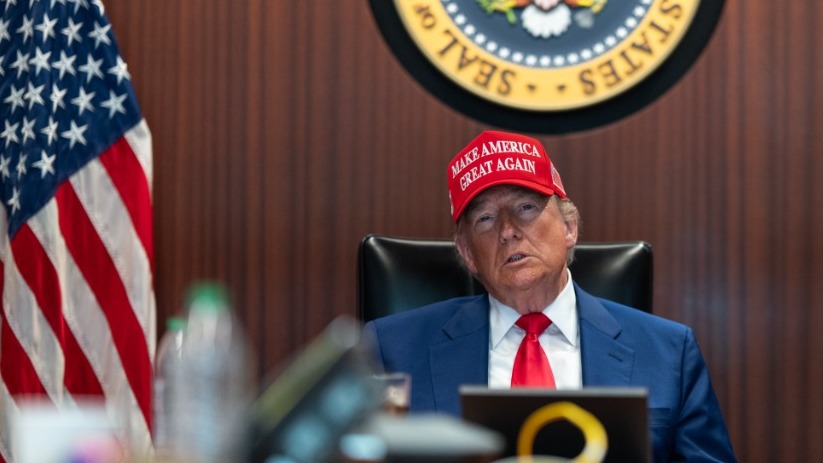
President Donald Trump has moved to recast the housing market as a battleground between Wall Street landlords and aspiring homeowners, positioning himself as a defender of the American Dream against deep-pocketed investors. By sharply limiting how large financial firms can buy single-family houses, he is promising more starter homes for families and, in the process, opening new angles for smaller investors who are willing to play by Main Street rules.
The stakes are enormous: single-family homes remain the primary way American households build wealth, and the administration is betting that pushing institutional buyers to the sidelines will free up inventory, cool rent-seeking behavior, and give first-time buyers a fighting chance. Whether that vision holds, and who ultimately profits, will depend on how regulators implement the new rules and how quickly ordinary buyers and small investors adapt.
The new Executive Order and Trump’s populist housing pitch
At the center of the shift is an Executive Order that President Donald Trump signed earlier this week, framed explicitly as a move to stop Wall Street from competing with Main Street homebuyers. The stated policy is to preserve the supply of single-family homes for American families by curbing institutional investors that acquire or hold properties that would otherwise be purchased by families. A detailed White House Fact describes how the administration wants to stop large firms from buying or holding single-family homes at scale, casting the move as a way to protect homeownership opportunities rather than rental portfolios.
The order is also being sold as a direct defense of the American Dream. One summary of the move notes that President Donald Trump signed what has been described as an “Order To Make Homeownership Affordable Again,” explicitly tying the crackdown on Wall Street firms to a promise to protect first-time buyers and young families. Another account of the Executive Order quotes The Trump Administration calling homeownership the “bedrock of the American dream,” underscoring how central this narrative has become to the president’s economic message.
How the crackdown works: sidelining Wall Street landlords
The mechanics of the policy are designed to hit large investors where they operate most aggressively, in bulk purchases of single-family homes that can be turned into rental empires. Reporting on the order explains that Trump’s order directs federal regulators to restrict Wall Street firms from buying single-family homes, particularly in situations where they might scoop up properties in bulk after a wave of foreclosures. A separate account notes that President Donald Trump signed the order on Tuesday with the explicit aim of prohibiting large institutional investors from purchasing single-family homes, effectively drawing a bright line between corporate landlords and individual buyers.
The White House has also laid out how agencies should tilt the playing field toward families. According to The Order, key agencies are instructed to promote sales to individual owner-occupants through “first-look” policies that give families an early chance to buy before investors can bid. The same document argues that institutional buyers with vast resources have been able to outbid ordinary Americans, and that limiting their role will keep more money in Americans’ pockets. A companion White House Fact reiterates that President Donald Trump is focused on Trump Stops Wall Street from Competing with Main Street Homebuyers, spelling out limits on acquiring or holding single-family homes that are meant to be occupied by families rather than managed as financial assets.
Starter homes, first-time buyers and the promise to “save” the market
The political appeal of the crackdown rests heavily on starter homes, the modest properties that have become increasingly scarce for young families. One account notes that Trump has signed a new order to stop Wall Street firms from snapping up starter homes, with the White House arguing that this will help first-time buyers who have been squeezed when big investors buy up housing stock. A similar report explains that President Trump has effectively banned Wall Street Investors from buying up single-family homes in ways that crowd out would-be first time homeowners, casting the move as an effort to “even the playing field.”
Trump himself has leaned into that framing on the global stage. Speaking at the World Economic Forum in Davos, Switzerland, President Donald Trump said he wants “people to be able to buy a home,” tying his broader economic agenda to the single-family housing market. Another summary of the order notes that Trump signed the executive order on Tuesday directing federal regulators to promote home sales to individuals and to issue guidance that reins in Wall Street landlords. In parallel, a separate Trump Housing Plans explainer aimed at Metro Detroit buyers outlines five affordability initiatives, including help with down payments, that are meant to work alongside the investor crackdown to make ownership more realistic for ordinary households.
Where small investors fit in a market tilted away from big finance
For all the focus on Wall Street, the order could also reshape opportunities for smaller investors who are willing to operate on a different scale. The official fact sheet targets institutional buyers that acquire or hold large numbers of single-family homes, not individual landlords who own a handful of properties. Another detailed analysis of The Order emphasizes that it is institutional buyers with vast resources that are seen as distorting the market, suggesting that smaller investors who buy one or two homes may face fewer direct constraints. A separate report on how President Trump signed an executive order targeting institutional investors notes that the goal is to limit competition with individual homebuyers, not to eliminate mom-and-pop landlords altogether.
That distinction matters because it hints at a new hierarchy in the rental and investment market. One overview of the policy shift explains that The Trump Administration is turning federal housing policy away from institutional buyers and back toward individual ownership, treating homeownership as the bedrock of the American dream. Another account of the crackdown notes that Trump takes on Wall Street landlords in a bid to save starter homes, with the White House arguing that limiting big landlords will help first-time buyers when investors are buying up housing stock. For small investors, that could mean more chances to buy individual properties in neighborhoods where corporate buyers had been dominant, provided they are prepared to compete on terms that prioritize owner-occupants and comply with any new first-look rules.
Unanswered questions: affordability, prices and the next policy fights
Even supporters of the crackdown acknowledge that limiting Wall Street’s role will not automatically make homes cheaper. One analysis warns that the effort to rein in Wall Street landlords could actually push US home, as investors argue that restricting one class of buyers without boosting supply might tighten the market further. A separate commentary notes that as Wall Street has bought houses, America’s young families have been locked out of homeownership and renters have been price-gouged into poverty, but it also argues that simply banning institutional investors is not a substitute for building more housing. Another report on the executive order notes that Tuesday’s order is aimed at large investors in the single-family home market, but leaves open how local zoning, construction costs and interest rates will interact with the new rules.
More From TheDailyOverview
*This article was researched with the help of AI, with human editors creating the final content.

Elias Broderick specializes in residential and commercial real estate, with a focus on market cycles, property fundamentals, and investment strategy. His writing translates complex housing and development trends into clear insights for both new and experienced investors. At The Daily Overview, Elias explores how real estate fits into long-term wealth planning.

