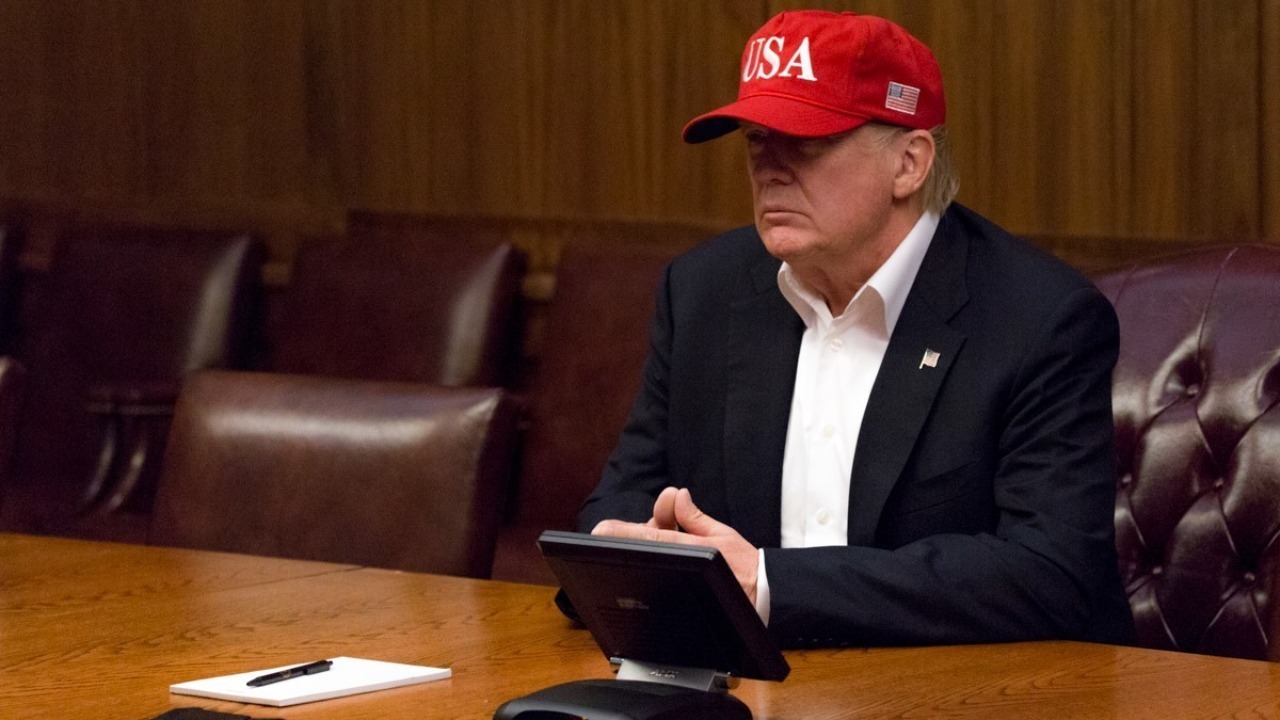
Donald Trump is telling Americans to brace for an economic shift he says the country has “never seen,” and he is pairing that warning with a promise that some households could come out far richer if they position themselves correctly. As 2026 approaches, the stakes are not just political but deeply personal, from the size of your tax refund to the value of your home and retirement portfolio. I am looking at what Trump is signaling, how the policy pieces fit together, and where ordinary investors might realistically find opportunity instead of shock.
Trump’s warning and the promise of a once-in-a-lifetime boom
Trump has started framing the next phase of his presidency as a break with economic history, telling Americans to prepare for something the United States “has never seen” and tying that language directly to the idea of getting “ready and wealthy” in 2026. In his pitch, the coming years are not just about avoiding pain, they are about seizing a rare opening to build wealth if people move early instead of waiting for clarity. That message has been amplified in coverage that describes how Trump says Americans should think about positioning their money before the policy wave hits.
The rhetoric is not just about fear of the unknown, it is also about scale. In a nationally televised address previewing his 2026 agenda, Trump has promised an economic boom that he says will be unlike anything “the world has never seen,” even as inflation has stayed elevated and the job market has weakened sharply in recent months. That contrast between bold promise and current strain is central to his argument that the payoff will justify the turbulence, and it is reflected in reporting that details how Trump has promised a historic expansion even as his popularity has waned.
The 2026 tax reset: why refunds and paychecks could swing
One of the most concrete levers behind Trump’s warning is tax policy, especially the scheduled reset of major provisions in 2026. The White House has rallied behind the One Big Beautiful Bill, formally branded as The One Big Beautiful Bill and also known as the Working Families Tax Cut, which extends and reshapes many of the 2017 tax changes that were set to expire. According to official guidance, the legislation’s Key Takeaways include an increased Child Tax Credit that rises with inflation each year, a design that could significantly boost after tax income for families who qualify.
Trump’s economic team is already selling the upside. One prominent Trump economist has predicted what he calls the “biggest refund cycle ever” in the history of America, arguing that people are going to receive “massive” checks as the new rules take hold. In that forecast, some working families could see annual tax relief between 11,000 dollars and 20,000 dollars, a range that would instantly change household budgets if it materializes. That claim, backed by analysis that wages have grown faster than prices in recent periods, is laid out in detail in coverage of how a Trump economist predicts that refund surge and ties it to the broader Working Families Tax Cut strategy.
Stocks, tariffs and a more volatile market map
For investors, the other big moving part in Trump’s warning is the stock market, which is already navigating a new tariff regime and a softer labor backdrop. Analysts tracking the 2026 outlook for U.S. stocks and the broader economy note that uncertainty around tariff policymaking eased in the second half of 2025, but they also warn that the tariffs already in place are likely to remain and could keep contributing to macro instability. In their baseline view, the combination of slower growth, persistent inflation pressure and policy crosscurrents will shape returns, a perspective captured in a detailed 2026 outlook that stresses how tariff policy can weigh on valuations even when headline risk fades.
Trump’s own approach to trade has long leaned on tariffs as a bargaining tool, and that posture is still influencing markets. In earlier rounds of the trade conflict with China, stocks tumbled after Beijing responded to new U.S. measures, and coverage at the time noted that instead of backing away, Trump (Donald Trump) was betting that the tariffs would force businesses to relocate manufacturing and product lines to the United States. Critics warned that this strategy could backfire, arguing that it might miss his stated desires and instead lead to calamity for some sectors, a concern captured in reporting that described how stocks tumble again when China fired back in the trade war.
Real estate as Trump’s favored wealth engine
When Trump talks about getting rich in the next phase of his presidency, he often returns to a familiar theme from his own business life, real estate. In his recent economic messaging, he has highlighted property as a prime example of how Americans can build lasting wealth, arguing that owning assets that rise with inflation is one of the best defenses against the kind of disruption he says is coming. That framing is echoed in financial coverage that explains how Trump says Americans need to prepare for something unprecedented while positioning themselves to benefit from the very policies that might unsettle markets.
Beyond stocks, real estate has long been another cornerstone of wealth building in America, and Trump’s allies are leaning into that history as they sketch out what 2026 could look like. The argument is straightforward, if not risk free: as the cost of living rises, rents and property values tend to climb alongside it, which can turn a mortgage payment into a form of forced saving rather than a pure expense. That logic is spelled out in guidance that urges households to Invest in US real estate as a way to keep pace with inflation, with examples ranging from starter homes in growing Sun Belt suburbs to small multifamily buildings in cities where rents are still climbing.
How I would prepare my own finances for Trump’s 2026 economy
Faced with Trump’s warning and the policy roadmap behind it, I would start by treating 2026 as a reset year for my household balance sheet rather than a moment for all or nothing bets. On the tax side, that means running the numbers now on how The One Big Beautiful Bill and the Working Families Tax Cut could change my withholding, my eligibility for the expanded Child Tax Credit and my likely refund, then adjusting my W-4 so I am not giving the government an interest free loan. If I were in the income band that Trump’s economist says could see 11,000 dollars to 20,000 dollars in annual relief, I would plan in advance how to deploy that windfall into debt reduction, emergency savings and long term investments instead of letting it disappear into lifestyle creep.
On the investing side, I would assume that tariffs and political volatility will keep shaking markets, and I would build a portfolio that can live with that rather than trying to time every headline. That means leaning on broad index funds tied to the S&P 500 or total market, keeping at least a few months of expenses in high yield savings so I am not forced to sell in a downturn, and being selective about any sector bets that are especially exposed to trade shocks. If I had the means and stability to buy property, I would look at real estate the way Trump describes it, as a long term inflation hedge, but I would stress test the numbers against higher mortgage rates and the possibility of a softer job market. In other words, I would take Trump’s talk of something America has never seen as a cue to get organized, not paralyzed, and to use the coming policy shifts as a chance to put my own finances on a sturdier, more opportunity ready footing.
Supporting sources: Trump says Americans need to prepare for something the US ….
More From TheDailyOverview

Grant Mercer covers market dynamics, business trends, and the economic forces driving growth across industries. His analysis connects macro movements with real-world implications for investors, entrepreneurs, and professionals. Through his work at The Daily Overview, Grant helps readers understand how markets function and where opportunities may emerge.

