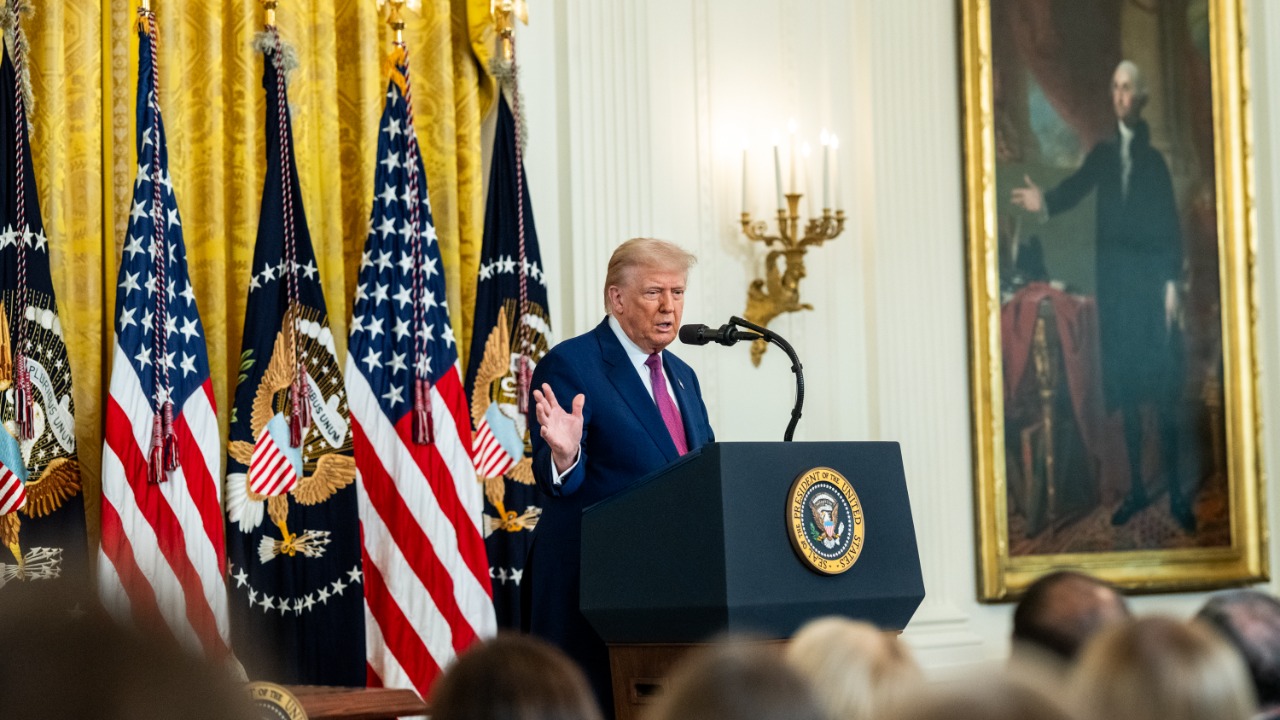
President Trump’s move to halt $10 billion in social service and child care funding to five Democratic-led states has instantly become a litmus test for how far the White House is willing to go in weaponizing federal dollars. The administration insists it is cracking down on fraud and misuse, while the targeted states argue the freeze is a blunt political instrument that punishes low-income families first. At stake is not only a massive pot of money, but also the unwritten rules that have long governed how Washington treats blue and red states in the federal system.
The clash is unfolding as courts, agencies and governors scramble to interpret what the freeze actually does and who gets hurt first. The answer will help determine whether this is the start of a broader realignment of federal aid or a high-profile skirmish that ultimately gets walked back under legal and political pressure.
The $10 billion freeze and why these five states
The core of the dispute is a decision by the Department of Health and Human Services to halt roughly $10 billion in child care and social service funding that would otherwise flow to five states run by Democrats. According to detailed breakdowns, at least $7.35 billion in TANF money is being held back from California, Colorado, Illinois, Minnesota and New York, all of it tied to the TANF and Social Services Block Grant program that underpins basic assistance for low-income families. The Trump administration has framed the move as a necessary pause while it investigates alleged irregularities in how these states have used flexible welfare dollars for child care, job programs and related services.
Officials have also frozen large portions of the Child Care and Development Fund, including a specific tranche of $2.4 billion that is supposed to help make childcare more affordable for low-income families with children. In public messaging, the administration has leaned on the language of stewardship, arguing that taxpayers should not be on the hook for what it describes as lax oversight and potential fraud in blue-state social service systems. Critics in the five states counter that the White House has singled them out not because of any unique misuse, but because they are high-profile Democratic strongholds whose governors have clashed with President Trump on everything from immigration to climate policy.
Inside the fraud rationale the White House is selling
To justify the freeze, the Trump administration has pointed to internal reviews and anecdotal evidence of questionable spending, casting the decision as a technocratic response rather than a partisan strike. Health and Human Services officials have said they are scrutinizing how states have used TANF and related child care funds for nontraditional purposes, such as plugging budget gaps or financing programs only tangentially related to low-income families. In their telling, the $10 billion pause is a temporary safeguard while auditors determine whether the money has been diverted from its intended beneficiaries, a narrative that has been amplified in early coverage of the fraud review.
Supporters of the move, including conservative policy voices and some Republican lawmakers, have echoed that framing in interviews and on television, arguing that the federal government has long turned a blind eye to how states repurpose flexible welfare dollars. In one widely shared segment, commentators on a business-focused program praised the administration for finally forcing a reckoning over what they described as a sprawling and opaque child care bureaucracy, using the HHS action as a case study in how Washington can rein in perceived excess in blue states, a line of argument that has surfaced on business television. Yet even some policy experts who favor tighter oversight have questioned why the crackdown is limited to five Democratic states when similar practices exist elsewhere, a selective approach that fuels suspicions of political targeting.
Blue-state leaders call it punishment, not oversight
Governors and legislative leaders in the five affected states have responded with a unified message that the freeze is less about fraud and more about retribution. Officials in California, Colorado, Illinois have stressed that their agencies already run extensive anti-fraud systems, including data matching, audits and aggressive recovery efforts when improper payments are found. They argue that if the White House had genuine concerns, it could have ordered targeted corrective actions instead of cutting off entire funding streams that support child care subsidies, domestic violence shelters and disability services.
In Illinois, where child care providers were already warning of staffing shortages and long waitlists, advocates say the freeze could push fragile programs over the edge. Local reporting has highlighted small centers that rely on state-administered federal dollars to keep doors open, with some operators warning they may have to shut down if the uncertainty drags on, a fear captured in accounts that note how the funding freeze could worsen the shortage and force providers to close, as described in But the reporting from Illinois. Across the five states, Democratic officials have framed the move as part of a broader pattern in which the Trump administration uses federal levers to squeeze political opponents, from sanctuary city fights to pandemic-era relief disputes.
The legal fight: courts push back on the pause
The legal system has already started to test how far President Trump can go in unilaterally choking off congressionally approved aid. In one early case, a federal judge moved to block the administration from fully implementing the freeze, ordering that at least some of the $10 billion in child and family aid continue to flow while litigation proceeds. That ruling specifically cited the inclusion of $2.4 billion from the Child Care and Development Fund, emphasizing that Congress had intended those dollars to help low-income families with children and questioning whether the executive branch could suspend them without a clear statutory violation, a point laid out in detail in the court challenge.
At the same time, the Department of Health and Human Services has signaled that it will keep reviewing the targeted programs even as some money is forced out the door by court order. Earlier this year, the Department of Health and Human Services announced the freeze and then, under pressure, clarified that certain payments would continue while the review unfolded, a sequence described in coverage of how Earlier this month the agency tried to balance legal risk with the White House’s demands. The result is a murky landscape in which states are unsure how much money to budget, providers do not know whether to hire or lay off staff, and families are left guessing whether subsidies will be there when rent is due.
Real-world fallout for families and providers
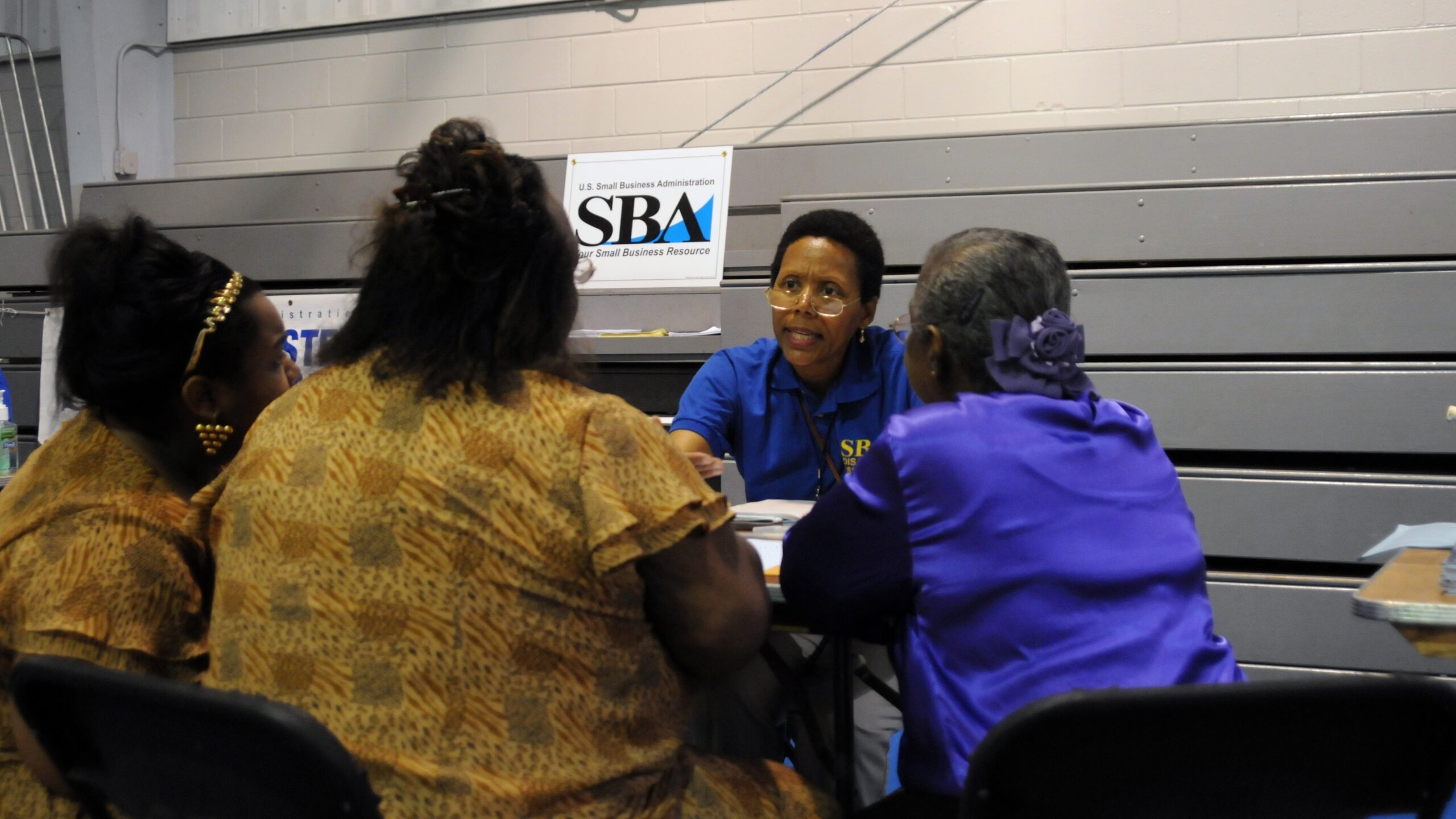
Behind the legal and political theater are families who depend on these programs to keep their lives functioning. The $10 billion in question touches everything from child care vouchers for parents working night shifts to cash assistance for relatives caring for children whose parents are incarcerated or struggling with addiction. In some of the affected states, officials have warned that if the freeze persists, they may have to cap enrollment, cut reimbursement rates or prioritize only the very lowest-income households, a triage that would leave thousands of working-class families just above the cutoff scrambling for alternatives, as outlined in early analyses of how the HHS freeze could ripple through local budgets.
Providers are already making contingency plans. In Illinois, center directors have described delaying facility repairs, freezing hiring and considering shorter operating hours because they cannot count on federal reimbursements arriving on time. Similar stories are emerging from community organizations in New York and California that rely on Social Services Block Grant dollars to fund after-school programs and elder care, with some warning that they may have to turn away clients if the uncertainty continues. Advocates say the freeze is landing hardest on neighborhoods where parents cobble together multiple part-time jobs and depend on subsidized care to keep those jobs, a dynamic that has been underscored in coverage of how public assistance funding disruptions can cascade through local economies.
A broader pattern: targeting “woke” and “wasteful” grants
The child care and TANF freeze is not happening in isolation. In a separate move, the White House has instructed federal agencies to cut another $1.5 billion in grants that officials have derided as “woke” or “green” spending in Democratic-leaning jurisdictions. Internal directives have reportedly told the DOT and CDC to identify programs that can be zeroed out or scaled back, with the administration again citing “waste and mismanagement” as justification for clawing back funds from Dem states, a strategy described in detail in an $1.5 billion grant review.
Reporting on the internal budget process has described how President Trump’s budget office is driving this effort from Washington, pressing agencies like DOT and CDC to comb through grant programs that disproportionately benefit urban transit, climate resilience and public health initiatives in blue states. One account noted that President Trump’s budget office is at the center of the push, with aides in WASHINGTON emphasizing that the cuts are being carried out in line with the president’s campaign promises to rein in what he calls ideological spending, as detailed in coverage by Josh Christenson. Taken together with the HHS freeze, the pattern suggests a broader strategy of using the federal purse to reward allies and squeeze opponents, even as the administration continues to frame each move as a neutral crackdown on misuse.
Politics, precedent and what comes next
From a political standpoint, the standoff over the $10 billion freeze is already shaping up as a defining clash between the Trump White House and Democratic governors. The administration has ordered a sweeping review of federal funding streams that disproportionately benefit Democratic-led states, signaling that the child care and TANF fight may be only the first in a series of confrontations, a trajectory described in reporting on how the funding review could expand. For President Trump, the moves play well with a base that has long believed blue states exploit federal generosity, while for Democrats, they offer a vivid example of what they describe as partisan governance that treats millions of residents as collateral damage.
The precedent question looms even larger. If courts ultimately uphold the administration’s authority to selectively freeze or redirect congressionally appropriated funds based on contested claims of fraud or ideological disagreement, future presidents of both parties could feel emboldened to do the same. Legal analysts have pointed to earlier episodes in which the Trump administration tried to restrict funds to so-called sanctuary jurisdictions, some of which were partially blocked in court, as a preview of the arguments now unfolding over child care and social services, a pattern that has been traced in coverage of how funding to Democratic is being restricted pending review. For families in California, Colorado, Illinois, Minnesota and New York, those constitutional debates are not abstract. They are the difference between a child care slot and a waiting list, between a stable budget and a sudden shortfall, between a safety net that functions and one that frays under the weight of political crossfire.
More From The Daily Overview
*This article was researched with the help of AI, with human editors creating the final content.

Grant Mercer covers market dynamics, business trends, and the economic forces driving growth across industries. His analysis connects macro movements with real-world implications for investors, entrepreneurs, and professionals. Through his work at The Daily Overview, Grant helps readers understand how markets function and where opportunities may emerge.