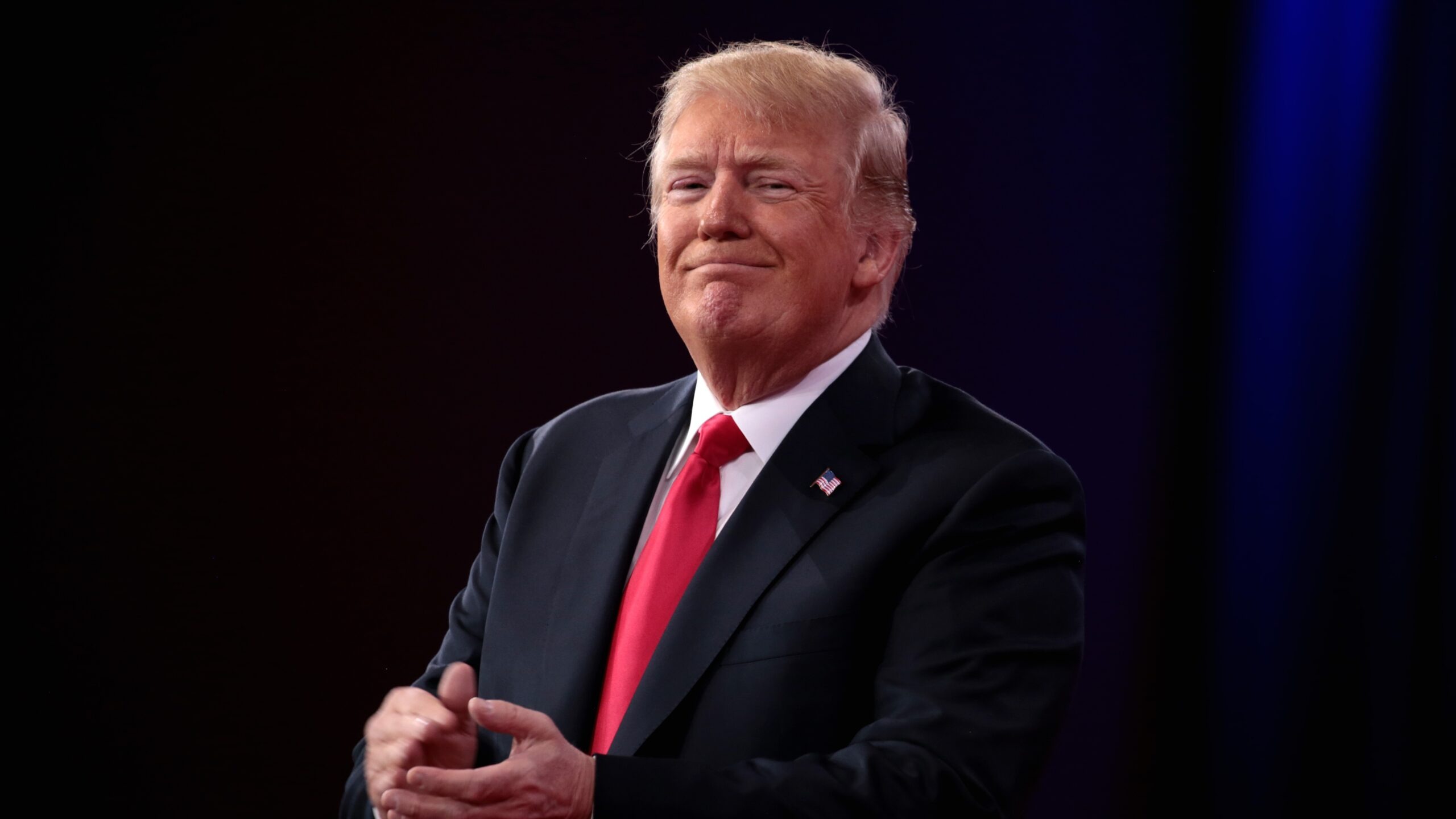
When Donald Trump sat in the Oval Office to announce Project Vault, the headline number did much of the talking: a $12 billion financing blitz, anchored by a $10 billion federal loan and supplemented by private capital, to build a Strategic Critical Minerals Reserve. The initiative is framed as an emergency response to U.S. Geological Survey data showing that the United States has been effectively 100 percent import reliant on China for key rare earth compounds and metals. One policy expert warned that leaves the country “one crisis away” from a supply shock, and Project Vault’s goal of holding roughly 60 days of reserves for selected materials is meant to buy time if that shock hits.
US Rare Earth Dependency Exposed
For years, U.S. officials have had a clear picture of how dependent the country is on imported minerals, including rare earths, thanks to the annual mineral commodity summaries published by the U.S. Geological Survey. That dataset details production, consumption and trade flows, and it shows that for rare earth compounds and metals, the United States has relied overwhelmingly on foreign suppliers. A separate USGS visualization highlights how China has accounted for the dominant share of U.S. net imports over a multi‑year average, illustrating that the United States has effectively had no domestic buffer if those flows are disrupted.
The strategic implications of that dependency were spelled out in Donald Trump’s first term, when he signed Executive Order 13817. That directive explicitly stated that reliance on foreign mineral sources created a “strategic vulnerability” to adverse foreign action and supply disruptions, and it ordered agencies to craft a federal strategy to secure reliable supplies of critical minerals. The language in that order anticipated the current concern that a single geopolitical crisis, shipping disruption or export restriction could choke off rare earth inputs needed for missiles, electric vehicles and consumer electronics.
Trump’s $12B Blitz Unveiled
The centerpiece of Trump’s new push is Project Vault, a public‑private effort to build what officials describe as a Strategic Critical Minerals Reserve. The Export‑Import Bank of the United States confirmed that its Board approved a Direct Loan of up to $10 billion for Project Vault, describing the program as support for a U.S. Strategic Critical Minerals Reserve that will stockpile materials essential to defense and high‑tech manufacturing. According to EXIM, the structure uses intermediaries to source and store the minerals, with the federal loan providing the bulk of the upfront purchasing power.
Wire coverage of the Oval Office rollout reported that Project Vault pairs that $10 billion EXIM loan with about $2 billion in private capital, yielding the $12 billion headline figure Trump touted. A separate analysis described how the reserve is intended to cover roughly a 60 day window of import replacement for selected materials, meaning the stockpile would be sized so that if imports stopped, U.S. industry could keep drawing on those reserves for about two months. That coverage also outlined the role of financial intermediaries that would manage purchases and storage on behalf of the government while bringing in private investors to share risk and potential upside.
Key DoD Partnerships Accelerate Independence
Project Vault is only one piece of the rare earth blitz. The Department of Defense has also moved to build an end‑to‑end domestic magnet supply chain by partnering with MP Materials, which operates the Mountain Pass mine in California. The Pentagon’s Office of Strategic Capital announced its first direct loan through an agreement with MP Materials, describing a $150 million facility to add heavy rare earth separation capabilities at Mountain Pass. The release framed the loan as a way to address a key bottleneck in heavy rare earth processing, which is currently concentrated in China.
The commercial contours of that partnership appear in an SEC filing by MP Materials that discloses the Department of Defense deal under securities‑law standards. That document details a package that includes preferred stock and a warrant, backed by the federal government’s commitment to support a U.S. rare earth magnet supply chain centered on Mountain Pass. MP Materials elaborated in a separate company statement, describing a $400 million investment in preferred stock plus a warrant that would give the Department of Defense a 15 percent stake on an as‑converted and as‑exercised basis, alongside the $150 million loan. The company said the agreement also establishes a 10‑year price floor of $110 per kilogram for neodymium‑praseodymium (NdPr) and a 10‑year offtake commitment, which together are designed to stabilize revenues as MP Materials builds processing and magnet production capacity in the United States.
China’s Export Controls Escalate Tensions
Trump’s rare earth blitz is aimed at reducing dependence on China at the same time Beijing tightens its grip on outbound supplies. A Primary Chinese government document from the Ministry of Commerce sets new export‑control licensing requirements on specified medium and heavy rare earth‑related items, including certain oxides, compounds and permanent magnet materials. The announcement states that the controls are effective on issuance and that exporters must obtain licenses before shipping those items abroad, turning what had been routine trade into a permission‑based system.
Beijing’s export controls do not ban sales outright, but they inject uncertainty into every shipment and give Chinese authorities discretion over which customers receive approvals. By targeting medium and heavy rare earth inputs and magnet‑grade materials, the China rules fragment a global supply chain that had long treated Chinese processing capacity as an open tap. For U.S. policymakers who already viewed rare earths as a single‑point failure, the licensing regime is another reminder that geopolitical decisions in Beijing can reverberate quickly through American defense contractors, automakers and electronics manufacturers.
Experts Warn of Imminent Crisis
Analysts who track critical minerals say the combination of concentrated supply and rising geopolitical friction leaves the United States “one crisis away” from serious shortages. The USGS mineral commodity summaries, which the Primary dataset underpins, show that for several rare earth products the United States has little to no domestic production relative to consumption, and that imports have been heavily skewed toward China. A Primary USGS visualization makes that point visually by ranking commodities according to net import reliance and highlighting China’s share, with rare earth compounds and metals sitting near the top of the risk spectrum.
Policy experts quoted in the High quality financial press have argued that such concentration functions as a “single point of failure” for advanced economies. They warn that a conflict in East Asia, a domestic environmental clampdown in China or a targeted export squeeze could each serve as the trigger that suddenly cuts off supplies. At the same time, those analysts acknowledge that precise crisis timelines are speculative and depend on how governments and companies respond, so projections about when a shortage might hit are best understood as scenarios rather than forecasts.
Path Forward and Uncertainties
Even with Project Vault and the MP Materials partnership, the path to genuine independence from Chinese rare earths runs through years of construction, permitting and market testing. The Useful reporting on operational details notes that building new separation plants and magnet factories is capital intensive and that investors will watch closely to see whether the promised private financing materializes alongside the EXIM debt. Implementation of a Strategic Critical Minerals Reserve also raises practical questions about how the government will choose which materials to stock, how it will rotate inventory and how it will avoid distorting prices in already thin markets.
There is also debate over the full breakdown of the $12 billion figure and how much risk private investors are truly taking on. The EXIM EXIM announcement is clear about the Direct Loan of up to $10 billion, but some analysts cited in the financial press say the remaining $2 billion in private commitments are less transparent and may depend on future market conditions. Trump’s earlier Trump executive order provides policy continuity around the goal of securing critical minerals, yet the success of this new blitz will ultimately hinge on whether these programs can move from headline numbers to operating facilities before the next geopolitical or supply shock tests the system.
More From The Daily Overview
*This article was researched with the help of AI, with human editors creating the final content.

Grant Mercer covers market dynamics, business trends, and the economic forces driving growth across industries. His analysis connects macro movements with real-world implications for investors, entrepreneurs, and professionals. Through his work at The Daily Overview, Grant helps readers understand how markets function and where opportunities may emerge.

