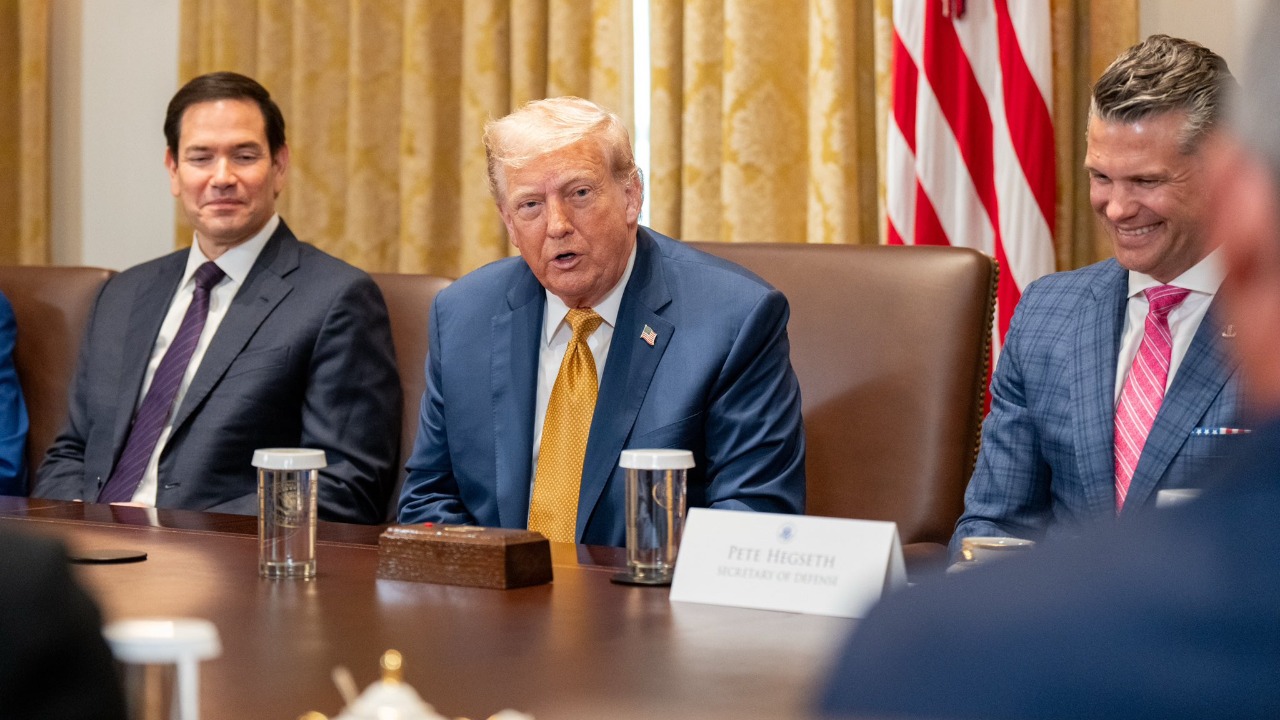
President Donald Trump has spent months talking up a potential “tariff dividend,” a promise that every eligible American household could see a one-time $2,000 windfall tied to higher taxes on imports. The idea has fueled a wave of online speculation about fresh stimulus-style checks, especially as families look for help with holiday bills. For now, though, the biggest obstacle is not who qualifies, but the simple fact that there is still no concrete plan moving through Washington that could actually send the money out.
Instead of a signed law or even a detailed bill, what exists is a political concept: use revenue from tariffs to fund a $2,000 payment, possibly framed as a rebate or dividend, sometime in the coming year. Until that concept is translated into legislation, passed by Congress, and implemented by federal agencies, the “tariff dividend” remains more campaign slogan than imminent deposit.
The promise: a $2,000 boost from tariff revenue
Trump has repeatedly floated the idea that tariffs on foreign goods could be turned into a direct benefit for households, pitching a $2,000 payment as a kind of national bonus funded by trade policy rather than traditional deficit spending. In his telling, higher duties on imports would both pressure trading partners and generate enough cash to help ordinary families while also chipping away at federal red ink. Supporters have seized on that framing, describing the proposal as a way to convert tough-on-trade rhetoric into something that shows up in people’s bank accounts.
Reporting on the proposal underscores how loosely defined it still is. One detailed explainer notes that Trump’s $2,000 tariff dividend payment is “still being floated” with “no formal proposal and little details thus far,” even as he talks about using tariffs to lower the national debt and fund a broad payout to Americans. That same analysis stresses that the idea is being discussed as a potential future policy rather than a scheduled program, which is why references to a $2,000 tariff dividend payment keep surfacing in speculative conversations rather than in official government notices.
Viral checks, real confusion
Into that vacuum of specifics has poured a flood of social media posts and YouTube videos promising clarity on whether $2,000 checks are “really coming.” One widely viewed breakdown from Nov walks through the surge in search traffic from people asking if Trump is giving them $2,000 and when that $2,000 might arrive at their house, reflecting how quickly a loosely defined policy idea can morph into an assumed fact in the public imagination. The video’s host spends much of the time tamping down expectations, explaining that there is no official payment schedule even as viewers latch onto the headline number.
That gap between online hype and policy reality has only widened as influencers and opportunistic websites recycle the same talking points without adding new information. Some posts frame the potential payout as a done deal, others treat it like a traditional stimulus check, and many gloss over the difference between a campaign promise and a signed law. The result is a feedback loop in which people share clips like the Nov explainer on $2,000 checks, then head to search engines or tax forums expecting confirmation that a deposit is imminent, only to find more speculation rather than hard answers.
What the IRS can and cannot do
The Internal Revenue Service sits at the center of most federal payments to individuals, which is why rumors about new checks often invoke the agency by name. In recent weeks, one viral claim insisted that the IRS “Confirms” a $2,000 December 2025 Direct Deposit, complete with supposed Eligibility Rules and a precise payment timeline. That framing suggested that the agency had already locked in a schedule for sending out money, even though no law authorizing such a program had been enacted.
Closer inspection of that claim shows how misleading it is. The IRS has been clear in past stimulus rounds that it does not invent new benefits on its own, and outside analysts have stressed that any new federal stimulus payments must originate in the legislative branch before the tax agency can implement them. One detailed fact check on the “IRS Confirms $2,000 December 2025 Direct Deposit” rumor points out that Trump’s Tariff Dividend Statements are political messaging, not binding policy, and that the IRS cannot create a $2,000 program without Congress first passing a law that spells out the eligibility rules, funding source, and payment mechanism. That analysis uses the viral claim as a case study in how quickly people can misread bureaucratic language about Direct Deposit and Eligibility Rules as proof that money is already on the way.
The legislative roadblock
The biggest hurdle between Trump’s rhetoric and any actual $2,000 tariff dividend is Congress. Under the Constitution, new federal spending programs must be authorized and funded through legislation, whether they are branded as stimulus checks, tax rebates, or dividends from tariff revenue. That means lawmakers would have to draft a bill that specifies how much tariff money is available, who qualifies for the payout, how the payments are calculated, and which agency is responsible for sending them. Without that legislative blueprint, there is nothing for the IRS or any other office to administer.
So far, reporting indicates that no such detailed proposal has been formally introduced, let alone advanced through committee hearings, floor debates, and final votes. Analysts who have tracked the idea describe it as a concept that Trump and his allies are “still floating,” not a program that has cleared the procedural gauntlet on Capitol Hill. One overview of the situation notes that the $2,000 tariff dividend is being discussed in the same breath as other potential uses of tariff revenue, such as paying down the national debt, which underscores how many competing priorities would have to be reconciled in a single bill. That same report walks through the basic mechanics of a tariff-funded rebate, from how customs duties are collected to how they might be redirected into a one-time payment, but it also stresses that none of those steps can happen until Congress acts, which is why questions about tariff rebate eligibility remain hypothetical.
What households should realistically expect
For families trying to budget around the holidays, the distinction between a floated idea and a funded program is not academic. Many people are already penciling in potential relief, asking whether a $2,000 payment might arrive in time to cover rent, car repairs, or credit card balances that ballooned over the year. Financial counselors warn that building plans around an unpassed policy is risky, especially when the only concrete details come from campaign-style remarks and viral posts rather than from signed legislation or official agency guidance.
In practical terms, that means treating the tariff dividend as a possibility, not a line item in the household budget. Until Congress writes and passes a law, and until the IRS or another agency publishes clear instructions on how and when any $2,000 payments would be delivered, the safest assumption is that no money is coming on a fixed timeline. The online buzz, from speculative explainers to breathless breakdowns of supposed IRS confirmations, reflects genuine economic anxiety, but it does not change the basic sequence of how federal benefits are created. For now, the “tariff dividend” remains a political promise facing a very real procedural wall, and the only honest answer to whether a $2,000 check is on the way is that it is unverified based on available sources.
More From TheDailyOverview

Julian Harrow specializes in taxation, IRS rules, and compliance strategy. His work helps readers navigate complex tax codes, deadlines, and reporting requirements while identifying opportunities for efficiency and risk reduction. At The Daily Overview, Julian breaks down tax-related topics with precision and clarity, making a traditionally dense subject easier to understand.

