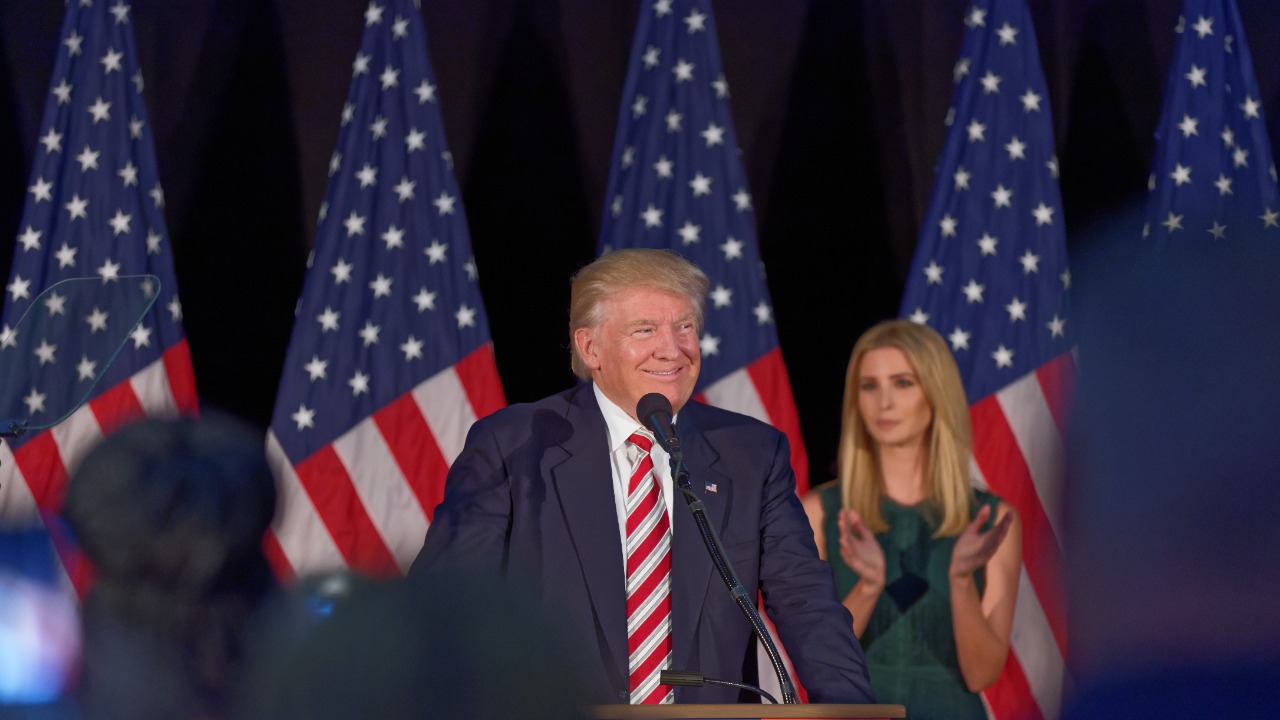
President Donald Trump has put a bold promise on the table: a one-time $2,000 “tariff dividend” for households, funded by higher taxes on imports rather than traditional income taxes. The idea has sparked intense interest from families still feeling squeezed by inflation and from investors trying to game out what it would mean for the broader economy. I want to walk through what the proposal actually says, who is most likely to qualify if it becomes law, and how any future payments would be delivered, based on what officials and outside analysts are saying now.
Despite the viral social media posts and breathless speculation about checks arriving as soon as this winter, the plan is still only a proposal, not an approved benefit. Understanding that gap between political promise and legal reality is the key to knowing whether you should expect $2,000 in your bank account, or simply treat the idea as a high-stakes policy debate that could reshape the tax system in 2026 and beyond.
What Trump’s $2K tariff dividend actually is
At its core, the tariff dividend is Trump’s attempt to flip the usual tax debate on its head by using import duties to fund direct payments to households instead of relying on income taxes. In public remarks and on social media, he has framed it as a way to send a $2,000 payment to typical families while cutting or even replacing parts of the income tax code. One detailed breakdown describes the concept as a “$2,000 tariff dividend” that would be financed by higher tariffs on foreign goods, an approach that even sympathetic analysts concede is financially challenging once you compare projected tariff revenue with the cost of mailing checks to tens of millions of people, a tension that is highlighted in the discussion of how the plan is financially challenging.
Trump and his allies have pitched the idea as a populist rebate that would let “American” consumers capture the proceeds of tariffs that are currently paid by importers and, in practice, passed on through higher prices. One analysis of his messaging notes that he has floated a “Dividend In Form Of Direct Payments Or” potentially other mechanisms, after announcing that every American will receive some kind of tariff-based benefit, a framing that has fueled speculation about whether the money would arrive as checks, tax credits, or something else entirely, as described in the coverage of a Dividend In Form Of Direct Payments Or alternative.
Where the proposal stands now
For all the attention, the most important fact is also the simplest: there is no law on the books today that authorizes a $2,000 tariff dividend, and no checks are scheduled. Treasury officials have been explicit that the idea remains a concept, not a funded program, and that neither the Internal Revenue Service nor the Department of the Treasury has a live payment schedule. One detailed explainer stresses that, as of now, the proposed dividend is “just a concept, not law,” and that The Treasury and IRS have confirmed no payments are scheduled, underscoring that any talk of imminent deposits is unverified and speculative.
Inside the administration, there is still clear interest in moving forward, but officials are already trying to manage expectations about timing and scope. President Donald Trump has repeatedly signaled that he wants tariff dividend refund checks to go out in 2026, and on Dec. 2 Trump reiterated that commitment in a meeting that focused on how to structure the payments and who should qualify, a sequence that has been laid out in coverage of how President Donald Trump remains committed to the idea. At the same time, Treasury Secretary Scott Bessent has publicly tried to cool speculation about near-term payouts, fielding questions about when and how the money would be sent and signaling that the details are still being hammered out as part of a broader tax package, a caution that comes through in his comments on When and how will the money be sent.
Who is most likely to qualify
Trump has framed the dividend as a benefit for low and middle earners, not a universal payout for every high-income household. In a widely discussed Truth Social post, he said the $2,000 payment would be targeted to “typical” families rather than the very wealthy, and follow-up reporting has emphasized that the benefit is meant to reach households that have felt squeezed by higher prices and previous rounds of stimulus that phased out at moderate incomes, a focus captured in the breakdown titled “Who Qualifies for the” tariff Dividend that explains how the $2,000 figure would be reserved for a defined slice of the population and why critics argue the design could still miss some struggling workers, as detailed in the analysis of Who Qualifies for the benefit.
Commerce Secretary Howard Lutnick has gone further and put a rough income line on the proposal. In public remarks, Commerce Secretary Howard Lutnick said Monday that President Donald Trump’s plan is aimed at people earning $100,000 or less a year, a threshold that would exclude many upper-middle-class households while still covering a large share of workers and retirees, a detail that anchors the discussion of how Commerce Secretary Howard Lutnick said Monday the income cap would work. Republican Sen Ron Johnson, a key fiscal hawk, has already warned that the country “can’t afford” Trump’s full vision and has argued that any final version should exclude “high income people,” a stance he laid out in an interview with Fox Business host Maria Bartiromo the that has become central to the debate over whether the checks will be tightly means-tested or more broadly available, as described in the discussion of how Republican Sen Ron Johnson wants to shape eligibility.
How much households could receive
The headline number is simple: Trump has proposed $2,000 per qualifying household, but the actual amount any family receives would likely depend on income, filing status, and possibly family size. One detailed Q&A on the plan notes that Trump’s $2,000 tariff dividend payment is being floated alongside a smaller $200 option for certain taxpayers, suggesting that policymakers are weighing a tiered structure where some households receive the full $2,000 while others, perhaps with higher incomes or different filing situations, would be eligible for smaller payments such as $200, a distinction that is spelled out in the explanation of Who would be eligible for Trump’s $2000 tariff dividend.
Other reporting on the broader stimulus concept reinforces that the $2,000 figure is not a casual talking point but a central design choice. A concise policy summary describes how Trump proposed $2,000 stimulus checks funded by tariff revenue for low and middle-income Americans and notes that Paym logistics, including whether the money arrives as a direct deposit or paper check, are still being worked out, a reminder that the size of the benefit is locked in politically even as the delivery details remain fluid, as laid out in the Quick Read of his plan. Another overview of the administration’s messaging lists “Key Things To Know About Trump” and his Tariff Dividend Checks, underscoring that the $2,000 promise is meant to be a signature economic move that differentiates his approach from traditional tax rebates, as summarized in the piece on Key Things To Know About Trump and his Tariff Dividend Checks.
How and when payments would be delivered
Even if Congress ultimately signs off, the timing and delivery method are likely to look more like a future tax-season refund than an emergency stimulus check landing overnight. Trump’s advisers have floated 2026 as the realistic window for any tariff dividend to arrive, with some suggesting that the payments could be processed through the same infrastructure that handled pandemic-era stimulus, including direct deposits to bank accounts already on file with the IRS and paper checks for others. One detailed explainer on the status of the plan notes that Trump’s $2,000 tariff dividend payment is still being floated with no firm date, and that questions such as “When will the $2000 tariff dividend payment be paid?” remain unanswered, a sign that the calendar is still in flux even as the administration talks up the idea, as reflected in the discussion that begins with When the money might arrive.
Inside the White House, the rollout has already become a recurring agenda item. During his Tuesday cabinet meeting on Dec. 2, Presid Trump used the session to reiterate his commitment to tariff rebate checks and to press his team on how to structure the program so that it reaches the intended households without creating a bureaucratic mess, a focus that comes through in the account of what happened During his Tuesday cabinet meeting. At the same time, several senior aides have publicly cautioned that the president’s proposal is still being refined and that people should be wary of viral claims about exact payment dates or guaranteed eligibility, a warning captured in the reminder that, Nonetheless, Trump administration officials are urging patience and skepticism about overly precise promises, as noted in the update that begins with Nonetheless and tracks their comments.
The big economic tradeoffs
Behind the political theater sits a hard budget math problem. Independent analysts have pointed out that tariffs are a relatively narrow revenue source compared with the cost of sending large checks to most households. One prominent estimate finds that Sending a one-time $2,000 payment to U.S. households would cost between $300 billion and $600 billion, far more than current tariff receipts, a gap that raises questions about whether the administration would need to raise tariffs sharply, cut other spending, or accept a larger deficit to make the numbers work, as detailed in the analysis that begins with Sending a one-time $2,000 payment.
Economists have also warned that tariffs themselves act as a tax on trade that can raise prices and reduce the availability of goods, which could blunt some of the benefit of a cash payout. A detailed policy critique notes that Tariffs are trade barriers that raise prices, reduce available quantities of goods and services for US businesses and consumers, and that using them to fund broad dividend checks could end up costing more than the tariffs generate, especially if the program is designed to be generous and inclusive, a concern laid out in the argument that Tariffs would not cover the full bill. Even some within Trump’s orbit have acknowledged these tradeoffs, with internal briefings emphasizing that the dividend might need to be smaller, more targeted, or paired with other tax changes to avoid blowing a hole in the budget.
More From TheDailyOverview

Julian Harrow specializes in taxation, IRS rules, and compliance strategy. His work helps readers navigate complex tax codes, deadlines, and reporting requirements while identifying opportunities for efficiency and risk reduction. At The Daily Overview, Julian breaks down tax-related topics with precision and clarity, making a traditionally dense subject easier to understand.

