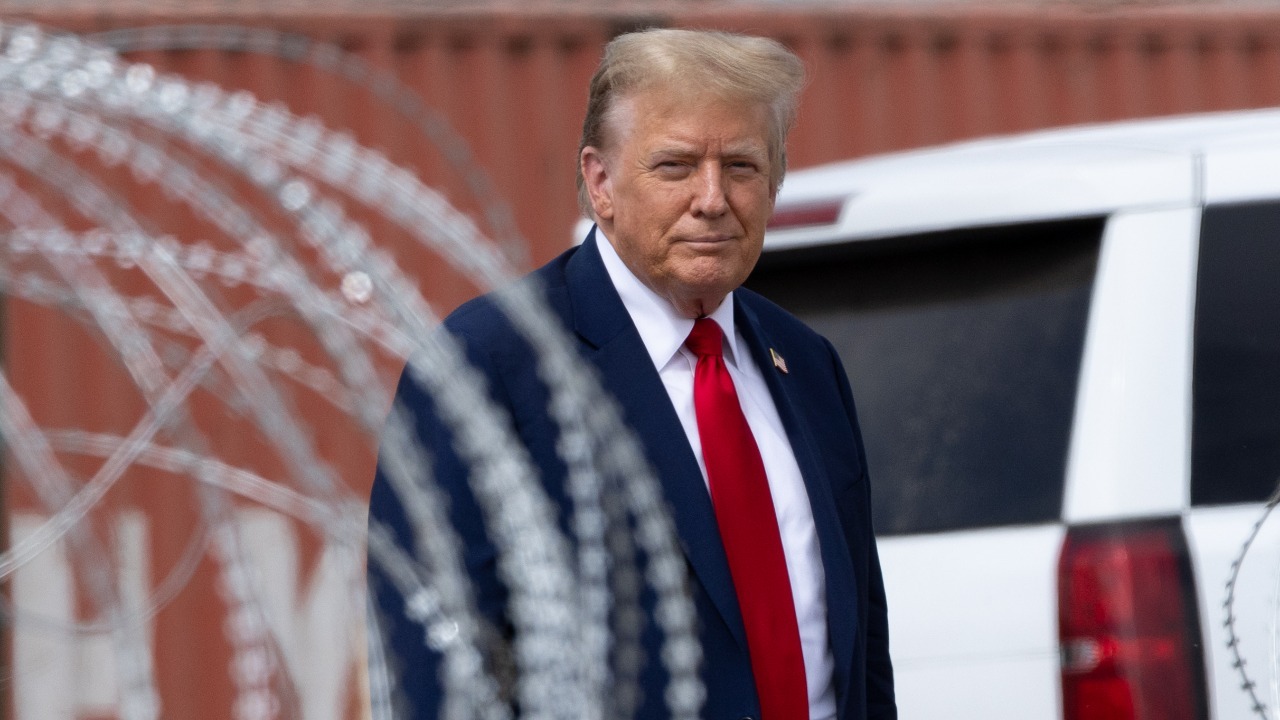
President Donald Trump’s revived push to buy Greenland has moved from late-night punchline to live policy debate, complete with internal cost estimates and strategic talking points. The headline numbers are staggering, with a potential price tag approaching $1 trillion and official projections that any meaningful financial payoff would be decades away. The question is no longer whether the idea is outlandish, but whether it is defensible on economic, strategic, or political grounds.
As the White House leans on national security and resource arguments, its own figures show a deal that would strain public finances for a generation while delivering only modest, slow-burning returns. I see a project that looks less like a savvy acquisition and more like an extraordinarily expensive geopolitical vanity play.
The trillion‑dollar sticker shock
The starting point for any serious discussion is the cost, and here the numbers are eye watering. Internal assessments cited by advisers put the direct purchase price of Greenland at close to $700 billion, a figure that alone would rival the annual U.S. defense budget. A separate COST ESTIMATE framed the same ballpark price as the bill The United States might face if it tried to fulfill President Donald Trump’s ambition, underscoring how extraordinary it would be for a single territorial purchase. Once infrastructure, social services, and integration costs are added, analysts say the total outlay could climb toward $1 trillion over time, a sum that would compete with domestic priorities from climate resilience to health care.
Supporters argue that such a figure should be weighed against Greenland’s long term resource and strategic value, but even on those terms the math is unforgiving. A detailed attempt to “price” the island’s natural wealth noted that Greenland has already halted new oil and gas exploration, cutting the estimated hydrocarbon value to $2.7 trillion and casting doubt on how much of that could ever be commercially recovered. When I weigh a trillion dollars in up‑front and near term spending against speculative returns that depend on future commodity prices, environmental rules, and technology, the business case starts to look extremely thin.
Trump’s strategic dream vs. legal and political reality
President Donald Trump has framed Greenland as a once in a century strategic opportunity, arguing that control of the Arctic gateway would give the United States a dominant position in a region where Russia and China are already active. His advisers have described his interest as “dogged determination” to annex the icy island, rooted in the belief that it could reshape the balance of power in the North Atlantic and Arctic sea lanes, according to analysis of President Donald Trump’s thinking. In that telling, the purchase would be less a real estate deal and more a generational security investment.
The problem is that the legal and political obstacles are at least as formidable as the ice sheet that covers most of the island. Greenland is an autonomous territory within the Kingdom of Denmark, and officials in Copenhagen have been explicit that Denmark is not for sale and neither is its vast Arctic land. Any transfer would require not only Danish consent but also the approval of Greenland’s own government and its roughly 56,000 residents, who have been moving steadily toward greater self rule rather than external control. When I factor in those layers of sovereignty, the plan looks less like a pending transaction and more like a political fantasy that risks alienating key allies.
The weak business case and 20‑year payoff problem
Even if one brackets the diplomatic hurdles, the economics are brutal. Analysts who have walked through the numbers say the White House is effectively asking taxpayers to front a near trillion dollar sum for an asset that would not generate positive financial returns for at least two decades. One detailed assessment concluded that the government would need to spend heavily on ports, airfields, housing, and social services before any serious mining, tourism, or shipping revenue could materialize, a lag that helps explain why the overall business case looks so weak.
Critics have been blunt about that gap. In one widely cited comment, an expert described the economics as “non existent,” even before considering the political, legal, and practical reasons the project is likely impossible, a judgment echoed in separate coverage that quoted the same view of Jan and the prospects for more of Greenland’s 56,000 residents to support such a move, as reflected in Jan. A parallel analysis carried the same warning that “the business case is non existent,” reinforcing the sense that, on pure return on investment terms, the proposal fails the most basic test investors would apply to a megaproject, a point repeated in another discussion of Jan and the island’s residents.
What $700 billion could buy at home
To grasp the opportunity cost, it helps to translate $700 billion into concrete alternatives. That sum is roughly comparable to the entire annual budget of the Department of Defense, and it could also fund a sweeping domestic agenda, from modernizing the national power grid to underwriting universal pre‑K. When I consider that The White House’s own estimate of $700 billion would only cover the purchase price, not the decades of follow on spending, the tradeoffs become even starker.
Some advisers have floated creative financing ideas, including the notion of paying each Greenlander a generous per capita sum to secure local support, a concept that surfaced in the COST discussion of how to persuade residents. Others have suggested that the island’s mineral wealth and shipping lanes could eventually offset the initial outlay, a view that has been amplified in sympathetic coverage of the president’s ambitions, including a report that a takeover would likely entail an enormous price tag but might be justified by long term gains. Yet when I stack those hypothetical benefits against immediate needs like climate adaptation in coastal U.S. cities or replacing aging bridges, the Greenland plan looks like a misallocation of scarce fiscal capacity.
Symbolism, sovereignty, and the Arctic future
There is also a symbolic dimension that cannot be separated from the spreadsheets. Greenland is not an empty frontier but a society with its own culture, politics, and aspirations, something that is easy to forget when it is reduced to a line item in Washington budget debates. A quick look at basic reference material on Greenland underscores its unique status as the world’s largest island, mostly covered by ice yet home to communities that have been pushing for more autonomy, not a change of flag. Treating those people as if they were shareholders in a company to be bought out for the right price risks deepening resentment toward the United States and complicating Arctic cooperation.
Trump’s allies sometimes counter that the idea is not as radical as it sounds, pointing to past U.S. land purchases and even floating scenarios in which Denmark might eventually reconsider if the offer were high enough. One video discussion framed the question explicitly as how much Trump would be willing to pay if Denmark dropped its opposition, and, even more importantly, what the island is really worth, a line of argument captured in a segment about Trump and the world’s largest island. Yet history cuts both ways: previous acquisitions like Alaska were made at a fraction of the U.S. economy’s size and before modern norms of self determination took hold. In the twenty first century Arctic, where climate change, indigenous rights, and great power rivalry intersect, a unilateral push to buy a territory that has clearly said no looks less like visionary statecraft and more like a costly distraction from the hard work of diplomacy and multilateral governance.
More From TheDailyOverview

Grant Mercer covers market dynamics, business trends, and the economic forces driving growth across industries. His analysis connects macro movements with real-world implications for investors, entrepreneurs, and professionals. Through his work at The Daily Overview, Grant helps readers understand how markets function and where opportunities may emerge.

