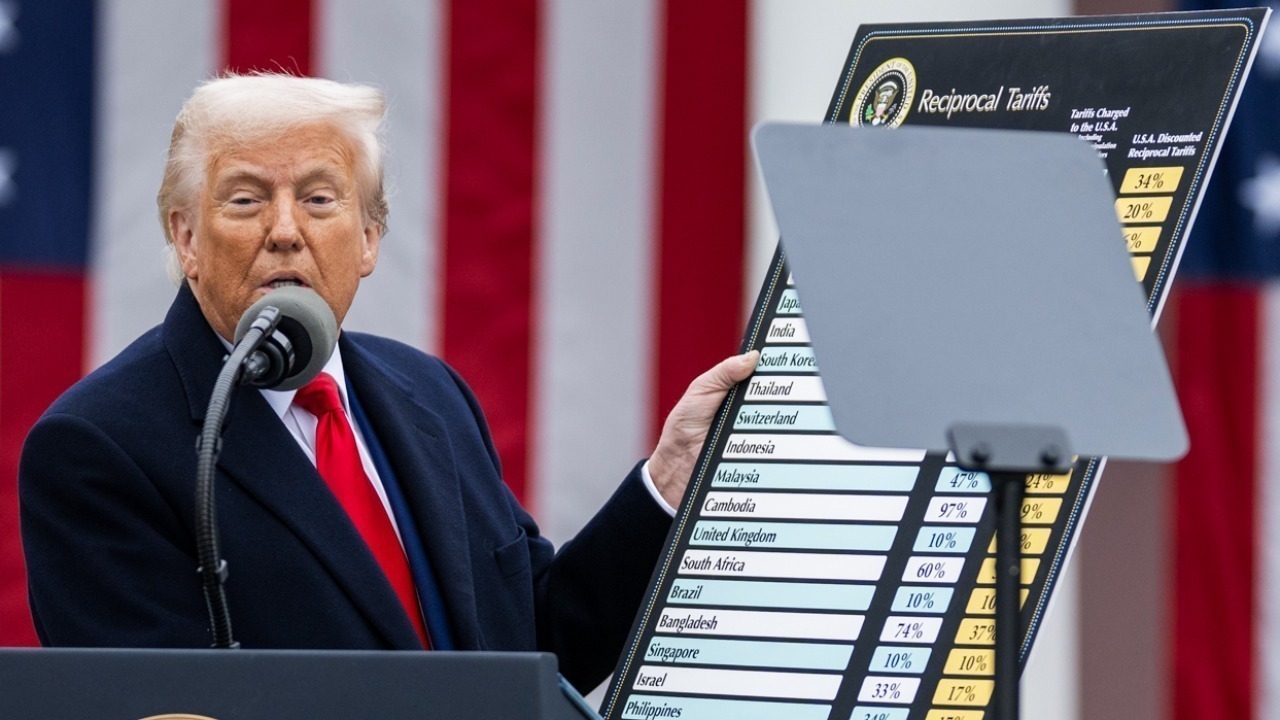
President Donald Trump has turned tariffs from a niche policy tool into the central lever of United States economic strategy, and the shockwaves are now visible in prices, trade flows, and growth forecasts across the world. What began as a targeted effort to pressure rivals has hardened into a broad regime of border taxes that is reshaping supply chains and forcing governments and companies to recalculate their exposure to American demand.
The result is a global economy that feels less predictable and more politicized, as allies and competitors alike respond with their own measures, hedging, and workarounds. I see the emerging picture as a high-stakes experiment in using trade barriers to pursue security and industrial goals, with costs and benefits that are only starting to come into focus.
The new tariff regime and its legal muscle
The current phase of Trump’s trade policy rests on an aggressive use of emergency powers that gives the White House wide latitude to tax imports. Analysts note that Key Findings from Nov 17, 2025 describe how President Trump has imposed International Emergency Economic Powers Act tariffs on United States trading partners, turning a statute once reserved for sanctions into a backbone of the tariff strategy. By leaning on the International Emergency Economic Powers Act, often shortened to IEEPA, the administration has sidestepped some of the constraints that normally govern trade policy and locked in a framework that can be expanded quickly.
The White House has framed this as a national security imperative rather than a conventional trade dispute. In an official fact sheet dated Apr 1, 2025, President Trump declared a national emergency to “increase our competitive edge, protect our sovereignty and strengthen our national and economic security,” explicitly tying tariffs to a broader effort to rewire the United States relationship with global markets. That framing helps explain why the measures have spread beyond a narrow list of products to cover entire categories, from metals and autos to critical minerals such as copper.
From trade war to global shock
What began as a bilateral clash has evolved into a systemic jolt to the trading system. Research released on Jun 24, 2025 finds that the latest wave of duties is not just a domestic tax shift but a drag on worldwide activity, with one working paper concluding that the tariffs significantly reduce US and global economic growth and increase inflation in many economies. That combination of slower output and higher prices is precisely what central banks have been trying to avoid, and it complicates efforts to bring inflation back to target without tipping countries into recession.
International institutions have started to quantify the damage. Reporting from Nov 4, 2025 notes that Although financial markets have since largely recovered, in October the International Monetary Fund, IMF warned that the overall hit from the tariff fight could eventually rival the size of the United States economy. A separate briefing on Oct 13, 2025 describes how April the US shook global trade norms by announcing sweeping tariffs, with the IMF’s April report offering a range of estimates for the worldwide fallout. Taken together, these assessments underscore why investors now treat tariff headlines as macroeconomic news, not just trade minutiae.
Rising costs at home and abroad
Inside the United States, the most immediate effect has been on prices. Consumer advocates and economists point out that shoppers are already paying more, with one Nov 4, 2025 analysis bluntly asking, Are prices going up for US consumers? Shoppers have indeed seen price rises for some products, and United States inflation was reported at 3% as tariffs filtered through to store shelves. Another study from Apr 3, 2025 argues that Trump, Trade War, Major Economic and Strategic Blunder, Despite
Independent modeling backs up the concern that the tax burden is landing heavily on the domestic economy. A detailed assessment from Apr 9, 2025 titled The Economic Effects of President TrumpRevenue is even lower on
Tariff levels, trade flows, and corporate workarounds
Beyond prices, the structure of United States trade has shifted in ways that are still being digested. Market researchers tracking the policy timeline note that by Oct 29, 2025, Oct 29, 2025Our updated estimate of the average effective U.S. tariff rate stands at 15.8%, a significant increase from the 2.3%
Yet the blunt expectation that imports would collapse has not fully materialized. A blog post dated Oct 19, 2025 notes that Despite tariffs, US merchandise imports increased and exports heldLatest tariff update
Winners, losers, and the politics of protection
The uneven distribution of costs and benefits is fueling a fierce political argument over whether the strategy is worth it. Supporters in the administration point to a 2024 study, cited on Apr 1, 2025, which concluded that earlier rounds of tariffs in Trump’s first term “strengthened the U.S. economy,” a finding highlighted in the same President Trump fact sheet that announced the new national emergency. They argue that targeted protection can buy time for domestic industries, from steel mills in Indiana to solar panel factories in Georgia, to invest and regain market share.
Critics counter that the collateral damage is too high and that the policy is riddled with unintended consequences. A video analysis from Aug 6, 2025, for example, describes how some allies see the measures as a kind of AugPresident Trump’s global tariffs – the most significant escalation America
A world adjusting to permanent friction
What makes this moment so consequential is the growing sense that the tariffs are not a temporary bargaining chip but a semi permanent feature of the landscape. On Nov 17, 2025, analysts summarizing the tariff regime’s trajectory emphasized that President Trump
Global markets are already behaving as if this friction is here to stay. Over the past year, I have watched companies from Apple to Volkswagen accelerate plans to “China plus one” their supply chains, while governments from Tokyo to Brussels roll out their own industrial policies in response. A widely shared video from Oct 13, 2025 captures the mood, explaining how Oct
More From TheDailyOverview
- Dave Ramsey warns to stop 401(k) contributions
- 11 night jobs you can do from home (not exciting but steady)
- Small U.S. cities ready to boom next
- 19 things boomers should never sell no matter what

Grant Mercer covers market dynamics, business trends, and the economic forces driving growth across industries. His analysis connects macro movements with real-world implications for investors, entrepreneurs, and professionals. Through his work at The Daily Overview, Grant helps readers understand how markets function and where opportunities may emerge.

