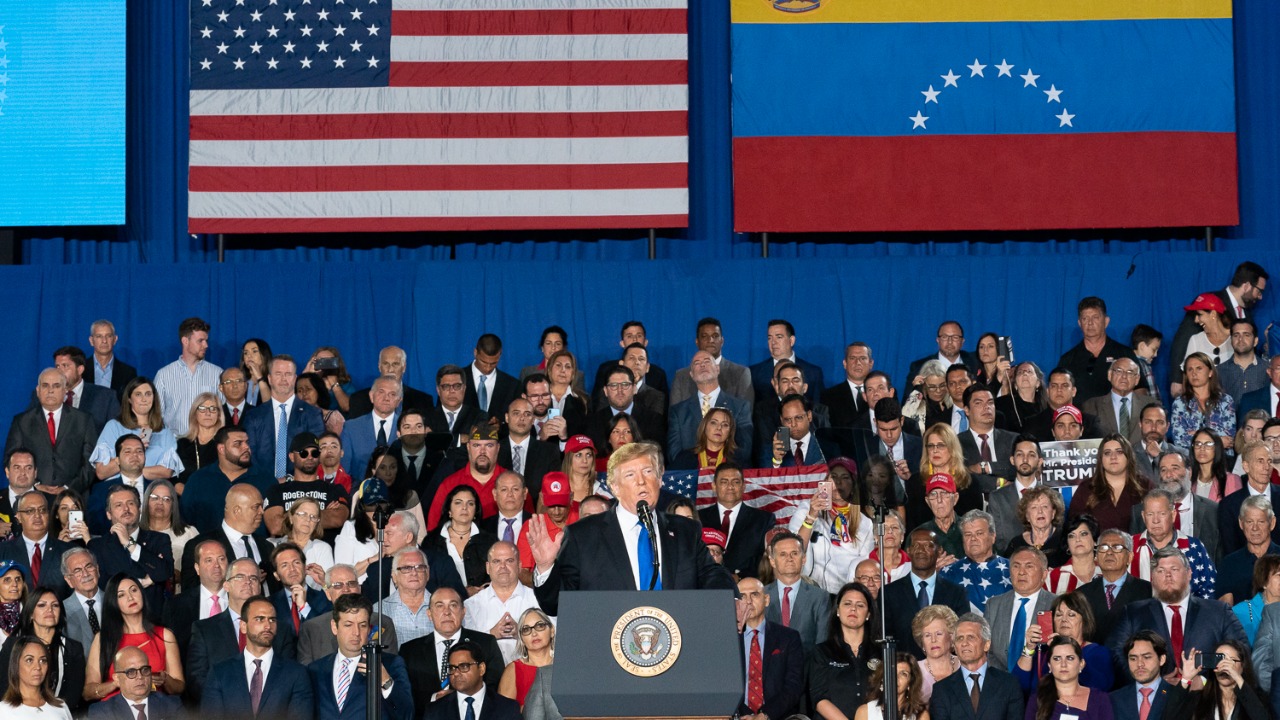
President Donald Trump is pitching his Venezuela gamble as a win for American drivers and a blow to hostile regimes, but the fine print points to something else: potentially huge checks written to oil and construction companies that agree to rebuild a shattered energy sector. The administration’s own allies concede that restoring production will cost billions, and they are already floating ways for the United States to shoulder much of that bill. If the plan moves ahead, the biggest early winners may not be Venezuelan citizens or U.S. consumers, but the firms hired to drill wells, repair refineries and lay new pipelines.
At the center of the push is a promise that Venezuela will ship large volumes of crude to the United States while Washington takes control of how that oil is sold and how the money is spent. That structure, combined with talk of reimbursing corporate outlays, could turn a foreign policy intervention into a sprawling public subsidy for private energy and infrastructure players, even as lawmakers and industry executives warn that “it’s clearly a risk” for anyone who signs on.
The new oil-for-control bargain
The basic architecture of Trump’s Venezuela strategy is straightforward: Washington would effectively run the country’s oil sales and direct the revenue, while U.S. companies move in to revive production. Officials from the United States have been privately telling skeptical lawmakers and oil executives that before any of this can happen, they must be confident they can work with Rodr and other power brokers in Caracas, a recognition that political buy-in is as important as geology. One senior figure described the whole effort as “clearly a risk,” a phrase that captures both the security concerns on the ground and the financial exposure for any firm that bets on a long-term presence in a still-volatile state, according to internal briefings reported in Jan discussions.
Trump has tried to sweeten that risk calculus by promising a steady flow of crude to U.S. refineries. He has publicly said that Venezuela will be “turning over” up to 50 m barrels of oil to the United States, a headline figure meant to signal both leverage over Caracas and relief for American motorists. In a separate appearance, he framed the arrangement as Venezuela sending as much as 50 m barrels that could be worth up to $2.8 billion, a reminder that even a short burst of exports represents a major cash stream that Washington now intends to manage. The combination of control over sales and a guaranteed buyer in the United States gives the administration powerful tools to reward companies that align with its plans.
Billions in broken infrastructure, and who pays
Behind the political theater lies a stark technical reality: Venezuela’s oil infrastructure is in ruins. Years of underinvestment, sanctions and mismanagement have left wells shut in, refineries corroded and export terminals barely functional. Analysts who have examined the fields say it will take billions of dollars just to stabilize output, let alone ramp it up to levels that could reshape global markets, a point underscored in assessments that describe a billions needed price tag to pump more Venezuelan oil. Nevertheless, in announcing the dramatic raid and arrest of Maduro, Trump expressed confidence that U.S. oil companies would jump at the chance to invest, betting that the lure of rich reserves would outweigh the daunting cost of rebuilding.
Trump has gone further than optimism, hinting that Washington itself might pick up much of the tab. In public remarks, he has said he believes the U.S. oil industry will be “very happy” to go into Venezuela if they know they can be reimbursed for their expenses, an idea he floated while discussing how American firms might be compensated for expanding or investing in the country’s fields and refineries, according to a detailed account By Kristen Welker and Steve Kopack. Another analysis framed the plan even more bluntly, noting that despite capturing Venezuela’s president, Nicol Maduro, and his wife, Cilia Flores, Trump’s intervention in Venezuela could still end up costing U.S. taxpayers heavily if the United States reimburses companies to rebuild Venezuela’s infrastructure, a scenario laid out in a breakdown of how Despite Venezuela might become an expensive project.
‘Indefinite’ U.S. control and the leverage it creates
The financial stakes grow even larger when paired with Washington’s insistence that it will control Venezuelan oil exports for the long haul. Energy officials have said the United States will take over Venezuelan oil sales “indefinitely,” deciding how the proceeds are used and which projects get funded, a sweeping claim that was spelled out when Chris Wright became the first administration official to publicly describe how the United States Will Indefinitely Take Over Venezuelan Oil Sales and Revenue, as detailed in a policy-focused interview with Chris Wright. The US has echoed that message in international forums, saying it will control sales of Venezuelan oil “indefinitely” and dictate how the proceeds are used, a stance that has been closely watched by governments and markets following The US live updates.
That control gives Washington enormous leverage over which companies get contracts and how quickly they are paid. A market-focused analysis noted that U.S. officials have signaled they will oversee Venezuelan oil exports indefinitely, with traders watching how this will affect benchmark contracts like CL=F, and that Ari Natter, Naureen, Malik and Jennifer, Dlouhy have reported that some firms are wary of returning because recouping their investments could take years, even as the government insists it will manage the revenue stream, according to a breakdown by Ari Natter. Another account put it more bluntly, quoting one executive who said that Even the firms that are owed billions of dollars will be reluctant to return, because they doubt they will be paid back quickly enough to justify the risk, a warning captured in a report on how Even the most exposed companies are weighing their options.
Political stability as the price of investment
For all the talk of reimbursements and export control, the biggest variable may be whether Venezuela can achieve anything resembling political stability. Analysts who have tracked the crisis argue that a Credible Path, Political Stability Is Indispensable for Trump, Venezuela Oil Aspirations, warning that without a clear roadmap for governance and security, no amount of U.S. guarantees will convince risk-averse investors to pour in capital, as laid out in a detailed assessment titled Credible Path. Following a three week U.S. diplomatic push, that analysis concluded that any sustainable oil expansion hinges on a broader political settlement that reassures both Venezuelan citizens and foreign partners that contracts will be honored and security forces will protect, not prey on, new projects.
Industry voices have echoed that caution. In a televised interview, Geoff Bennett summarized the administration’s pitch by noting that So President Trump is pushing this idea of the U.S. reimbursing American oil companies for expenses in Venezuela, but experts he spoke with stressed that without legal clarity and security guarantees, those reimbursements might not be enough to unlock the scale of investment needed, a tension he highlighted in a segment anchored by Geoff Bennett. Another market participant, Eric Fine, who invests in bonds as an emerging markets portfolio manager at VanEck, put it in financial terms, saying “We’re in a different ballpark now” as Wall Street weighs how Trump’s Venezuela actions, including potential debt restructurings and new instruments blessed by the U.S. Treasury Department, could create lucrative opportunities beyond oil, a perspective captured in an interview with Eric Fine.
Who ultimately benefits from Trump’s gamble
All of this leaves a central question: if the United States underwrites the rebuilding of Venezuela’s oil sector, who captures the upside. Trump has framed the operation as a way to punish hostile governments and lower prices at the pump, but the structure he favors, with reimbursements for capital spending and Washington in charge of export revenue, looks tailor made to protect corporate balance sheets. Analysts have noted that President Trump’s team is scrambling to sell skeptical lawmakers and oil executives on the idea that the United States can work with Rodr while still safeguarding American interests, a balancing act described in internal briefings about how the United States might structure contracts and guarantees. If those guarantees are generous enough, the biggest beneficiaries could be the engineering giants and drillers that secure multi year deals backed by U.S. policy.
At the same time, the administration’s own rhetoric hints at how costly that support could become. One detailed breakdown of the intervention noted that Jan has become shorthand inside the administration for a compressed timeline in which Trump expects quick results, even as experts warn that rebuilding fields and refineries is a multi year project with uncertain returns, a tension that has already surfaced in debates over how much public money should be put at risk, as described in early Jan briefings. For now, the clearest winners are the companies that stand to be paid, and possibly reimbursed, to rebuild a foreign oil industry underwritten by U.S. power, while Venezuelan citizens and American taxpayers wait to see whether the promised benefits ever materialize.
More From The Daily Overview

Grant Mercer covers market dynamics, business trends, and the economic forces driving growth across industries. His analysis connects macro movements with real-world implications for investors, entrepreneurs, and professionals. Through his work at The Daily Overview, Grant helps readers understand how markets function and where opportunities may emerge.

