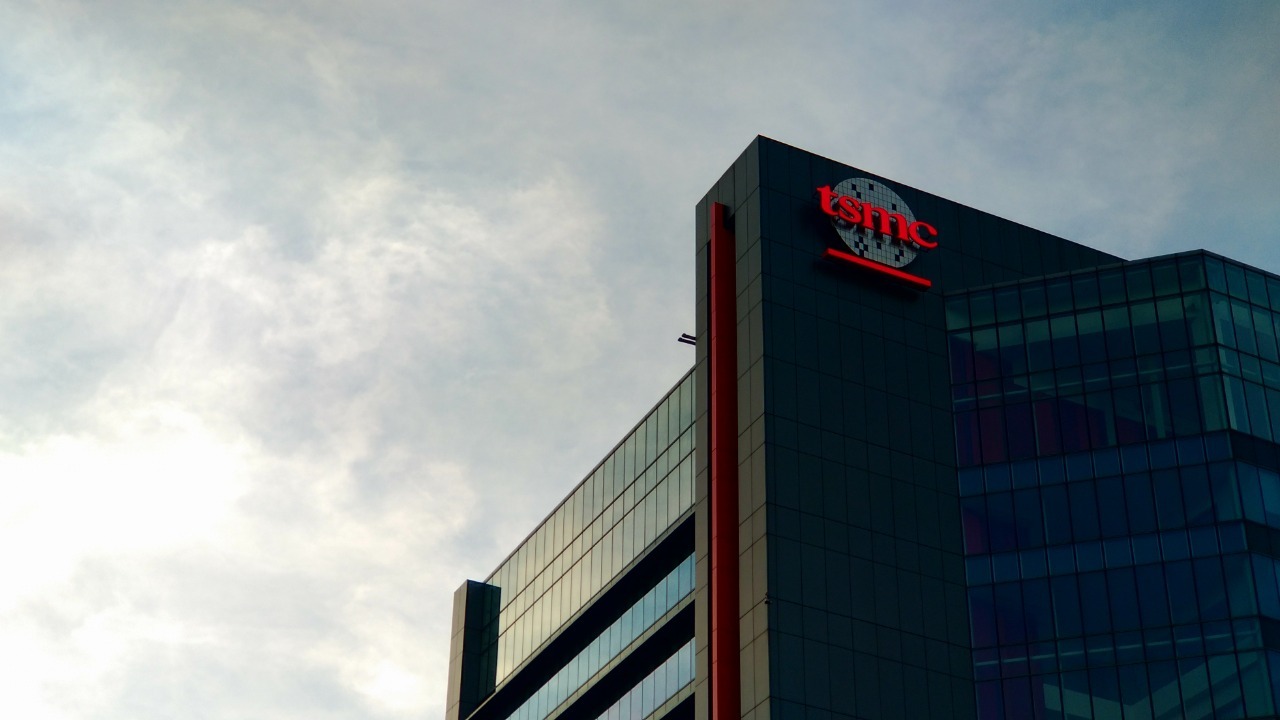
TSMC just gave Wall Street something rare in a market saturated with artificial intelligence hype: numbers that actually justify the excitement. The contract chip giant reported a powerful finish to 2025, with fourth quarter revenue of $33.73 billion, up 20.5% year over year, and profit jumping 35%, while January sales accelerated again with 37% growth. For Nvidia investors, those figures are more than a solid earnings print, they are a real-time readout of demand in the data center AI engine room where Nvidia still dominates.
Most AI processing is happening in data centers, and Nvidia controls a dominant 92% share of that accelerator market, so TSMC’s surge in high-performance chip orders effectively acts as a proxy for Nvidia’s pipeline. When the world’s largest contract chipmaker, with roughly 70% of foundry revenue share, signals that AI demand is not just holding but strengthening, it validates the idea that Nvidia’s growth story is still in its middle chapters rather than the final act. The bullish message TSMC just delivered is that the AI buildout is broad, durable, and increasingly embedded in the infrastructure budgets of the biggest technology buyers on the planet.
TSMC’s blowout quarter confirms the AI buildout is real
The most important takeaway from TSMC’s latest results is not just that the company beat expectations, but that the beat was driven squarely by AI chips rather than a one-off rebound in smartphones or PCs. Management reported fourth quarter revenue of $33.73 billion, up 20.5% year over year, and framed that growth as a direct result of surging demand for custom and high performance silicon used in data center accelerators. That is exactly the category where Nvidia’s GPUs and networking chips sit, which means TSMC’s order book is effectively a mirror of hyperscale AI spending.
The strength did not fade as the calendar flipped. TSMC then reported that January sales grew 37%, a sharp acceleration that suggests customers are not pausing to reassess AI budgets, they are leaning in. A separate breakdown noted that the world’s largest contract chipmaker saw its fourth quarter profit jump 35%, a sign that AI-heavy product mix is not only boosting revenue but also margins for TSM. For Nvidia shareholders, that combination of volume and profitability at their key manufacturing partner is a strong signal that the AI cycle is still in expansion mode rather than peaking.
Nvidia’s 92% grip on data center AI turns TSMC into a demand gauge
To understand why these numbers matter so much for Nvidia, it helps to look at the structure of the AI hardware market. Most AI processing takes place in data centers, and Most AI accelerator deployments still run on Nvidia platforms, where the company holds a dominant 92% share. When that much of the installed base is tied to a single vendor, any broad-based surge in AI compute orders flowing through TSMC is overwhelmingly likely to be Nvidia silicon, whether branded GPUs or custom chips that still rely on its architectures.
That dominance is why I see TSMC’s commentary as a de facto demand forecast for Nvidia’s data center segment. One analysis of Nvidia’s positioning, framed as a Deep Dive into NVDA, described the company as evolving into a $4.5 trillion infrastructure giant, not just a chip designer. If Nvidia is the architect of that AI infrastructure, TSMC is the construction firm pouring the concrete, and the latest earnings show the trucks are still running at full speed.
The foundry kingpin: 70% share and a widening AI moat
TSMC’s role in this story is not incidental. Earlier this year, one report highlighted that Taiwan Semi is the largest chip manufacturer in the world by revenue, with market share hovering around 70% in the contract foundry business. That scale gives it unmatched capacity to ramp cutting edge nodes, from 3 nanometer processes used in flagship GPUs to specialized variants tuned for high bandwidth memory and advanced packaging. For Nvidia, which relies on the most advanced nodes to keep its performance lead, there is effectively no substitute at comparable volume and yield.
TSMC’s dominance also simplifies the investor calculus. Another analysis of the AI supply chain noted that There is TSMC and some lesser competitors that do not have the same level of technology or scale, especially after Intel’s fall from grace in the foundry race. That concentration means Nvidia’s manufacturing risk is highly correlated with TSMC’s fortunes, but it also means that when TSMC reports a surge in AI-related revenue, the benefits are tightly focused on a small group of chip designers, with Nvidia at the front of the line.
Custom AI chips, Broadcom, and the ecosystem effect
One of the more intriguing signals in TSMC’s report is the rise of custom AI chips, often called ASICs, which are being developed by cloud giants and networking specialists alongside Nvidia’s general purpose GPUs. A detailed look at this trend pointed out that TSMC’s role as the manufacturing backbone is critical, with the foundry giant’s $33.73 billion in fourth quarter revenue and 20.5% growth reflecting not just Nvidia orders but also custom silicon from players like Broadcom. On the surface, that might look like a competitive threat to Nvidia, as hyperscalers experiment with alternatives to standard GPUs.
I see a more nuanced dynamic. Custom accelerators tend to be highly specialized, optimized for specific workloads or internal cost structures, while Nvidia’s platforms remain the default for a broad range of AI research and deployment. As long as TSMC’s capacity is expanding to accommodate both, Nvidia benefits from a richer ecosystem of AI hardware that still leans on its software stack and interconnect technologies. The fact that Broadcom and others are winning alongside Nvidia suggests that AI demand is deep enough to support multiple hardware strategies without immediately eroding Nvidia’s 92% share in the core data center accelerator market.
Reading the macro tea leaves: January’s 37% surge
Beyond the quarterly snapshot, TSMC’s January numbers offer a rare high frequency view into AI infrastructure spending. A market analysis of those figures noted that TSMC reported 37% sales growth for January and highlighted that the company’s outlook implied a potential market capitalization of $645 billion this year for TSMC. That kind of acceleration at the start of the year is hard to reconcile with any narrative that AI spending is already topping out or that customers are pulling back after an initial rush.
Television coverage of the earnings reaction captured the mood succinctly, noting that our top story featured a Taiwan semiconductor stock popping ahead of the open as the world’s top contract chip maker and Nvidia’s biggest supplier surprised to the upside. When the market rewards TSMC for AI-driven growth, it is implicitly endorsing the idea that Nvidia’s order book remains healthy, because investors know how tightly the two companies are linked. For Nvidia shareholders, TSMC’s early year surge is a macro signal that the AI capex cycle is still in its expansion phase.
The risk side: concentration, geopolitics, and supply chain fragility
None of this bullishness erases the structural risks that come with Nvidia’s dependence on a single foundry partner concentrated in one region. TSMC’s 70% share and technological lead mean that Nvidia has little practical diversification in the near term, especially for its most advanced products. Any disruption in Taiwan, whether from geopolitical tension, natural disaster, or localized supply chain shocks, would ripple directly into Nvidia’s ability to ship GPUs and networking gear, with limited short term alternatives.
Some investors treat TSMC’s scale as a de facto safety net, assuming that a company this central to the global economy will always find a way to keep operating. I think that view underestimates the operational fragility of such a concentrated system. The same analysis that highlighted TSMC’s dominance also noted that There are only a few lesser competitors with comparable ambitions, and they lack the same level of technology and capacity. That means Nvidia’s biggest fundamental risk is not demand, which TSMC’s numbers suggest is robust, but supply continuity in a world where the manufacturing bottleneck is both a strength and a single point of failure.
Why TSMC’s surge could deepen Nvidia’s software moat
Most coverage of Nvidia’s relationship with TSMC focuses on hardware volumes, but the more interesting story is what those volumes do for Nvidia’s software advantage. As TSMC ramps production of Nvidia’s latest architectures, each new wave of GPUs expands the installed base that runs on CUDA, cuDNN, and a growing stack of AI frameworks tuned specifically for Nvidia hardware. One analysis of Nvidia’s trajectory, framed as The Architect of Intelligence, argued that NVIDIA is evolving into a full stack infrastructure provider, not just a chip vendor. The more silicon TSMC ships for Nvidia, the more entrenched that full stack becomes.
This is where I think the market sometimes misreads the competitive landscape. Rivals like AMD can, in theory, match or even beat Nvidia on raw hardware metrics for specific workloads, but they cannot easily replicate a decade of software ecosystem investment that is now being reinforced by every incremental GPU TSMC manufactures. As TSMC’s AI output grows, it is not just feeding near term revenue, it is hardening Nvidia’s moat by making it even more costly for developers and enterprises to switch away from the dominant platform. In that sense, TSMC’s bullish guidance is not only good news for Nvidia’s next quarter, it is a structural tailwind for its long term margins.
More From The Daily Overview
*This article was researched with the help of AI, with human editors creating the final content.

Grant Mercer covers market dynamics, business trends, and the economic forces driving growth across industries. His analysis connects macro movements with real-world implications for investors, entrepreneurs, and professionals. Through his work at The Daily Overview, Grant helps readers understand how markets function and where opportunities may emerge.

