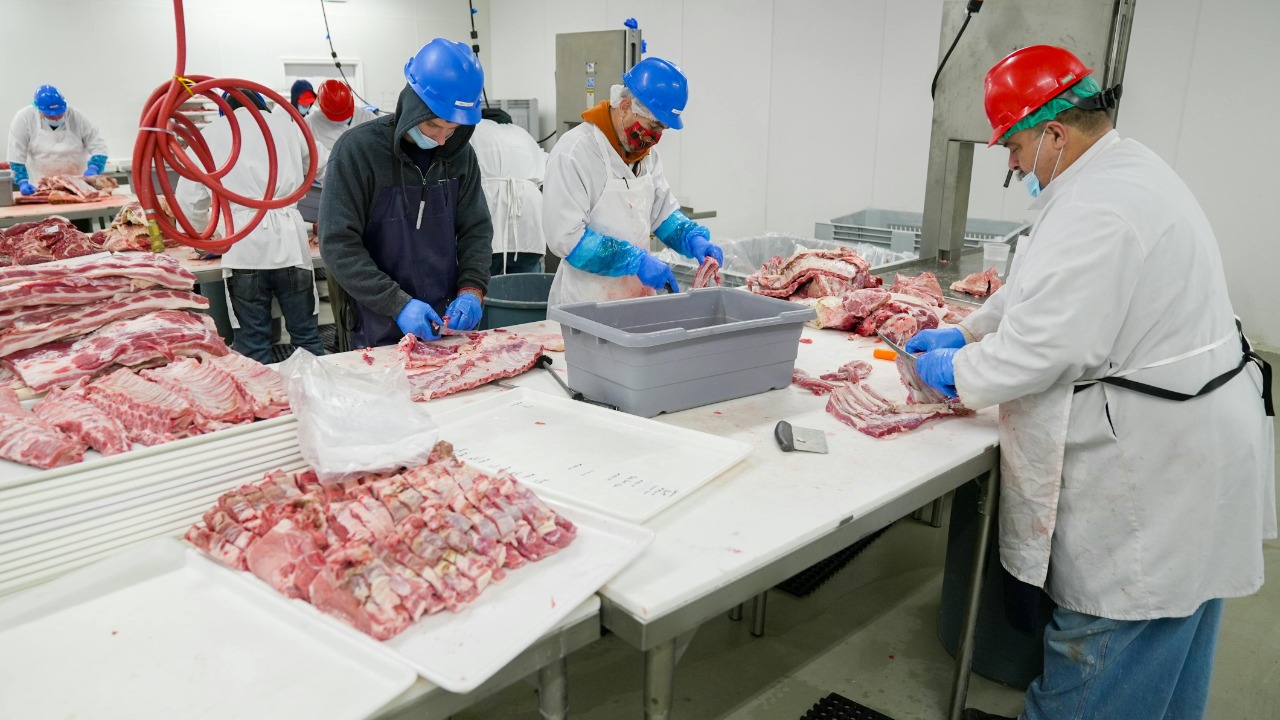
The sudden shutdown of a major Tyson beef complex has yanked nearly a tenth of U.S. slaughter capacity offline, instantly tightening an already stressed market and putting hundreds of millions of dollars at risk in Texas and Nebraska. The closure lands at the worst possible moment for consumers and ranchers, colliding with a historic cattle shortage and years of thin margins on the Plains. I see it as a stress test for how concentrated the country’s meatpacking system has become, and how exposed local economies are when a single plant goes dark.
Behind the headline numbers is a cascading story of lost paychecks, stranded cattle and higher grocery bills, stretching from feedlots in the High Plains to supermarket meat cases in coastal cities. The hit to Texas and Nebraska alone is estimated at roughly $300 million in lost economic activity, but the real stakes are national: a 9 percent cut in beef processing capacity at a time when inventories are already at their lowest in decades, and when communities built around these plants have few obvious replacements.
The 9% shock to U.S. beef capacity
When a single facility accounts for about 9 percent of U.S. beef slaughter, its closure is not a routine corporate adjustment, it is a structural shock. Tyson Foods has confirmed it will permanently shut a major beef plant and scale back operations elsewhere as it confronts a severe cattle shortage and rising costs, effectively pulling a critical piece of the country’s protein infrastructure out of service. The company has framed the move as a response to dwindling cattle supplies and the need to “optimize” its network, but the practical effect is a sudden hole in national capacity that other plants will struggle to fill quickly.
The timing could hardly be worse for consumers. Cattle inventories have fallen to the lowest level in 70 years, a historic squeeze that has already pushed wholesale and retail prices higher even before this shutdown. Tyson has said it will increase production at other beef facilities to meet customer demand, redistributing cattle and labor across its network to blunt the impact of the lost plant. Yet even with that shift, the removal of such a large single site from the system leaves less slack in the chain, which is likely to amplify price spikes whenever weather, disease or logistics disrupt the remaining plants.
Why Tyson is pulling back on beef
Tyson Foods is not walking away from a profitable asset on a whim, it is reacting to a multi-year squeeze that has made large-scale beef packing far riskier. Prolonged drought across key grazing states has shrunk the national herd, while high feed costs and expensive land have made it harder for ranchers to rebuild. In that environment, Tyson has concluded that running all of its legacy plants at full tilt no longer makes economic sense, especially when cattle are scarce and packers are bidding aggressively just to keep chains running.
In corporate terms, the company is repositioning around a smaller, more flexible beef footprint that can be fed by the available cattle supply. Tyson has already signaled that it will close at least one major complex and scale back other operations as part of a broader strategy to manage risk and protect margins. One detailed account of the decision notes that Tyson Foods is responding directly to dwindling cattle supplies, which have been shaped by parched rangelands and hiked feeding costs that ripple through every stage of the supply chain. From my vantage point, the company is effectively conceding that the era of cheap, abundant cattle that underwrote its previous scale is over, at least for now.
Texas and Nebraska’s $300 million gut punch
The economic fallout in Texas and Nebraska illustrates how a single corporate decision can reverberate through entire regions. The shuttered Tyson complex has been a cornerstone employer and buyer of cattle in both states, anchoring local tax bases and supporting a web of small businesses that depend on plant workers’ paychecks. When that spending disappears, the damage is not limited to the plant’s payroll; it hits grocery stores, car dealers, daycares and diners that have grown up around the steady flow of wages.
Local officials and industry analysts estimate that the combined hit to Texas and Nebraska could reach roughly $300 million in lost economic activity once direct wages, supplier contracts and secondary spending are tallied. In Nebraska, one community that has long relied on Tyson describes the closure as a “gut punch,” warning that closing a single slaughterhouse can ripple across ranchers nationwide because of how tightly integrated the cattle and beef markets have become. In Texas, where feedlots and cow-calf operations are deeply tied to nearby packers, the loss of a major buyer forces producers to haul cattle farther or accept lower bids, eroding already thin margins.
Ranchers squeezed between drought and packer power
For ranchers, the shutdown is not just a lost buyer, it is a fresh reminder of how concentrated the packing sector has become. With only a handful of large companies dominating beef processing, producers in states like Texas and Nebraska already have limited options when they bring finished cattle to market. Removing a plant that handled 9 percent of national slaughter tightens that bottleneck, giving the remaining packers more leverage over prices even as retail beef costs stay high.
Livestock specialists have been blunt about the stakes. Oklahoma State University Extension livestock marketing specialist Derrell Peel has warned that the industry fears what the impact of the Tyson Nebraska plant closure will be on both local markets and national price discovery, given how much volume is now funneled through fewer plants. From my perspective, the combination of drought-driven herd liquidation and packer consolidation leaves ranchers in a vise: they are paying more to raise fewer cattle, only to face fewer bidders when it is time to sell.
Community fallout and the risk of hollowed-out towns
Inside the towns that grew up around Tyson’s facilities, the closure is already reshaping daily life. Longtime employees are weighing whether to relocate, retrain or retire early, while school districts and hospitals brace for enrollment drops and budget shortfalls. In one Nebraska county, local leaders have described how Tyson’s departure will have a county-wide economic impact, as families relocate or consolidate and small businesses lose the customer base they have relied on for years. The risk is not just a temporary downturn, but a slow hollowing out of communities that have few alternative employers of similar scale.
Those local dynamics are mirrored in Texas, where rural towns tied to cattle and beef processing have been fighting population decline for years. The loss of a major plant accelerates that trend, making it harder to keep young families, attract new investment or maintain basic services. Some communities are trying to pivot by promoting tourism, logistics or light manufacturing, leaning on assets like regional industrial parks or upgraded transport hubs to lure different kinds of employers. I see those efforts as necessary but uphill, given how central a single large meatpacking plant has been to the tax base, housing market and cultural identity of these towns.
What this means for beef prices and the broader food system
For shoppers, the most visible effect of Tyson’s pullback will be on the price and availability of familiar cuts in the meat case. With cattle inventories at a 70 year low and a major plant offline, the supply of boxed beef is tightening just as holiday demand peaks and restaurant traffic remains strong. Tyson has said that, to meet customer demand, production will be increased at other beef facilities, optimizing volumes across its network despite the lack of cattle supply. In practice, that means running remaining plants harder, stretching labor and logistics, and leaving less room to absorb any new shock.
At a system level, the episode exposes how vulnerable the U.S. food supply has become to disruptions at a handful of massive facilities. Closing a single slaughterhouse, as one analysis of the Nebraska plant notes, can ripple across ranchers nationwide because of high costs and falling prices that are set in a few concentrated markets. From my vantage point, the Tyson shutdown is a warning shot: unless policymakers and industry leaders diversify processing capacity and support smaller regional plants, the next drought, disease outbreak or corporate retrenchment could carve an even bigger hole in the country’s protein supply, with higher prices and deeper damage for places like Texas and Nebraska.
More From TheDailyOverview
- Tennessee loses $2.6B megafactory and faces major layoffs
- Retired But Want To Work? Try These 18 Jobs for Seniors That Pay Weekly
- What to do with your pennies after the U.S. stops minting them
- Home Depot CEO warns of a troubling customer trend in stores

Grant Mercer covers market dynamics, business trends, and the economic forces driving growth across industries. His analysis connects macro movements with real-world implications for investors, entrepreneurs, and professionals. Through his work at The Daily Overview, Grant helps readers understand how markets function and where opportunities may emerge.

