The United Kingdom is preparing to surrender sovereignty over the Chagos Islands, a remote archipelago in the Indian Ocean that has long symbolised the afterlife of empire and the hard edge of Western power projection. As London steps back, the United States is moving to lock in its military footprint and, in the process, to turn a decolonisation milestone into a fresh assertion of global reach.
At the centre of this shift is Diego Garcia, the heavily fortified air and naval hub that anchors US operations from the Middle East to East Africa. The way Britain manages its retreat, and the way Washington responds, will help decide whether the world’s most powerful democracy is seen as stewarding the end of empire or quietly assembling the largest overseas network of bases and dependencies on the planet.
The UK’s last African colony and a treaty under fire
For more than two centuries the Chagos Islands sat inside the United Kingdom’s imperial orbit, eventually becoming part of the British Indian Ocean Territory carved out in the Cold War. That arrangement is now ending, with The UK having formally agreed to transfer sovereignty to Mauritius after years of legal and diplomatic pressure. The UN General Assembly backed Mauritius with an overwhelming, if non binding, vote that called on London to complete decolonisation of the archipelago, a position Port Louis has consistently framed as the correction of a historic wrong.
Under the deal, Returning the Chagos archipelago to Mauritius would close the chapter on Britain’s last remaining African overseas territory, while preserving the US base through a long term lease. The UK government has delayed further debate in the House of Lords on ratification of the Chagos Archipelago treaty, but legal experts such as Professor Marc Weller, Programme Director of the International Law Programme, argue that UK ratification will not violate international law because the territory has always been administered to some extent separately, a nuance that shapes how decolonisation is interpreted in this case.
Diego Garcia: the island America will not let go
For Washington, the Chagos story is less about imperial tidying up and more about the future of hard power in the Indian Ocean. Diego Garcia hosts a sprawling US facility that has supported bombing campaigns, surveillance flights and logistics for conflicts stretching from Iraq to Afghanistan, and recent commentary has stressed that the Diego Garcia military base is too important for cheap shots or symbolic gestures. In parliamentary debate, As the Defence Secretary told the House, the Diego Garcia treaty signed and laid before the House on 22 May is designed explicitly to secure the base against threats from hostile State targets in recent years, a reminder that the island is treated in US and UK planning as a non negotiable asset.
Under the terms of the proposed new Chagos deal with Mauritius, the UK will lease back Diego Garcia, the largest of the islands and the one that hosts the US base, for decades, with options that could keep American forces in place well into the second half of this century. Reporting on the Diego Garcia Military Base and British Indian Ocean Territory Bill shows how the treaty was laid before the House and framed as a way to guarantee that the base remains insulated from regional instability, effectively turning a decolonisation agreement into a long term basing contract for the Pentagon.
Trump’s fury, Greenland fantasies and a new imperial map
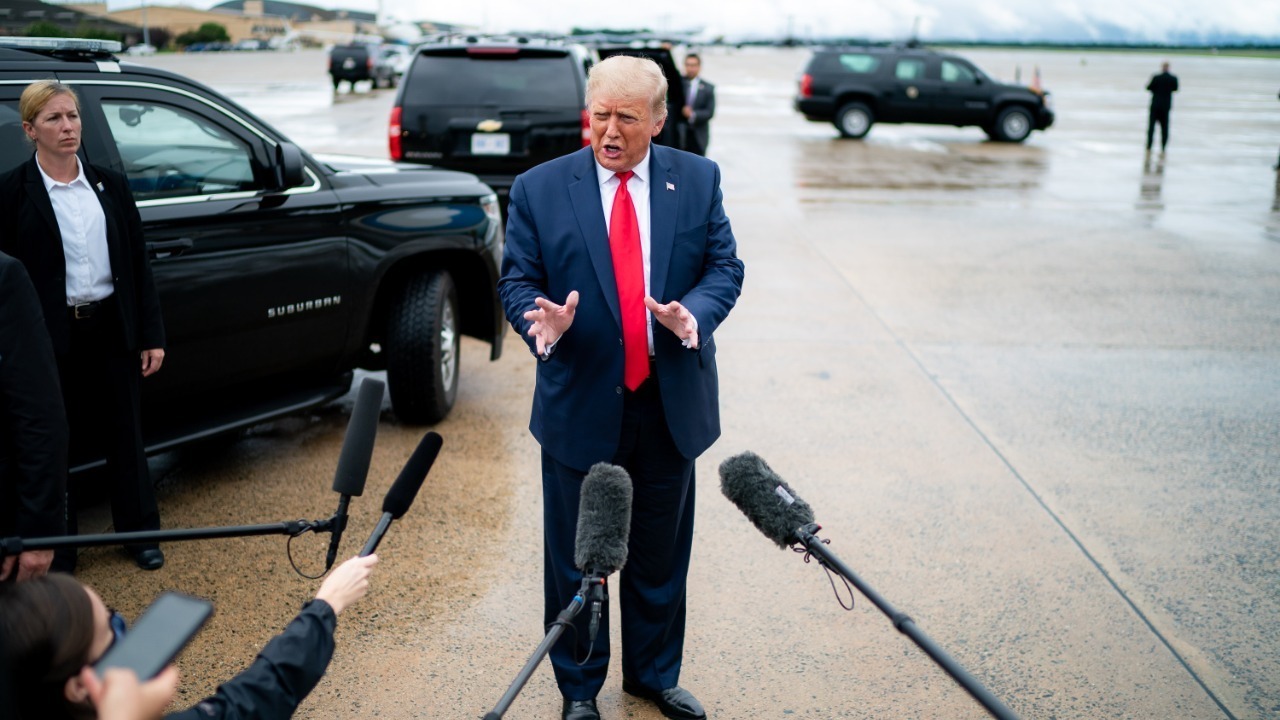
President Donald Trump has reacted to Britain’s retreat with a mix of outrage and opportunism that reveals how he sees territory as a tool of power. In public comments, President Trump has accused the UK of “great stupidity” over its decision to return the Chagos Islands to Mauritius, casting the move as proof that London cannot be trusted to safeguard shared strategic assets. The UN General Assembly’s backing for Mauritius, and The UK’s formal agreement to hand over sovereignty, have been cited by critics in Washington as evidence that Britain is prioritising international opinion over alliance discipline.
Trump has gone further, linking the Chagos decision to his long running fixation on Greenland and suggesting that the UK’s move is a reason for the United States to acquire Greenland as a counterweight. One report describes how, just when the world thought it had understood the full scale of Donald Trump’s territorial obsession with his Greenland fetish, he opened a new war front with the UK over Chagos, a clash amplified in video segments that frame the dispute as part of a broader pattern. In another account, Trump is quoted using his historic address to the UK to argue that the return of Chagos to Mauritius is a reason to acquire Greenland, turning a complex decolonisation process into a talking point for a much larger vision of American controlled territory.
British backlash and the politics of “surrender”
Inside Britain, the Chagos deal has triggered a sharp political backlash that mirrors Trump’s anger, even as it draws on very different instincts. Shadow foreign secretary Priti Patel has said the government “surrendered” the Chagos Islands, language that echoes long standing Conservative anxieties about giving up control over strategic territory. In one social media post, Shadow foreign secretary Priti Patel is quoted attacking the decision and arguing that the wider security partnership with countries such as China should be dropped altogether, a sign of how the Chagos debate is bleeding into broader arguments about Britain’s place between rival powers.
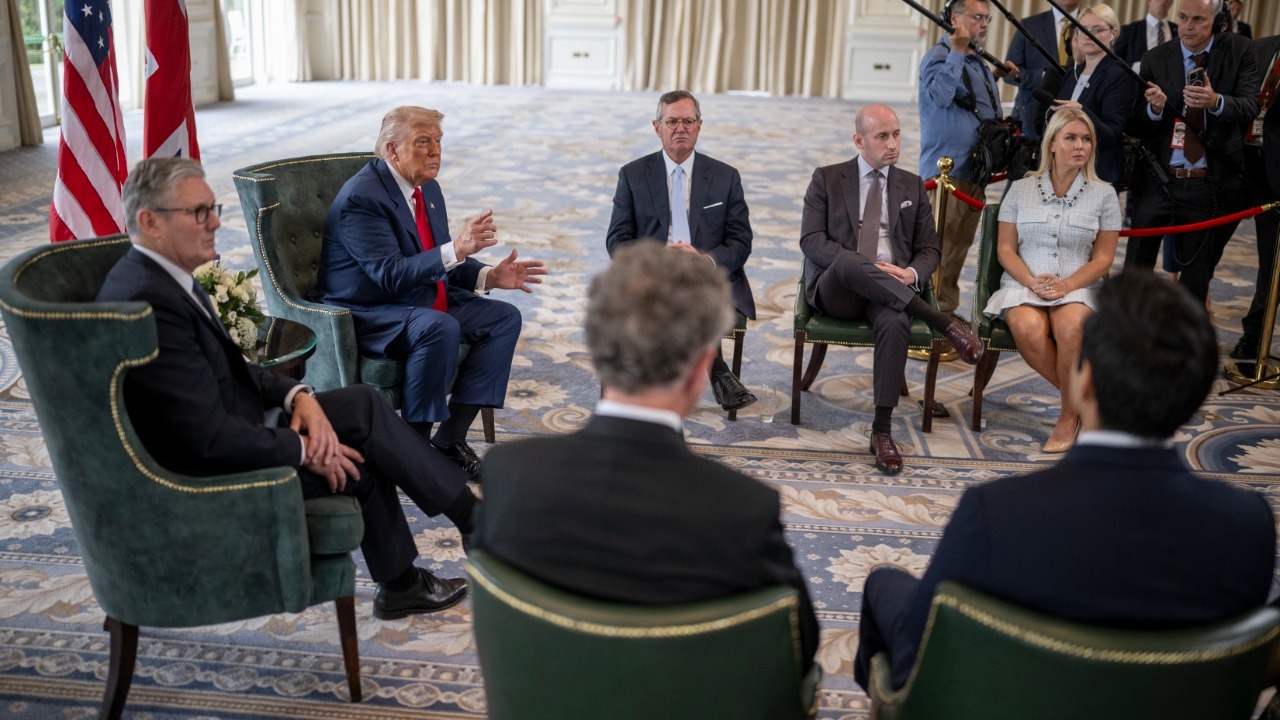
Another post, shared by supporters, celebrates Trump’s intervention with the words “Well done!!! Donald Trump says the UK’s plan to hand over sovereignty of the Chagos Islands to Mauritius is an ‘an act of GREAT STUPIDITY’,” turning the US president into an unlikely hero for parts of the British right. At the same time, detailed explainers on What is in the Chagos Islands deal and why it is controversial note that The UK government is standing firm on its decision to hand over sovereignty while leasing back Diego Garcia, insisting that the arrangement protects both the rights of Mauritius and the security interests tied to the base. The result is a rare alignment between a Conservative government committed to decolonisation in this specific case and a US president who is openly urging London to keep the islands British territory.
From Chagos to Venezuela: a wider US push for overseas leverage
The Chagos dispute is not happening in isolation, it sits alongside a broader shift in US strategy that leans more heavily on territorial leverage and resource control. Following January 3, 2026, the U.S. president’s rhetoric has shifted decisively toward asserting control over Venezuelan oil as a central strategic objective, a stance that analysts describe as part of a revival of US hard power in Latin America. That same instinct to secure physical assets, whether oil fields or island bases, runs through Trump’s approach to Chagos, Greenland and beyond, suggesting that the United States is less interested in formal colonies than in a lattice of locations it can dominate.
In the Indian Ocean, that lattice is anchored not only in Diego Garcia but also in other key points along vital sea lanes, including the wider Indian Ocean region that links the Gulf, East Africa and Southeast Asia. Commentators who argue that the Diego Garcia military base is too important for cheap shots see the Chagos treaty as a way to regularise US presence while deflecting criticism of Britain’s colonial legacy. In that sense, the UK’s retreat does not shrink Western power so much as it clears the way for Washington to consolidate what may be the world’s most extensive overseas network of bases, stretching from the Indian Ocean to the Arctic ambitions wrapped up in Trump’s repeated references to Greenland.
More From TheDailyOverview
*This article was researched with the help of AI, with human editors creating the final content.

Grant Mercer covers market dynamics, business trends, and the economic forces driving growth across industries. His analysis connects macro movements with real-world implications for investors, entrepreneurs, and professionals. Through his work at The Daily Overview, Grant helps readers understand how markets function and where opportunities may emerge.