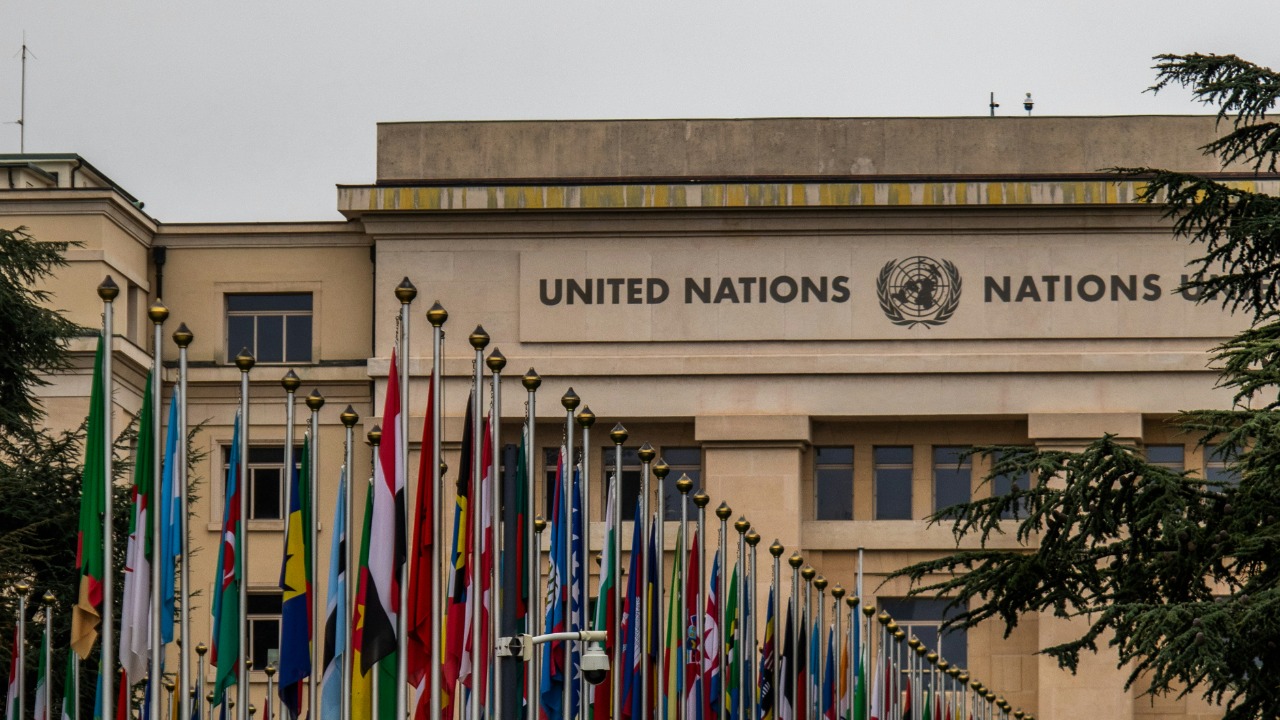
The United Nations is warning that its core operations are now at risk because member states have failed to pay what they owe. The secretary-general has described the situation as an “imminent financial collapse,” a phrase that would have sounded like hyperbole a few years ago but now reflects a cash crunch measured in the billions of dollars. At stake is not only the UN’s ability to pay staff and keep the lights on, but its credibility as the institution meant to manage global crises.
Behind the alarmist language is a structural problem that has been building for years: a widening gap between what governments promise to contribute and what actually arrives in New York. As arrears mount, the UN is burning through its reserves, slashing budgets and juggling payments in ways that look less like prudent stewardship and more like emergency triage.
The warning that the UN is running out of cash
When I look at the numbers the secretary-general has put on the table, it is clear why he has chosen to speak in such stark terms. Earlier this year, he told member states that unpaid dues to the regular budget were approaching $1.6 billion, a figure that already implied deep cuts to planned spending. By the end of the budget year, he reported that the UN closed its books with $1.568 billion in outstanding contributions, more than double what was owed just a few years earlier. In his message to the General Assembly, Guterres said liquidity reserves had been “nearly exhausted,” warning that without drastic improvement in payments the organization would not be able to meet its obligations.
That blunt assessment has now hardened into a formal warning that the UN faces an “imminent financial collapse” unless its financial rules are overhauled and arrears are cleared. In his appeal to the 193 member states, The United Nations chief argued that the current system leaves the secretariat hostage to late and partial payments, forcing it to delay reimbursements to troop contributors and postpone mandated activities. He has asked governments not only to pay what they owe, but also to give him more flexibility to manage cash across different budgets so that one part of the system is not starved while another sits on restricted funds.
How unpaid dues spiralled into a structural crisis
The arrears problem is not new, but the scale and persistence of nonpayment have turned what used to be a seasonal cash squeeze into something closer to a structural breakdown. According to the secretary-general’s own budget update, the UN entered the current year with a backlog of unpaid assessments that had already forced “deep spending cuts” into the core budget, even before new crises were factored in. Those Deep reductions meant hiring freezes, delayed maintenance and postponed program rollouts, all of which erode the organization’s capacity over time.
Guterres has described the situation as a “Kafkaesque cycle” in which the UN is expected to refund money it never actually received, because the rules assume full and timely payment that no longer exists in practice. In a message circulated to delegations, he wrote that “we are trapped in a Kafkaesque cycle expected to give back cash that does not exist,” a line that captures both the bureaucratic absurdity and the political paralysis around reforming the UN’s financial structure. The result is a system in which the secretariat must constantly shuffle limited cash between accounts, while member states argue over who should pay how much and when.
The US arrears and the politics of nonpayment
At the heart of the current crisis is the decision by some of the UN’s largest contributors to hold back payments, either as a matter of domestic politics or as leverage over policy disputes. The most consequential shortfall comes from The US, which is by far the biggest single funder of the regular budget. According to internal figures cited to diplomats, The US (the United States) now owes $2.196 billion (NZ$$3.65b) to the UN’s regular budget, plus it will owe hundreds of millions more for the current year. That figure alone accounts for a large share of the total arrears and has forced the secretariat to delay reimbursements to countries that contribute troops and police to peacekeeping missions.
Separate reporting, based on a UN official who spoke on condition of anonymity, puts the outstanding amount in similar terms, stating that The US now owes 2.196 billion in USD to the regular budget and will owe a further 767 m for this year. That level of arrears reflects not just accounting delays but a political choice by Washington to withhold funds amid disputes over UN policy and management. It also comes at a moment when the United States has pulled back from several multilateral commitments, leaving other countries to decide whether they will fill the gap or follow the same path of selective disengagement.
Other major donors pull back and the aid landscape shifts
The United States is not alone in tightening the purse strings. Other traditional donors have also reduced their contributions to international aid and multilateral institutions, compounding the pressure on the UN system. Reporting on the broader funding environment notes that Other countries, such as the UK and Germany, have announced significant reductions in foreign aid, cuts that inevitably affect the resources available for UN agencies and programs. When several of the largest economies in the system all move in the same direction, the cumulative effect is a sharp contraction in predictable funding.
Inside the UN, officials warn that this is not just a matter of trimming around the edges. The secretary-general has said that The UN is facing an unprecedented liquidity crunch that is “categorically different” from past budget squeezes, because it coincides with a surge in demand for humanitarian relief, peacekeeping and climate-related support. In his words, the organization is now in a Kafkaesque cycle of obligations and expectations that no longer match the cash available. That mismatch is already visible in delayed payments to vendors, postponed field missions and a growing backlog of reimbursements owed to countries that provide blue-helmeted troops.
Inside Guterres’s plea: reform, flexibility and political will
Antonio Guterres has chosen to confront member states with unusually direct language, arguing that the current financial model is no longer fit for purpose. In his appeal, Guterres called on governments to address unpaid dues and to give the secretariat more authority to manage cash across different parts of the budget. He has stressed that the UN chief, Antonio Guterres, is not asking for more money overall so much as for the ability to use existing resources more rationally, rather than being forced to keep funds siloed while other accounts run dry.
In a separate message, the secretary-general framed the problem in almost literary terms, saying that Secretary General Antonio Guterres sees the organization trapped in a Kafkaesque cycle of returning money that was never received. He has warned that without urgent action, the UN risks an “imminent financial collapse” that would undermine its ability to respond to conflicts, disasters and human rights crises. For Guterres, the crisis is not only about balance sheets but about whether member states are willing to match their rhetorical support for multilateralism with the predictable funding that keeps the system functioning.
Who is paying on time, and who is not
While the headlines focus on the biggest debtors, the UN’s own records show that many countries continue to meet their obligations in full and on time. The organization maintains a public honour roll of member states that have paid all assessments due, a list that often includes small and middle-income countries that see UN membership as a core part of their foreign policy identity. Their punctual payments highlight the political nature of the arrears problem: it is not simply that poorer states cannot afford to pay, but that some of the wealthiest are choosing to delay or withhold funds.
At the same time, the secretary-general has reminded governments that the regular budget is only one piece of a much larger financial puzzle that includes peacekeeping assessments and voluntary contributions to agencies like UNICEF and the World Food Programme. In his warning to the General Assembly, Guterres noted that because so much is owed, the UN’s liquidity reserves have been nearly exhausted, leaving the organization with little buffer against further shocks. That means even countries that are current on their dues could see mandated programs scaled back or delayed, simply because the cash to implement them is not available when needed.
A mandate under strain after US withdrawal
The financial crisis is unfolding against a backdrop of political tension over the UN’s role and relevance, particularly in Washington. After the withdrawal of the United States from several UN-related commitments, the United Nations has publicly doubled down on its core mandate, arguing that global challenges from pandemics to climate change cannot be managed without a strong multilateral system. In a recent discussion of the fallout from US decisions, UN officials stressed that they would continue to pursue their charter responsibilities even with fewer resources, but acknowledged that reduced American engagement makes it harder to mobilize collective action.
That tension is now sharpened by the arrears crisis. When the largest contributor withholds billions, it not only drains the budget but also signals to other governments that nonpayment is an acceptable form of political pressure. In his latest appeal, Antonio Guterres warned that if this pattern continues, the UN will be forced to make choices that cut to the bone of its operations, from scaling back field missions to reducing support for investigations into war crimes and crimes against humanity. The question now is whether member states, starting with the biggest debtors, are prepared to treat the warning of “imminent financial collapse” as a final alarm bell or just another piece of background noise in an already crowded diplomatic agenda.
More From TheDailyOverview
*This article was researched with the help of AI, with human editors creating the final content.

Grant Mercer covers market dynamics, business trends, and the economic forces driving growth across industries. His analysis connects macro movements with real-world implications for investors, entrepreneurs, and professionals. Through his work at The Daily Overview, Grant helps readers understand how markets function and where opportunities may emerge.

