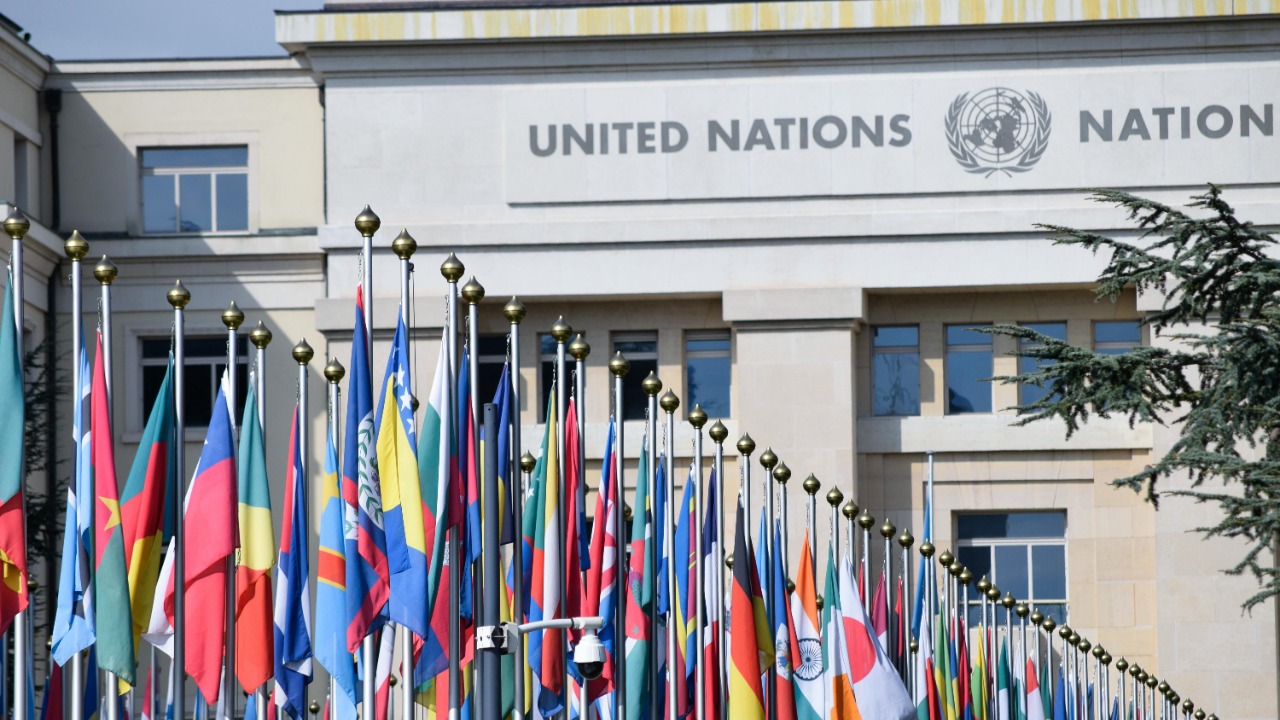
The United Nations human rights office is warning that it is running on fumes just as global abuses are mounting, and officials say cuts driven by President Donald Trump have pushed the system into what they bluntly describe as “survival mode.” The United States was long the largest single funder of the United Nations, but the sharp retrenchment since Trump’s return to the White House has collided with a broader liquidity crunch inside the UN system. The result is a scramble for emergency cash that could reshape how, and where, the world’s flagship human rights body operates.
At stake is not only the future of a single office in Geneva but the credibility of international oversight in places where governments are already testing the limits of impunity. As the UN pleads for hundreds of millions of dollars to keep monitors in the field, the political message from Washington is that multilateral rights work is no longer a priority, even as Congress tries to claw back some influence through a new foreign aid package.
The rights chief’s $400 million alarm
UN High Commissioner for Human Rights Volker Turk has chosen unusually stark language to describe the crisis, saying his office is now operating in “survival mode” and cannot meet basic obligations without a rapid cash injection. Earlier this week, he appealed for $400 m in additional voluntary funding, warning that without it the Office of the High Commissioner for Human Rights would be forced to keep scaling back investigations, technical assistance and field presences that underpin the wider UN human rights system. According to his team, the shortfall has already triggered cuts to operations in 17 countries, including Colombia, Myanmar and Chad, where independent scrutiny is often the only check on abusive security forces and armed groups, and Turk argues that every further reduction “untie[s] perpetrators’ hands” by signalling that the world is no longer watching.
Turk’s plea is not a routine budget negotiation but a response to a structural squeeze that has left his office heavily dependent on a shrinking pool of voluntary contributions. In Geneva, he has framed the $400 million request as the minimum needed to cover this year’s needs and restore some of the capacity lost in recent months, stressing that the current funding model leaves core human rights work vulnerable to the political whims of major donors. His warning that the global human rights system is “in crisis” is backed up by internal assessments that show mandated activities outstripping available resources, a gap that has widened as governments delay or withhold payments and as key contributors, led by the United States, pull back from multilateral commitments.
From liquidity crunch to ‘survival mode’
The emergency at the human rights office is unfolding against a broader liquidity crisis that has forced the United Nations to slash its regular budget and contemplate deep staff cuts. In a recent presentation on the 2026 spending plan, the UN leadership said it would reduce the budget by $577 m, a move that would eliminate nearly a fifth of positions across the system as unpaid member dues accumulate and cash reserves dwindle. The Secretary-General has described the situation as an “imminent financial collapse” scenario if governments do not pay what they owe, and the belt-tightening has already translated into hiring freezes, delayed reimbursements and curtailed missions that ripple down to specialized entities like the human rights office.
Even before this latest round of cuts, the UN had been under pressure to bring its resource requirements for 2026 down to 3.28 billion in the regular budget, a target that reflects both political resistance from some member states and the reality of chronic arrears. That push, outlined in a budget speech in Dec, has left departments competing for shrinking slices of a pie that no longer matches the mandates they have been given by the General Assembly and the Security Council. For the rights office, which relies heavily on extra-budgetary funding, the system-wide squeeze has compounded its own shortfalls, turning what might have been a manageable gap into a full-blown survival test.
Trump’s cuts and the end of U.S. dominance at the UN
The financial freefall has been accelerated by a deliberate shift in U.S. policy under President Donald Trump, who has moved quickly to reduce Washington’s contributions to multilateral institutions since returning to office. The United States was the United Nations’ biggest contributor, but reporting from Feb makes clear that it has slashed its funding since Trump came back to power, hitting areas such as human rights monitoring, development and conflict prevention particularly hard. Officials inside the Office of the High Commissioner say the loss of predictable U.S. support has forced them to halt or shrink programs that once relied on American backing, from training judges and police to supporting national human rights institutions.
Trump and his allies have framed the pullback as a necessary correction, arguing that the UN is bloated, biased and insufficiently accountable to U.S. taxpayers. A post shared by his political operation in Jan amplified warnings of an “imminent financial collapse” at The UN while celebrating the administration’s decision to “pull the plug” on what it portrays as wasteful globalism, underscoring that the cuts are a feature, not a bug, of the president’s foreign policy. For the human rights office, that political message translates into a practical dilemma: it must now persuade other governments, and perhaps private donors, to fill a hole left by a superpower that once championed many of the very mechanisms it is now starving of funds.
Congress pushes back with a $50 billion signal
On Capitol Hill, lawmakers are trying to send a different message about America’s role in the world, even as they operate within the constraints set by the White House. Congress has just passed a $50 billion foreign aid bill that restores funding for a range of humanitarian and development programs that were cut in 2025, a package that supporters say is meant to shore up fragile states and demonstrate that the United States still backs international engagement. The legislation, reported in Feb as having cleared both chambers despite Trump’s objections, directs money to health, food security and stabilization efforts that often intersect with human rights priorities, even if they do not directly replenish the UN’s own coffers.
Backers of the bill, speaking to NPR, have framed it as a way to keep the United States “stronger on the world stage” by investing in partners rather than ceding ground to rivals who are eager to fill any vacuum. By Fatma Tanis noted that the measure passed despite Trump’s cuts in 2025, highlighting a growing rift between the president and parts of Congress over how far to retreat from multilateral commitments. Yet the package does not reverse the specific reductions that have hit the UN human rights office, and diplomats acknowledge that without a change in the administration’s stance, Washington’s once-dominant role in funding global rights work is unlikely to return soon.
What ‘survival mode’ means on the ground
For people living under abusive governments, the phrase “survival mode” is not an abstraction but a description of what happens when monitors, investigators and advisers disappear. Turk has warned that cuts to his office’s presence in countries such as Colombia, Myanmar and Chad mean fewer eyes on the behavior of security forces, fewer reports to the Human Rights Council and fewer channels for victims to seek redress. In GENEVA, he has told diplomats that these reductions “untie perpetrators’ hands,” a phrase echoed in AFP reporting that captures the fear that warlords, militias and authoritarian leaders will interpret the UN’s retreat as a green light. The Offic has already reduced or frozen some field activities, and officials concede that they are now triaging crises rather than responding comprehensively.
More From The Daily Overview
*This article was researched with the help of AI, with human editors creating the final content.

Grant Mercer covers market dynamics, business trends, and the economic forces driving growth across industries. His analysis connects macro movements with real-world implications for investors, entrepreneurs, and professionals. Through his work at The Daily Overview, Grant helps readers understand how markets function and where opportunities may emerge.

