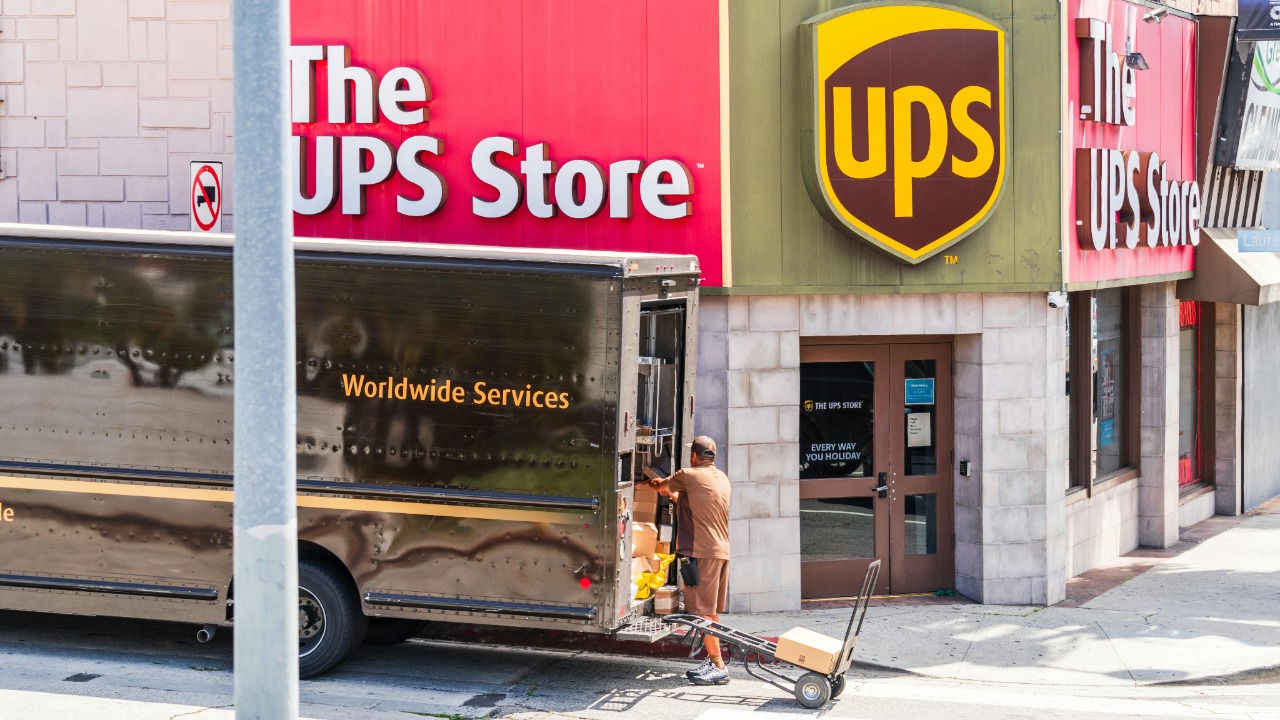
UPS’s latest quarterly earnings did not just confirm a deep restructuring; they collided with a sweeping lawsuit from New York’s top law enforcement official. As the company moves to cut up to 30,000 jobs by the end of 2026, New York Attorney General Letitia James is accusing it of cheating more than 20,000 seasonal workers out of pay, even as UPS races to shrink its dependence on Amazon, which it has agreed to reduce by more than 50 percent by June 2026. James has condemned what she calls worker exploitation, while UPS chief executive Carol Tomé has defended the cuts as part of a necessary “network reconfiguration” tied to a sharp drop in Amazon volume.
UPS’s Aggressive Cost-Cutting Strategy
UPS put a stark number on its restructuring in its 4Q 2025 earnings release, telling investors it plans to eliminate up to 30,000 jobs in the United States by the end of 2026 as it reshapes its delivery network. The company tied those cuts to a broad “network reconfiguration” that includes retiring aircraft and consolidating ground operations, moves it said are needed to match staffing and infrastructure to a smaller parcel flow from its largest customer. UPS characterized the reductions as part of a disciplined plan to protect profitability as volumes fall, rather than as a short-term reaction to any single quarter.
To get there, UPS is leaning heavily on a voluntary buyout program rather than immediate mass layoffs. In corporate terms filed with regulators and described in a company statement, UPS is offering eligible drivers a payout of $1,800 per year of service, with a $10,000 minimum, plus continued retirement benefits for those who accept. The company framed the offer as a way to “right-size” its workforce while giving long-serving employees a financial bridge, even as union leaders argue that the program, and the scale of the planned reductions, violate the spirit of recent contract talks.
The New York AG Lawsuit: A Legal Wall for Layoffs
Just as UPS was outlining that restructuring, New York Attorney General Letitia James filed a sweeping complaint that could complicate the company’s labor plans. In a lawsuit against UPS, her office alleges that since 2019 the company has engaged in systematic timekeeping manipulation that forced more than 20,000 seasonal workers across the state to work off the clock and miss out on millions of dollars in wages. The complaint describes a pattern in which managers allegedly edited time records or pressured temporary staff to clock out before finishing shifts, and it seeks more than $100 million in restitution and penalties along with court-ordered reforms to UPS’s timekeeping systems.
James did not mince words, accusing UPS of “cheating” seasonal employees and exploiting the very workers who help it handle peak holiday surges. Her office framed the case as an attempt to send a message to large employers that seasonal and part-time staff are entitled to the same wage protections as any other worker. Union representatives have seized on the lawsuit to argue that the alleged practices, if proven, would also violate provisions in their national agreement, though those claims remain opinions from labor advocates rather than established findings in court.
Amazon Pivot Stalls Amid Volume Glide-Down
Behind the headcount reduction is a deliberate move to shrink UPS’s exposure to Amazon, which has long been its largest single customer. According to a detailed SEC filing, Amazon accounted for 11.8% of UPS’s consolidated revenues in 2024, a concentration the company now views as strategically risky. In that same filing, UPS disclosed that in the first quarter of 2025 it entered into an agreement in principle to cut Amazon’s volume by more than 50% by June 2026, a planned “glide-down” that management says will free up capacity for higher-margin business.
UPS has already started executing that plan. Company disclosures cited in broader market reporting indicate that UPS has reduced Amazon parcels by about 1 million pieces per day so far and intends to trim another 1 million pieces per day as the agreement progresses. Executives have acknowledged that the pivot is complex and that some elements appear to be moving more slowly than hoped, but the filings do not spell out a single cause for any stall. Instead, they describe a managed ramp-down that must be synchronized with facility closures, fleet changes and the rollout of new business in healthcare and other premium segments.
Timeline of UPS’s Restructuring Moves
The path to this moment began when UPS formally quantified just how much of its business ran through Amazon. In its year-end disclosure for 2024, the company reported that Amazon represented 11.8% of consolidated revenues, a figure that immediately raised questions among analysts about concentration risk. By early 2025, UPS had followed that with the agreement in principle to reduce Amazon volume by more than 50% by June 2026, setting the stage for a multi-year restructuring that would touch everything from aircraft utilization to local delivery routes.
As the volume plan took shape, UPS moved to align its physical footprint and staffing. Company statements and investor updates summarized in independent reporting show that UPS intends to close 24 buildings in the first half of 2026, part of a broader consolidation that includes retiring older aircraft models and concentrating parcels in fewer, more automated hubs. The voluntary buyout program for drivers, detailed in a UPS statement, was launched against that backdrop, offering the $1,800-per-year and $10,000-minimum formula as a way to trim headcount without immediate pink slips. The New York Attorney General’s lawsuit in January 2025 then layered on new legal risk just as UPS was asking thousands of workers to consider walking away.
Why This Matters for Workers and the Economy
The stakes for workers are large. UPS has signaled that the up to 30,000 planned job cuts will fall heavily on U.S. drivers and other front-line roles, many of them unionized positions that have long been a benchmark for middle-class wages in the logistics industry. Labor-focused analysis cited in financial reporting notes that such a sizable reduction could ripple through local economies that depend on UPS depots and delivery routes, especially in smaller markets where alternative employers may not be able to absorb displaced drivers quickly.
UPS leadership has tried to counter those concerns by emphasizing a strategic shift toward higher-margin services rather than simple parcel volume. In comments reported by business outlets, executives have highlighted healthcare logistics as a key growth area, pointing to specialized handling of pharmaceuticals and medical devices as a way to replace some of the lost Amazon revenue with more profitable work. That pivot may eventually create new jobs in temperature-controlled warehousing, compliance and specialized transport, but in the near term it does little to ease anxiety among delivery drivers and warehouse staff who see buildings closing and routes disappearing.
Uncertainties and Next Steps
Despite the detailed figures in UPS’s filings, several elements of the restructuring remain unsettled. The company has not disclosed how many employees it expects to accept the voluntary buyout, and labor advocates quoted in independent coverage argue that the program could pressure workers into leaving under terms they view as less favorable than negotiated protections. At the same time, the New York Attorney General’s lawsuit is still in its early stages, and no court has yet ruled on the allegations of off-the-clock work and manipulated time records. Any financial settlement or judgment could affect how much capital UPS has available for severance, retraining or investments in new business lines.
There is also uncertainty around how cleanly the Amazon glide-down will proceed. The agreement in principle to cut Amazon volume by more than 50% by June 2026 is binding on paper, but the filings do not spell out enforcement mechanisms if either side wants to adjust the pace. Analysts cited in industry coverage say the shift could be affected by broader e-commerce trends, Amazon’s own logistics buildout or unexpected swings in consumer demand. For now, UPS is threading a narrow path: it is closing 24 facilities, retiring aircraft and targeting up to 30,000 job cuts while defending itself against a major wage-theft lawsuit and betting that a faster push into healthcare logistics will eventually make the pain worthwhile.
More From The Daily Overview
*This article was researched with the help of AI, with human editors creating the final content.

Grant Mercer covers market dynamics, business trends, and the economic forces driving growth across industries. His analysis connects macro movements with real-world implications for investors, entrepreneurs, and professionals. Through his work at The Daily Overview, Grant helps readers understand how markets function and where opportunities may emerge.

