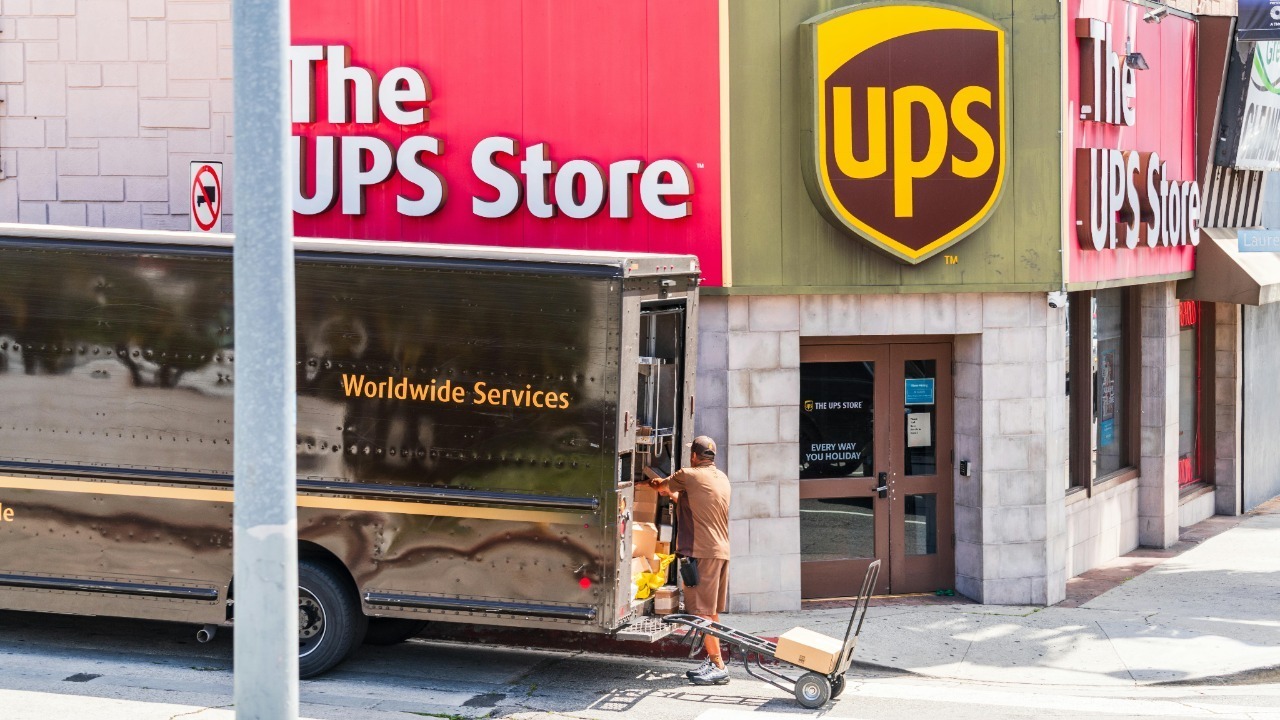
UPS is pulling back from a key distribution hub in Alabama, a move that crystallizes how its break with Amazon is reshaping the company’s entire U.S. network. The closure, part of a broader plan to strip out roughly $8 billion in costs, is landing hardest on workers and local officials who once saw parcel logistics as a dependable growth engine.
What looks like a single facility shutdown is in fact the local face of a national strategy: UPS is shrinking its Amazon exposure, consolidating capacity, and betting that a leaner network will deliver higher margins even as revenue growth slows.
Montgomery’s hub feels the shock first
The decision to wind down operations at the Montgomery UPS distribution facility turns a national restructuring into a very local crisis. State filings and local reports indicate that UPS is preparing to cut more than one hundred jobs at the site, with notices pointing to layoffs beginning around Februa as the company scales back activity in Montgomery, Alabama. For a mid sized metro that has spent years courting logistics and manufacturing employers, the loss of a major parcel hub is a direct hit to both household incomes and the city’s pitch as a distribution crossroads.
Local coverage underscores how abrupt the shift feels on the ground. One notice from the Montgomery UPS distribution facility describes plans to lay off employees and references a process to provide support as the site winds down, while another report details expectations that roughly 130 positions could be eliminated as the company implements its national plan to streamline operations and align capacity with demand. Those figures track with a separate filing that cited 128 jobs at risk in Montgomery, suggesting that nearly the entire workforce at the facility could be affected as UPS executes its broader restructuring.
Network Reconfiguration and the four site shakeup
Montgomery is not an isolated case, it is one node in what UPS has described as a sweeping “Network Reconfiguration” that is closing or trimming operations at multiple facilities. Company disclosures indicate that UPS will close or reduce operations at four locations in the coming months as part of this overhaul, a move framed as necessary to match capacity with shifting parcel flows and to concentrate volume in the most efficient buildings. The Alabama hub is caught up in that process, alongside other sites that are being shuttered or scaled back as the company redraws its U.S. map to support a smaller, more profitable footprint.
Executives have been explicit that this is not a minor tune up but a structural reset. In outlining the Network Reconfiguration initiative, UPS leadership tied the facility changes directly to its decision to reduce reliance on Amazon and to focus on customers and lanes that generate stronger returns. The company has said the reductions are part of a consolidation push that will allow it to serve shippers more efficiently, even as it cuts ties with lower margin business, a point reinforced in internal explanations of the four locations slated for closure or downsizing and in descriptions of the broader Network Reconfiguration strategy.
The Amazon split and a deliberate $8 billion retreat
The catalyst for this retrenchment is UPS’s decision to dramatically scale back its work for Amazon, historically its largest customer. Earlier in the restructuring cycle, UPS announced that it would reduce the amount of Amazon volume it delivers by more than 50% by the second half of 2026, under an agreement that effectively unwinds a relationship that once defined peak season parcel flows. That cutback is central to the company’s plan to remove roughly $8 billion in costs from its network, since fewer Amazon packages mean less need for a sprawling lattice of regional hubs and satellite facilities.
Management has been clear that the goal is not simply to shrink, but to trade low margin volume for healthier business. Earlier commentary from UPS leadership linked the Amazon pullback to a broader effort to lift profitability, with executives noting that the company’s margins showed improvement even as revenue growth lagged. In that context, the decision to slash Amazon exposure and reconfigure the network is framed as a path to as much as $6 billion in profit improvement in fiscal 2026, a target that helps explain why UPS is willing to absorb the political and community blowback that comes with closing facilities and cutting jobs tied to Earlier Amazon AMZN volumes.
Job cuts, facility closures, and the human cost
Behind the strategy slides and cost targets is a stark labor story. UPS has outlined plans to cut approximately 20,000 jobs and close 164 facilities in 2025 as it accelerates the Amazon drawdown, citing tariffs and economic conditions alongside the shift in customer mix. Those figures put the Montgomery layoffs in perspective, the Alabama hub is one of scores of locations being thinned out or shuttered as UPS compresses its footprint to fit a smaller, more diversified book of business. For workers, the timing is particularly painful, coming on the heels of a high profile labor contract and amid broader uncertainty in the freight and parcel sectors.
Local reporting in Alabama captures how that national plan translates into individual pink slips. Notices tied to the Montgomery UPS distribution facility describe layoffs beginning early in the year, with company representatives outlining a process to provide support to affected employees as the site winds down. One account references a wave of job cuts at the facility, while another details expectations that 130 layoffs are likely as UPS implements its restructuring, figures that align with the Montgomery UPS notices and the 130 layoffs figure cited in state filings. For a city that has leaned on logistics as a pillar of its jobs base, those numbers are not abstract, they represent drivers, sorters, and supervisors whose livelihoods are directly tied to UPS’s evolving relationship with Amazon.
What a leaner UPS means for shippers and cities
From a shipper’s perspective, the UPS pivot is both a risk and an opportunity. As the company cuts Amazon deliveries by half and retools its network, it is signaling that it wants to prioritize customers who value reliability and are willing to pay for premium service, rather than chasing every incremental package. Company statements have emphasized that while some Amazon deliveries will decrease, they will not vanish entirely, and that UPS is taking steps to maintain service quality for remaining Amazon lanes while courting a broader mix of retailers and industrial clients. That approach is framed as a path to profitability and customer diversification, a message underscored in explanations of how UPS and Amazon will coexist after the volume cut.
Supporting sources: UPS to cut.
More From The Daily Overview

Grant Mercer covers market dynamics, business trends, and the economic forces driving growth across industries. His analysis connects macro movements with real-world implications for investors, entrepreneurs, and professionals. Through his work at The Daily Overview, Grant helps readers understand how markets function and where opportunities may emerge.