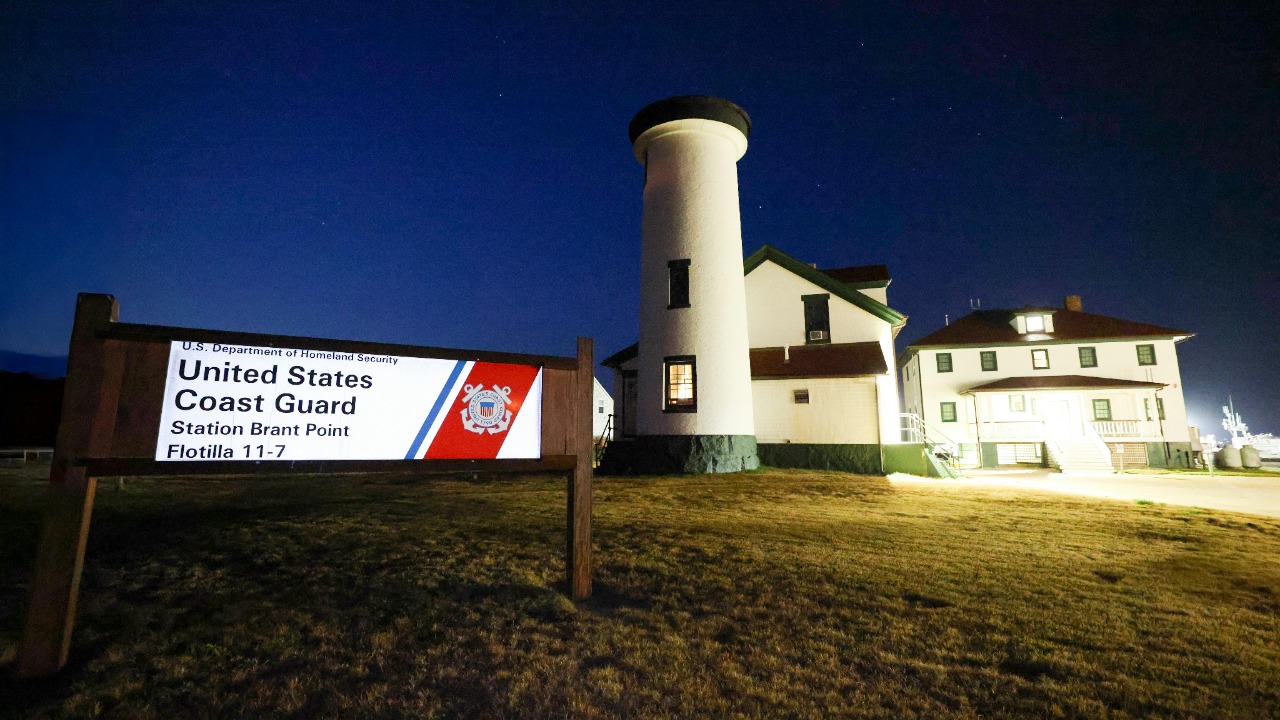
The U.S. Coast Guard has logged a historic win in the drug war, seizing what officials describe as the largest haul of cocaine ever taken by a single cutter in service history. Packed into bales and stacked on a South Florida pier, the cache is valued at more than $362 million and represents tens of thousands of pounds of narcotics that will never reach American streets.
Behind the headline figure is a complex story of maritime surveillance, armed interdictions and international coordination that stretches from the eastern Pacific to Port Everglades. I see this bust not just as a record-setting moment, but as a revealing snapshot of how the Coast Guard is adapting its tactics against increasingly sophisticated trafficking networks.
The record haul and why it matters
At the center of the operation is a staggering quantity of cocaine, roughly equivalent to more than 24 tons, that Coast Guard crews intercepted over the course of a single patrol. Officials say the drugs, valued at more than $362 million, were consolidated and offloaded in South Florida after a series of interdictions that pushed the service to a new benchmark for a single cutter. The scale of the seizure underscores how much product cartels are willing to move at once, and how critical maritime chokepoints have become in the hemispheric drug trade.
Coast Guard leaders have framed the bust as a milestone in a broader campaign that has already set a historic record for cocaine seized in the current fiscal year, with the service highlighting the unprecedented volume of narcotics taken off the water in official reporting. In South Florida, local coverage described how crews offloaded over 24 tons of cocaine worth more than $362 million, a figure that matches the service’s own valuation and gives a sense of the financial hit to the trafficking organizations behind the shipments. When I look at those numbers, I see not just a headline-grabbing total, but a direct strike at the revenue streams that fuel violence and corruption across the region.
Inside Coast Guard Cutter Stone’s historic patrol
The backbone of this record-setting operation was the crew of Coast Guard Cutter Stone, which officials credit with executing the largest single-patrol cocaine seizure in the service’s history. During that deployment, the cutter’s crew intercepted multiple smuggling vessels and ultimately offloaded approximately 49,010 pounds of illicit narcotics worth more than $362 m, a haul that Coast Guard officials say marks a new high-water mark for a single patrol. The fact that one cutter could account for that volume reflects both the intensity of trafficking along key maritime corridors and the Coast Guard’s ability to sustain complex operations far from U.S. shores.
Visuals from South Florida drove home the sheer physical scale of the seizure, with images of palletized bales stacked on the pier in MIAMI, Fla as crews offloaded 49,010 pounds of cocaine on Nov 19, 2025. That same operation was described as involving over $362M in drugs, a figure that aligns with the $362 valuation cited elsewhere and reinforces how this single patrol has become a benchmark for the service. When I consider those images alongside the official description of Coast Guard Cutter Stone’s achievements, it is clear that this was not a routine offload, but a defining moment for a crew that pushed its ship and its systems to the limit.
How the bust unfolded from the Pacific to Port Everglades
What makes this seizure particularly significant is the operational choreography behind it, stretching from the eastern Pacific transit zones to the docks at Port Everglades. Coast Guard officials have described how their crews used layered surveillance, maritime patrol aircraft and shipboard sensors to detect suspect vessels, then closed in with small boats and, when necessary, airborne use of force. One account of the operation notes that crews “used our armed helicopter” to help stop traffickers at sea, a reference to the airborne interdiction tactics described in coverage of the Pacific Ocean patrol that fed into the Port Everglades offload. That detail illustrates how the Coast Guard has evolved from simple patrols to highly choreographed, joint operations that blend intelligence and force.
Once the drugs were seized at sea, the logistical challenge shifted to safely transporting and documenting the evidence for prosecution, a process that culminated in the high profile offload at Port Everglades that local outlets highlighted on Nov 18, 2025. Reporting from South Florida emphasized that the cocaine came from multiple interdictions in the Pacific Ocean and was consolidated aboard a single cutter before being brought to Fort Lauderdale, a pattern that matches the Coast Guard’s broader practice of aggregating seizures for efficiency and security. As I see it, that pipeline from distant waters to a Florida pier is a reminder that the maritime drug war is not some abstract campaign, but a continuous flow of operations that begin thousands of miles away and end in U.S. courtrooms.
The human and public safety stakes behind the numbers
For all the focus on dollar values and tonnage, the Coast Guard has been explicit about the human stakes behind this record-setting bust. Officials have framed the seizure in terms of potential lives saved, pointing out that the cocaine taken off the water represents millions of potential doses that will never be cut, sold and consumed. One widely shared statement put it starkly, noting that the haul equated to a potential 23 million lethal doses of cocaine seized by the U.S. Coast Guard and its partners on Nov 20, 2025. When I weigh that figure, I see a direct line between maritime interdiction and overdose prevention, even if the exact number of lives saved can never be fully tallied.
The communities most affected by cocaine trafficking are often far from the waters where these interdictions occur, yet the impact of a seizure of this magnitude ripples through neighborhoods from South Florida to the Midwest. By stripping traffickers of product worth more than $362 m, the Coast Guard is not only disrupting supply chains, it is also constraining the cash that fuels gang violence, money laundering and corruption in source and transit countries. That is why officials have been eager to connect this single-cutter record to the broader historic record for cocaine seized in the current fiscal year, as highlighted in the service’s fiscal year update, which frames the bust as part of a sustained effort rather than a one-off success. From my perspective, those linkages matter because they show that the Coast Guard is measuring success not just in headlines, but in cumulative pressure on the networks that profit from addiction.
What this operation signals about the future of maritime drug enforcement
This record-setting seizure also offers a preview of where maritime drug enforcement is headed. The combination of a single cutter offloading 49,010 pounds of cocaine and a fiscal year that has already set a historic record for total seizures suggests that traffickers are concentrating larger loads on fewer vessels, betting on economies of scale. In response, the Coast Guard is leaning into more capable cutters, armed helicopters and international partnerships that allow it to cover vast stretches of ocean and respond quickly when intelligence points to a high value target. The performance of Coast Guard Cutter Stone on its historic patrol, documented in detail in maritime security reporting, is a case study in how those tools come together on a single deployment.
Looking ahead, I expect this bust to become a benchmark inside the service, a yardstick against which future patrols are measured and a justification for continued investment in cutters, aircraft and intelligence capabilities. The images from MIAMI, Fla on Nov 19, 2025, where crews offloaded over $362M in drugs and stacked 49,010 pounds of cocaine on the pier, captured in gallery coverage, will likely be used in training rooms and briefings as a tangible example of what coordinated maritime enforcement can achieve. In that sense, the story of this $362 million cocaine seizure is not just about what happened on one patrol, but about how the Coast Guard is reshaping its fight against transnational criminal organizations that continue to test the limits of U.S. maritime security.
More From TheDailyOverview
- Dave Ramsey says these two simple questions show whether you’re rich or poor
- Retired But Want To Work? Try These 18 Jobs for Seniors That Pay Weekly
- IRS raises capital gains thresholds for 2026 and what’s new
- 12 ways to make $5,000 fast that actually work

Grant Mercer covers market dynamics, business trends, and the economic forces driving growth across industries. His analysis connects macro movements with real-world implications for investors, entrepreneurs, and professionals. Through his work at The Daily Overview, Grant helps readers understand how markets function and where opportunities may emerge.