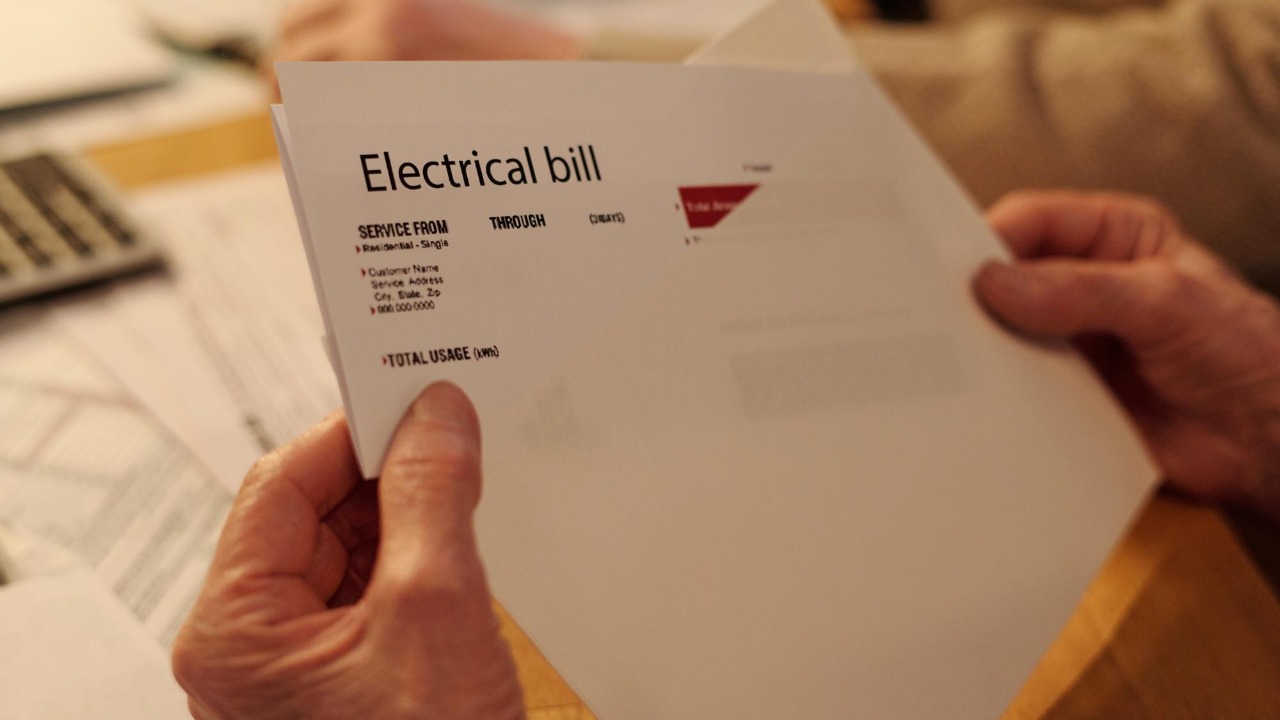
American households are being squeezed by a rapid run-up in electricity costs at the same time the federal government is pulling support from hundreds of energy projects. Since January 2025, typical power bills have climbed sharply even as officials cancel or pause investments that were meant to expand supply and modernize the grid. The result is a collision between surging demand, shrinking policy support and a patchwork of crackdowns that risks locking in higher prices for years.
Instead of racing to add new capacity, Washington is now scrutinizing and in many cases unwinding previously funded projects, from clean energy plants to transmission upgrades. I see a widening gap between what the grid needs and what current policy is delivering, and that gap is already showing up in the numbers on monthly statements.
Power bills are rising fast while support is pulled back
Household electricity costs have been climbing at a pace that would be politically explosive even in calmer times. Since January 2025, average U.S. residential bills have risen 13 percent, according to a report from Climate Power that tracks how higher rates are hitting families that have little choice but to keep the lights on and the heat running. That spike is landing on top of broader inflation and is particularly painful in regions where incomes have not kept up, yet federal officials are simultaneously tightening the screws on new energy investments that could eventually ease the pressure, a contradiction that is hard to ignore when I look at the data from Climate Power.
Experts warn that this is not just a short-term blip but the early phase of a structural shift in U.S. power markets. They point to a combination of aging infrastructure, rising fuel costs and a wave of new demand from power-hungry data centers that is colliding with policy decisions to slow or cancel projects that would add capacity. Analysts cited in one recent assessment describe demand from utilities as “astronomical,” yet they also document how federal officials are cracking down on hundreds of projects even as bills soar, a tension that is laid out starkly in the experts’ warnings.
A grid choked by delays and aging wires
Even when projects are not explicitly canceled, many are stuck in a bureaucratic and physical bottleneck that keeps them from delivering power to customers. Between 2021 and 2024, the U.S. interconnection queue ballooned from 1, 400 G to over 2, 000 G, a staggering jump that reflects how many proposed plants are waiting for permission and infrastructure to connect to the grid. Average wait times have stretched out as grid operators wrestle with complex studies and a lack of physical capacity, a systemic failure that leaves gigawatts of potential supply on paper while households pay more for the power that is already online, a dynamic detailed in the analysis of interconnection delays.
The wires that do exist are often old, overloaded and in some cases dangerous. Lawmakers and advocates are increasingly blunt about the risks, noting that aging infrastructure is not only a cost driver but also a public safety threat. Bill Moyer, Executive Dire of a grid-focused advocacy group, has warned that aging infrastructure is igniting wildfires that are costing lives and destroying communities, and he has argued that new demands on the grid require a more deliberate approach to planning transmission along rail and highway corridors. His comments came as members of Congress introduced the Rail and Highway Transmission Planning Act, which aims to streamline siting and build a more resilient network, a push that underscores how far current infrastructure has fallen behind the needs described by Bill Moyer.
Tax policy reversals and the Inflation Reduction Act rollback
At the same time, federal tax policy is moving in a direction that many analysts say will push electricity prices even higher. The Inflation Reduction Act created a suite of tax credits that helped finance wind, solar and other clean energy projects, effectively lowering the cost of new generation and, over time, putting downward pressure on bills. Now, cuts to those tax credits are projected to increase utility bills by 5 to 7 percent by 2030, a hit that would come on top of the 13 percent jump since January 2025 and would be felt by households and businesses alike, according to modeling cited in an assessment of the Inflation Reduction Act.
The shift is not just theoretical. The law that President Trump signed on July 4 ending tax incentives for wind and solar projects is expected to drive up electricity bills across the U.S., because it removes a key financial support that had made these projects cheaper to build and operate. Developers now face higher capital costs and more uncertainty, which in turn makes utilities more cautious about signing long-term contracts for clean power. I see that caution feeding directly into slower buildout and higher prices, a chain of cause and effect that is spelled out in the analysis of the tax law that President Trump approved in ending incentives.
Projected rate shocks and regional pain points
Looking ahead, there is little sign of relief for customers already straining under higher bills. Average U.S. residential rates are projected to reach ~18¢/kWh in 2026, up ~37% from 2020, a jump that would cement electricity as one of the fastest-rising household expenses of the decade. That projection reflects not only fuel and infrastructure costs but also the policy choices that have slowed the rollout of cheaper generation, and it suggests that without a course correction, the current squeeze will harden into a new normal, as laid out in the forecast that pegs the increase at 37%.
The pain is not evenly distributed. Some states and territories have seen far steeper increases than the national average, often because they rely on constrained transmission corridors or have been slow to add new capacity. The largest increase in that time was in Washington, D.C., up 93.2 percent, while Maine saw rates climb 66.1 percent, with other states like New Jersey also posting sharp jumps. These figures show how geography and policy interact, and they highlight why residents in places like Washington and Maine are feeling the crisis more acutely than others, a pattern documented in the breakdown of state-level hikes that puts the 93.2 percent and 66.1 percent surges in stark relief in state comparisons.
Project cancellations, offshore pauses and the DOE crackdown
Against this backdrop of rising bills, federal agencies are moving aggressively to cancel or pause energy projects that were previously funded or already under construction. The US Department of Energy is canceling hundreds of funded projects that it says are not worth the investment of more than $7.5 billion in federal funds, a sweeping decision that hits initiatives across the country. Scripps News reported that most of these projects were in Democrat-led states and noted that its coverage had drawn 518 views on social media, a small number that belies the scale of the policy shift described in the post from Scripps News.
Another account of the same move underscores how concentrated the cuts are. The U.S. Department of Energy is canceling hundreds of funded projects that it says are not worth the investment of more than $7.5 billion in federal funds, and again, most projects were in Democrat-led states, a pattern that raises questions about how political geography intersects with energy policy. I read that description as a sign that the Department of Energy is not just trimming around the edges but reshaping the map of federal support, as detailed in the summary that puts the $7.5 figure at the center of the DOE cancellations.
Clean energy pullback and the “One Big Beautiful Bill”
The federal retreat is not limited to individual project reviews. Companies canceled or downsized more than $34 billion in U.S. clean energy projects last year, a wave of reversals that underscores how fragile the investment environment has become. Many of these decisions were tied to shifting federal incentives and regulatory uncertainty, and they signal that developers are unwilling to commit capital when the policy ground keeps moving, a trend captured in the tally that puts the total at $34 billion.
Much of that uncertainty traces back to President Trump’s signature legislative package, often described by supporters as the One Big Beautiful Bill Act. Gutting clean energy investment at the federal level would hand Americans even higher electricity bills, with one analysis estimating that prices could rise by 7 percent for households and by 10 percent for businesses next year if the cuts are fully implemented. I see that projection as a direct warning that the bill is not just a budget exercise but a driver of future rate hikes, a link made explicit in the critique that begins with the word Gutting and argues that the burden will fall squarely on Americans.
Communities left exposed, from Native programs to offshore wind
The ripple effects of these policy shifts are hitting vulnerable communities first. Native recipients receiving funding under climate and social programs are confronting cancellations for grants already obligated, forcing in-progress projects to halt or scale back. Analysts note that last year, Congress used the One Big Beautiful Bill to cut into programs that had been created or expanded under the Inflation Reduction Act, leaving Native communities with fewer resources to adapt to climate impacts or lower their energy costs, a rollback described in detail in the assessment of how these cuts are weakening the safety net for Native recipients.
Offshore wind, once seen as a cornerstone of coastal decarbonization plans, has also been thrown into limbo. The Interior Department announced it is pausing all leases for large-scale offshore wind projects that are currently under construction or in advanced stages, citing national security concerns. That decision affects projects from Virginia to other Atlantic states and effectively freezes a major source of future clean power at a time when demand is surging and bills are rising, a pause that illustrates how security arguments are now intersecting with energy policy in ways that could keep prices higher for longer, as described in the account of how The Interior Department halted offshore wind.
More From The Daily Overview
*This article was researched with the help of AI, with human editors creating the final content.

Grant Mercer covers market dynamics, business trends, and the economic forces driving growth across industries. His analysis connects macro movements with real-world implications for investors, entrepreneurs, and professionals. Through his work at The Daily Overview, Grant helps readers understand how markets function and where opportunities may emerge.