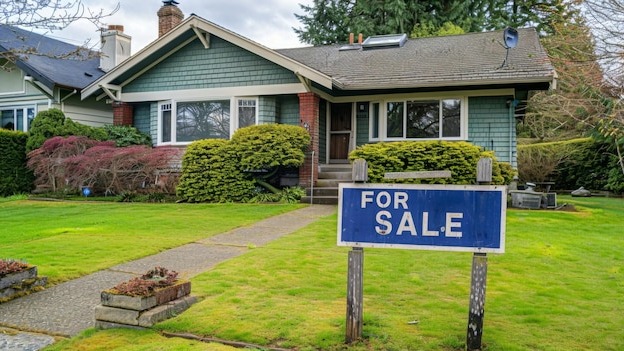
Sales of previously occupied U.S. homes dropped sharply in January, recording the largest monthly decline in nearly four years even as mortgage rates edged lower. The data, released by the National Association of Realtors, signals that cheaper borrowing costs alone have not been enough to thaw a housing market that has been sluggish since 2022. The downturn lands just weeks before the spring buying season, raising hard questions about whether the conditions that have sidelined millions of would-be buyers are becoming structural rather than cyclical.
January Sales Hit a Four-Year Low
Existing-home sales fell to a seasonally adjusted annual rate of 3.91 million units, the steepest single-month retreat since early 2022. The decline caught analysts off guard, as most Wall Street forecasts had projected only a modest pullback rather than a slide of this magnitude. The January figure extends a period in which the market has struggled to find its footing ever since the Federal Reserve began its aggressive rate-hiking campaign in 2022, pushing borrowing costs higher and abruptly ending the pandemic-era sales boom.
Several factors converged to push closings lower. Severe winter storms across large portions of the country disrupted showings, inspections, and appraisals and delayed contract finalizations, according to reporting from the Associated Press. But weather alone does not explain a decline this deep. The more persistent drag comes from a market caught between sellers unwilling to give up ultra-low mortgage rates and buyers unable to afford what little inventory is available, leaving transactions stuck at historically depressed levels despite pent-up demand.
Lower Rates, Stubborn Headwinds
Mortgage rates have been drifting lower in recent months, with the average 30-year fixed rate retreating from the peaks above 7% that defined much of 2024. Under more typical conditions, that kind of relief would pull hesitant buyers off the sidelines and encourage move-up homeowners to list. Instead, transaction volumes continued to slide, underscoring that rate relief is a necessary but insufficient ingredient for a housing recovery when the underlying supply constraints remain unresolved and prices have not meaningfully corrected.
A large share of current homeowners locked in rates well below 5% during the pandemic-era refinancing boom. For those households, selling now would mean trading a cheap mortgage for a far more expensive one, even at today’s somewhat lower rates. That “lock-in” effect has kept listings thin, which in turn props up prices and squeezes affordability for everyone else. First-time buyers, who historically drive a substantial portion of purchase activity, have been especially hard hit as down payments, closing costs, and monthly payments all rise relative to incomes. Their share of transactions has remained well below long-term norms, a pattern that predates January’s storms and reflects years of compounding affordability pressure.
A Market Stuck Since 2022
The broader context matters as much as the latest monthly headline. The U.S. housing market has been operating in a low-volume, high-price environment since the Fed started tightening monetary policy four years ago. Annual existing-home sales have hovered near their weakest levels in decades, and January’s data extends that streak rather than breaking it. The biggest monthly decline in nearly four years did not emerge from a healthy baseline; it deepened an already fragile trend in which many would-be buyers and sellers have been sidelined for multiple seasons in a row.
One common assumption in real estate commentary is that lower rates will reliably unlock pent-up demand and restore a semblance of normal turnover. January’s numbers challenge that view directly: borrowing costs eased, yet sales fell harder than at any point since the initial rate shock of 2022. The lesson is that affordability is a function of both price and rate, not rate alone. Median home values remain elevated in most metro areas, and wage growth, while solid in nominal terms, has not kept pace with the cumulative increase in housing costs over the past several years. Until either prices correct meaningfully, incomes rise faster, or both, lower rates may simply slow the pace of decline rather than reverse it.
What Spring Buying Season Could Reveal
The spring months typically bring a seasonal uptick in listings and closings as warmer weather, tax refunds, and the school-year calendar motivate families to move. This year, the spring market arrives with unusually low expectations. Inventory remains tight in most regions, and the January data suggests that buyer caution runs deeper than a single cold snap. If new listings do not increase substantially in March and April, the usual seasonal bounce could disappoint for the fourth consecutive year, reinforcing a pattern in which each prime buying window fails to deliver the hoped-for reset.
For prospective buyers, the practical takeaway is straightforward but uncomfortable. Lower mortgage rates have not translated into lower monthly payments in many markets because home prices have not adjusted downward to match the shift in financing costs. A household shopping today often faces a total cost of ownership that is dramatically higher than what the same home would have cost in 2019 or 2020, even if the headline rate is slightly better than last fall. That math keeps many renters locked out and many current owners locked in, creating a feedback loop that suppresses both supply and demand simultaneously and leaves the market looking frozen rather than simply slow.
Homebuilders have tried to fill part of the gap with new construction, and new-home sales have generally held up better than resales in recent quarters as builders offer incentives such as rate buydowns and closing-cost assistance. Yet new builds tend to skew toward higher price points because of land, labor, and regulatory costs, and construction timelines mean that permits pulled today will not become move-in-ready homes for months or years. The structural shortage of affordable starter homes, a problem that predates the pandemic, continues to weigh most heavily on the entry-level segment where demand is strongest and supply is thinnest, limiting how much new construction can offset weakness in existing-home transactions.
Bigger Questions for Housing Policy
January’s sharp decline also puts fresh pressure on policymakers at the national and local levels. The housing affordability gap has widened steadily, and the standard toolkit of interest-rate adjustments and demand-side tax incentives has produced limited results so far. Local zoning rules that restrict density, lengthy permitting processes, and rising construction and materials costs all constrain the supply response that economists see as the only durable fix. Without meaningful action on the supply side, cyclical rate movements will continue to shuffle demand around the calendar without expanding the total pool of transactions or easing the strain on renters and first-time buyers.
The risk for the broader economy is not trivial. Housing activity ripples outward through furniture and appliance sales, renovation and repair spending, moving and storage services, and mortgage origination and title fees, so a prolonged slump in existing-home sales dampens all of those adjacent sectors. It also freezes household mobility: workers become less willing to relocate for new jobs if moving requires taking on a much higher mortgage payment, which can reduce labor-market flexibility and productivity over time. As the spring selling season approaches, the central question is whether modestly lower rates and a potential uptick in listings will be enough to unstick a market that has been constrained since 2022, or whether January’s drop is an early sign that the current mix of high prices, limited supply, and cautious buyers is hardening into a new, less dynamic normal for U.S. housing.
More From The Daily Overview
*This article was researched with the help of AI, with human editors creating the final content.

Elias Broderick specializes in residential and commercial real estate, with a focus on market cycles, property fundamentals, and investment strategy. His writing translates complex housing and development trends into clear insights for both new and experienced investors. At The Daily Overview, Elias explores how real estate fits into long-term wealth planning.

