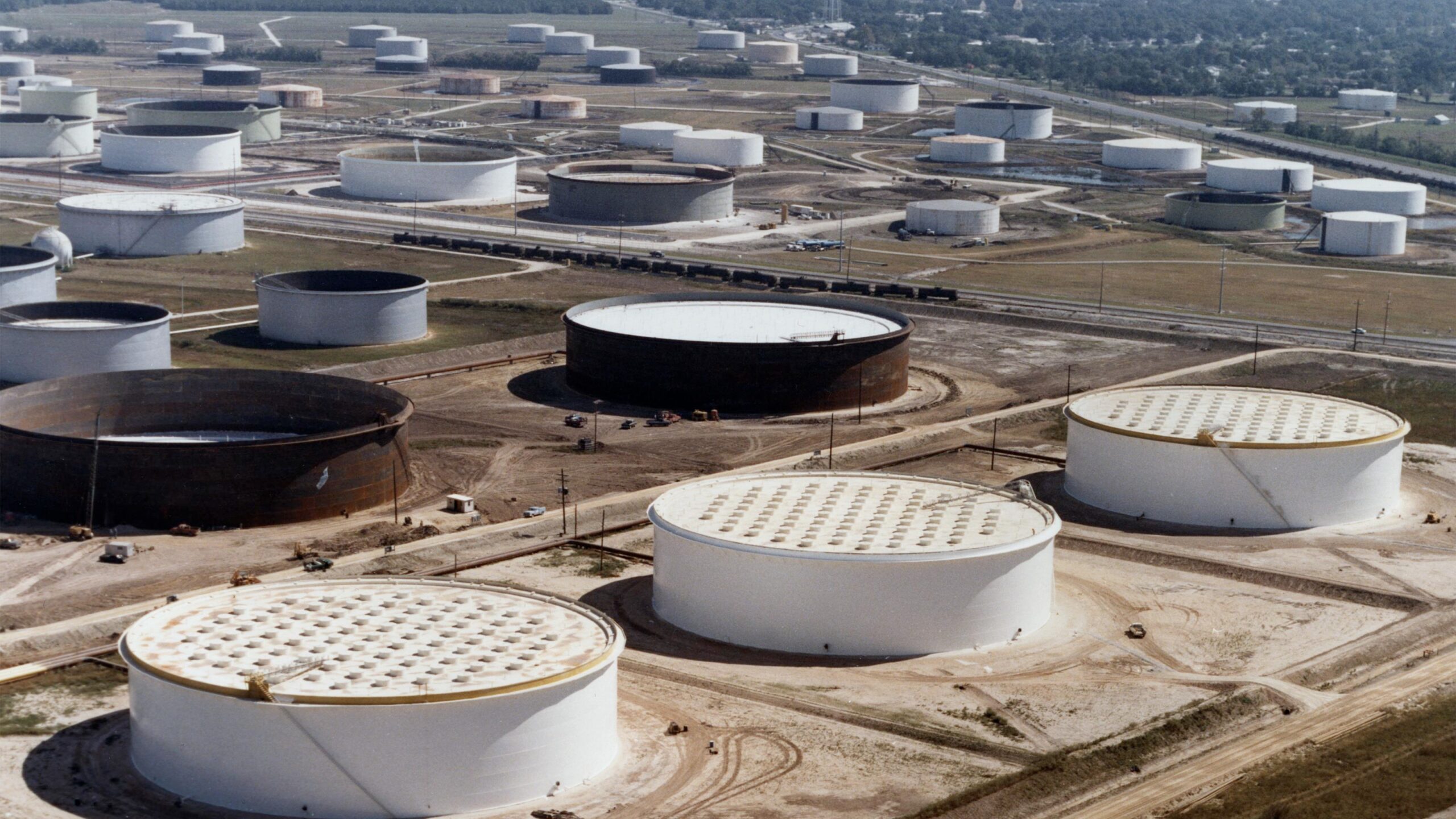
The United States is weighing a politically fraught idea: using Venezuelan crude to help rebuild its depleted Strategic Petroleum Reserve, even as officials publicly insist no such swap is on the books. The quiet deliberations reflect how energy security, sanctions policy, and domestic politics are colliding around a stockpile that was drawn down aggressively to tame fuel prices. What looks like a technical oil trade is, in reality, a test of how far Washington is willing to go to secure barrels in a tight market.
At the center of the debate is whether the government should allow companies to bring in heavy Venezuelan oil, then exchange it for U.S. medium-grade crude that better fits the geology of the reserve caverns. The concept would deepen engagement with a sanctioned producer at a moment when Venezuela’s future is in flux and when Congress, the Energy Department, and the White House are sending sharply mixed signals about how to refill the SPR.
The quiet swap concept and official denials
Energy traders and policymakers are focused on a potential arrangement in which companies import heavy Venezuelan barrels and hand over an equivalent volume of U.S. medium crude to the government, which would then inject that oil into the Strategic Petroleum Reserve, or SPR. People familiar with the talks have described a framework in which private companies would handle the logistics while Washington ends up with the grade of oil it prefers for long term storage. The idea hinges on the fact that much of the Venezuelan stream is heavier and more sulfur rich than the medium sour crude that U.S. engineers designed the SPR to hold.
Yet even as details of the potential swap have circulated, the Energy Department has been adamant that it is “Not Currently Considering Using Venezuelan Oil” in any formal Exchange to Fill Strategic Reserve. Officials have stressed that no such program is planned currently, even as they acknowledge the broader challenge of sourcing suitable crude for the SPR after earlier emergency sales. That tension between private exploration of options and public denial is what makes the prospective swap both sensitive and politically combustible.
How the swap would work in practice
In practical terms, the swap would exploit a mismatch between what U.S. refiners want to run and what the SPR needs to store. Gulf Coast plants are configured to process heavy and extra heavy grades, including Venezuelan blends, into gasoline and diesel, while the reserve’s salt caverns were engineered around medium sour crude produced in the United States. Under the concept described by people briefed on the talks, traders would bring in heavy Venezuelan oil, sell it to refiners that value its yield, and then deliver an equivalent volume of U.S. medium barrels to the government. Those medium barrels would then be pumped into the SPR, gradually rebuilding inventories without the Treasury writing a large check.
Reporting on the internal discussions indicates that the administration has explored a structure in which the United States receives not only a one-for-one replacement of its medium crude but potentially an additional quantity of oil as compensation for facilitating access to its market. Separate accounts of the same concept describe how the United States wants to exchange heavy Venezuelan oil for its medium to replenish reserves, with The US aiming to secure both the right quality and an additional amount of oil in the process. That structure would effectively turn the SPR into a beneficiary of commercial arbitrage between different crude grades.
Congressional crossfire and the GOP roadblock
While the executive branch weighs its options, Republicans on Capitol Hill have tried to seize the initiative with their own blueprint for using Venezuelan barrels to refill the SPR. Earlier this month, the House folded a proposal into a broader policy package that would direct the government to accept Venezuelan crude into the reserve as part of a GOP energy agenda. Coverage of that effort notes that the House eyes filling US reserves with Venezuelan oil in GOP policy bill 2.0, a move that has been championed by Rachel Frazin and Rachel Frazi in their reporting, and that the plan is framed as a way to rebuild stocks after the SPR was drawn down by about 40 percent during recent market turmoil.
Yet that GOP initiative has already hit a significant obstacle. Analysts and engineers have warned that the Strategic Petroleum Reserve could be damaged if sulfur rich Venezuelan crude is injected directly into its aging salt caverns, a concern that has turned into a roadblock for the legislation. A detailed account from ENERGYWIRE describes how technical staff at a Strategic Petroleum Reserve site in Freeport, Texas, photographed by Brandon Bell for AFP, have raised red flags about the compatibility of Venezuelan crude with the existing infrastructure, a warning echoed in a separate EST based report. Those technical objections help explain why the administration is more interested in swapping into medium crude than in storing Venezuelan oil outright.
Venezuelan turmoil and shifting oil flows
The debate in Washington is unfolding against a backdrop of upheaval in Venezuela itself. The country’s oil sector has been shaken by the capture of leader Nicolás Maduro, a development that has scrambled internal power dynamics and raised questions about who controls export flows. A recent industry roundup framed the moment as “What is at Stake in the O&G Industry With Maduro’s Capture,” noting that the surge in oil exports follows a dramatic political shift and is reshaping how Venezuela engages with strategic competitors like China, as detailed Here. That same analysis, titled “Venezuela Shakes the Sector: The Week in Oil and Gas,” underscores how the country’s renewed exports are rippling through regional markets.
For Washington, those shifting flows create both opportunity and risk. On one hand, increased Venezuelan output gives the United States more flexibility to structure a swap that does not crowd out other buyers. On the other, deeper energy ties with Caracas could complicate efforts to coordinate pressure with strategic competitors like China, which has long been a key destination for Venezuelan barrels, as highlighted in the “What is at Stake in the O&G Industry With Maduro’s Capture” discussion of the Industry With Maduro Capture. Any U.S. move to formalize an oil swap would therefore reverberate well beyond the Gulf Coast, affecting how other powers position themselves around Venezuelan crude.
Energy security, politics, and the SPR’s future
Behind the technicalities of crude grades and salt caverns lies a larger question about how America wants to manage its emergency stockpile in an era of volatile geopolitics. Analysts have pointed out that the SPR was drawn down aggressively to blunt price spikes, leaving inventories at multi decade lows and forcing officials to confront hard choices about how quickly to rebuild. One detailed assessment of How America Plans to Refill Its Emergency Oil Stockpile Using Venezuelan Crude, written By Julianne Geiger in Jan at 12:30 p.m. CST, argues that the swap idea reflects a quiet admission that the United States is more entangled with sanctioned producers than it rarely likes to admit, a point reinforced in a separate How America Plans analysis. The SPR, in this reading, is no longer just a domestic buffer but a lever in a complex web of sanctions and supply chains.
At the same time, the administration is trying to keep its options open. Officials have reiterated that the Energy Department is Not Currently Considering Using Venezuelan Oil in any Exchange to Fill Strategic Reserve, a line that has been repeated in multiple briefings and captured in Jan statements. Yet parallel reporting shows that U.S. officials have explored a plan to swap heavy Venezuelan oil for U.S. medium crude to fill the emergency reserve, with two sources saying the concept had originally been in legislation before being stripped out, as described in a detailed Venez focused account. That gap between public posture and private exploration is likely to persist as long as the SPR remains underfilled and global supplies remain tight.
More From TheDailyOverview

Grant Mercer covers market dynamics, business trends, and the economic forces driving growth across industries. His analysis connects macro movements with real-world implications for investors, entrepreneurs, and professionals. Through his work at The Daily Overview, Grant helps readers understand how markets function and where opportunities may emerge.