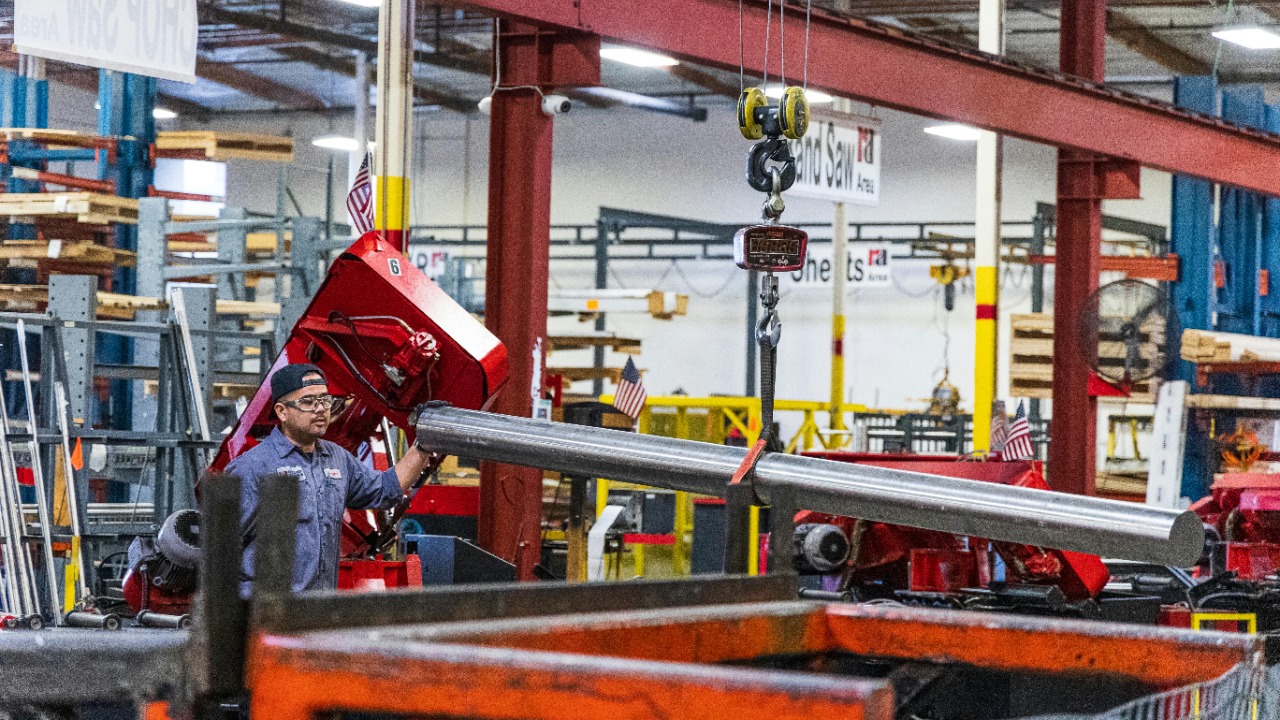
American factory workers are some of the most productive and best paid in the world, but that success carries a brutal arithmetic: when labor costs are roughly ten times higher than in emerging markets, low-margin production tends to migrate offshore. The result is a manufacturing base that is technologically sophisticated yet constantly under pressure, with plants closing in some regions even as others invest heavily in automation and advanced skills. I want to unpack how that wage gap interacts with trade policy, technology, and workforce shortages to shape which industries survive onshore and which quietly disappear.
The wage gap that reshaped the factory floor
The starting point is simple and stark: Your wages are roughly 10 times higher than what a factory worker earns in many emerging markets, and that gap is large enough to overwhelm almost every other line item in a cost sheet for basic, labor intensive goods. When a U.S. plant making low value textiles or simple electronics competes with a rival that pays a fraction of the hourly rate, the math pushes production to wherever labor is cheapest, especially in sectors where automation cannot fully replace people. That is why the phrase “Your wages are 10x higher than emerging markets” has become shorthand for the structural disadvantage facing American commodity manufacturing, even as it reflects a real standard of living that workers are understandably unwilling to surrender.
In practice, this wage differential does not just close individual factories, it shapes entire corporate strategies. Executives deciding where to build the next assembly line know that a tenfold gap in hourly pay can erase the benefits of being closer to U.S. customers unless the product is highly specialized or capital intensive. The result is a pattern in which American manufacturing concentrates in higher margin segments, while lower value work is offshored and communities that once depended on basic assembly jobs watch plants go dark week after week, a dynamic captured in the warning that such wage levels are “killing American manufacturing” as firms are pushed out of business every week, a reality highlighted in the video titled Your wages are 10x higher than emerging markets.
Why high wages do not tell the whole story
It is tempting to blame every factory closure on paychecks that are “too high,” but that framing misses how productivity and technology change the equation. A U.S. worker operating advanced robotics can produce far more per hour than a low wage counterpart on a manual line, which means the cost per unit can still be competitive even if the hourly wage is higher. Over the past generation, American plants have poured capital into automation, data systems, and precision equipment, allowing them to increase output with fewer workers and to focus on complex products where quality and speed matter more than raw labor cost.
That shift is one reason some economists argue that what looks like “deindustrialization” is often a story of doing more with less. Analyses of manufacturing trends point to automation as “another possible driver” of job losses, noting that companies can “increase production with fewer workers” as they invest in new technology. This perspective, laid out in detail in a discussion of American deindustrialization, suggests that high wages are only one part of a broader restructuring in which output can rise even as headcounts fall. In that world, the wage gap with emerging markets still matters, but it interacts with capital intensity, innovation, and scale in ways that blunt simple comparisons.
Tariffs, trade policy, and the new cost of “Made in USA”
High wages do not operate in a vacuum, they collide with trade policy choices that can either cushion or amplify their impact. When tariffs raise the price of imported inputs or finished goods, they can temporarily shield domestic producers from low wage competition, but they also raise costs for manufacturers that rely on global supply chains. Under President Donald Trump, steep new tariffs were pitched as a way to bring jobs back, yet the evidence shows a more complicated outcome, with some plants squeezed by higher input prices and retaliatory measures that hit export markets.
Recent analysis of employment data found that the U.S. is losing thousands of manufacturing jobs, and a nonpartisan policy institute attributed that decline to the Trump administration’s steep new tariffs and hardline stance on trade. According to that work, the sector shed a significant number of positions in 2024, a trend that undercuts the idea that tariffs alone can overcome a tenfold wage gap. Instead, the report on jobs and Trump tariffs suggests that protectionist tools can sometimes accelerate restructuring, pushing firms to automate faster or relocate within North America rather than restoring the kind of mass employment that once defined U.S. manufacturing towns.
Supply chains, risk, and the hidden cost of cheap labor
Even when wages are dramatically lower overseas, the true cost of offshoring is more complex than a simple hourly comparison. Companies that chase the lowest labor rates often discover that fragile logistics, geopolitical risk, and quality problems eat into the savings. The COVID shock exposed how quickly global supply chains can seize up when factories shut down and ports close, leaving U.S. manufacturers scrambling for parts and reconsidering the value of having critical production stretched across continents. That experience pushed many executives to weigh resilience and speed to market alongside wage differentials when deciding where to build capacity.
Consultants working with industrial clients now emphasize “Supply Chain Disruptions” and “Supply Chain Risk Analysis” as core strategic issues, not back office concerns. One detailed “Table of Contents” for a 2025 playbook on U.S. manufacturing challenges walks through how firms can use rigorous “Analysis” and “Cost Accounting for Supply Chain Optimizatio” to quantify the trade offs between low wages abroad and higher reliability at home. That guidance, laid out by Jan in a report on how to overcome U.S. manufacturing challenges in 2025, underscores that the cheapest labor is not always the lowest total cost once delays, inventory buffers, and reputational risk are priced in. For some products, that calculus is starting to tilt back toward regional or domestic production, even if wages remain far higher than in emerging markets.
Labor shortages and skills gaps on the home front
Paradoxically, while U.S. wages tower over those in emerging markets, many manufacturers still struggle to find enough workers. The problem is not just the number of people, it is the mismatch between the skills modern factories need and the training available in local labor markets. As older technicians retire, companies report difficulty replacing them with younger hires who can program robots, interpret sensor data, and maintain complex equipment. That shortage pushes wages higher for in demand roles and forces plants to leave capacity idle or invest in automation faster than planned.
Industry surveys describe “Workforce issues” as a leading concern, highlighting both a skills gap and an applicant gap that limit growth even when order books are full. One in depth assessment notes that “Alongside this potential” for expansion, employers must work harder to “develop, and retain” the valuable talent they already have, or risk losing them to competitors. The same analysis on supporting U.S. manufacturing growth amid workforce challenges argues that solving the labor puzzle is as important as any tax incentive or trade policy. In other words, high wages are not just a cost problem, they are also a signal that specialized skills are scarce and increasingly valuable.
Bridging the labor gap without racing to the bottom
If the U.S. cannot or should not compete by slashing pay to emerging market levels, the question becomes how to bridge the labor gap in a way that preserves both competitiveness and middle class livelihoods. One answer is to treat workforce development as a core part of industrial strategy rather than an afterthought. That means investing in apprenticeships, community college programs, and on the job training that prepare people for the specific technologies used on modern lines, from collaborative robots to advanced machining centers. It also means rethinking how factories recruit, including tapping underrepresented groups and mid career workers who can be reskilled.
Reports on the shop floor reality stress that “Finding the right workers is yesterday’s, today’s, and tomorrow’s problem,” especially after the sector was hit hard during the pandemic. Analysts argue that manufacturers must build systems to “attract, develop, and retain talent” instead of assuming a steady stream of applicants will appear at the gate. A detailed look at bridging the labor gap in US manufacturing lays out how companies can redesign roles, offer clearer career paths, and use technology to augment workers rather than replace them outright. Those steps do not erase the wage gap with emerging markets, but they can raise productivity enough that higher pay becomes sustainable rather than a liability.
Innovation as the counterweight to cheap labor
For U.S. factories that survive and thrive, innovation is the main counterweight to low wage competition. Instead of trying to match the cost of a basic T shirt or a generic smartphone charger, they focus on products where design, customization, and rapid iteration matter more than the hourly rate on the assembly line. That can mean electric vehicle components, aerospace parts, medical devices, or industrial software embedded in physical equipment. In these segments, the ability to collaborate closely with engineers, respond quickly to customer feedback, and integrate new materials or processes can justify higher labor costs.
Commentary on the sector notes that COVID exposed the fragility of global supply chains, but it also highlighted how U.S. manufacturers can “drive innovation and growth” when they are close to research hubs and end users. Analysts describe how “Labor Shortages and Skills Gaps” complicate this picture, since the need for experienced workers becomes more acute as factories adopt advanced technologies. Yet the same piece on how U.S. manufacturing drives innovation argues that the sector remains a powerful engine of progress when it leans into its strengths. In that sense, high wages are not just a cost to be managed, they are part of an ecosystem that supports innovation, from research labs to startup suppliers.
Globalization, “deindustrialization,” and what really disappeared
Public debate often treats globalization as a one way drain on American factories, but the reality is more nuanced. Trade has indeed shifted some production to lower wage countries, especially in basic consumer goods, yet it has also opened markets for U.S. producers of food, machinery, and high tech equipment. One analysis framed this as “Globalization Helps Feed the World,” pointing out that integrated supply chains and open markets allow American farmers and manufacturers to reach customers far beyond domestic borders. That dynamic complicates the narrative that every import is a loss and every export a win, since many products cross borders multiple times before reaching the final buyer.
At the same time, the term “deindustrialization” can obscure the difference between job counts and output. As factories automate and consolidate, they can produce more with fewer people, which looks like decline if the only metric is employment. The same study that highlighted how “Despite rhetoric from some politicians” about unfettered globalization, the data show a more complex picture, also emphasized that automation and productivity gains are central to understanding what has changed. In that context, the discussion of the reality of American deindustrialization suggests that high wages are both a cause and a consequence of a shift toward more capital intensive, technologically advanced production. The factories that remain are fewer, but they are often larger, more automated, and more deeply embedded in global networks.
What a sustainable manufacturing strategy looks like
Looking ahead, the challenge is not to erase the wage gap with emerging markets, but to design a manufacturing strategy that makes high pay compatible with global competition. That means accepting that some low margin, labor heavy products will never return to U.S. shores, while focusing policy and investment on sectors where the country has structural advantages. It also means aligning trade policy, workforce development, and industrial innovation so they pull in the same direction instead of working at cross purposes. Tariffs that raise input costs without building skills or infrastructure, for example, risk accelerating job losses rather than reversing them.
Industry playbooks for 2025 and beyond emphasize that the U.S. manufacturing industry is facing a cluster of challenges, from supply chain disruptions to workforce shortages, but they also outline actionable insights for overcoming them. By combining rigorous cost accounting, targeted training, and strategic use of automation, companies can narrow the effective cost gap with lower wage competitors without driving American workers into poverty. The stakes are clear: if the country fails to adapt, the pattern of plants going out of business every week will continue; if it succeeds, high wages will be seen not as a fatal flaw, but as the foundation of a resilient, innovative industrial base that can hold its own in a world where cheap labor is no longer the only advantage that matters.
More From TheDailyOverview
- Tennessee loses $2.6B megafactory and faces major layoffs
- Retired But Want To Work? Try These 18 Jobs for Seniors That Pay Weekly
- What to do with your pennies after the U.S. stops minting them
- Home Depot CEO warns of a troubling customer trend in stores

Grant Mercer covers market dynamics, business trends, and the economic forces driving growth across industries. His analysis connects macro movements with real-world implications for investors, entrepreneurs, and professionals. Through his work at The Daily Overview, Grant helps readers understand how markets function and where opportunities may emerge.

