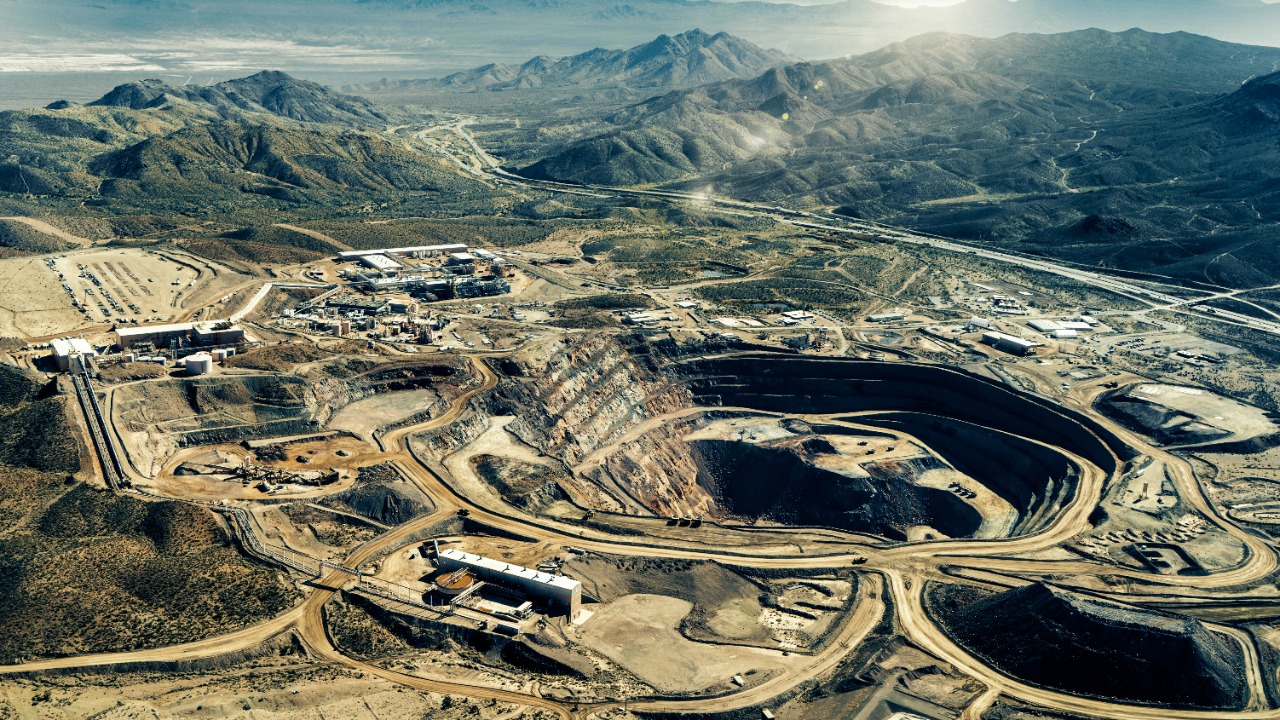
USA Rare Earth has suddenly moved from niche materials play to front-page story after securing a massive government-backed funding commitment that sent its valuation and analyst expectations sharply higher. The company’s price target has effectively tripled as investors tried to price in a new era of federally supported growth, and the stock has already logged double-digit gains in a matter of days. The question now is whether this surge reflects a durable shift in fundamentals or a short-lived rush into a hot policy theme.
I see the latest move as a textbook example of how industrial policy, capital intensity, and investor psychology collide in early-stage critical minerals stocks. The government’s multibillion-dollar support package, the market’s 37.2% jump in USA Rare Earth’s shares, and the new analyst enthusiasm are all real, but so are the execution risks and the long timelines that come with building mines, refineries, and magnet plants from scratch.
The government deal that changed the story
The inflection point for USA Rare Earth came earlier this year when the company announced a nonbinding letter of intent with the U.S. Department of Commerce for a government-backed financing package. One strand of that support is a commitment for $1.6 Billion in federal financing, a figure that would be transformative for a company of this size. Separate reporting describes the broader package as a $3.1 Billion government-backed funding deal, underscoring just how aggressively Washington is now willing to bankroll domestic rare earth capacity. For a sector that has long complained about capital scarcity, this is a rare instance of the state stepping in as anchor financier rather than leaving everything to equity markets.
Crucially, the company has framed this capital as a way to accelerate and de-risk its entire value chain, from mining to magnet manufacturing. In its own materials, USA Rare Earth, which trades under the ticker USAR, says the funding is expected to support growth across mining, processing, metal-making, and magnet manufacturing, all areas where the United States is heavily dependent on imports. The company also highlights that certain high-performance magnets are currently unavailable outside China, a strategic vulnerability that the government is clearly trying to address by backing a domestic supplier.
Stock surges and a tripled price target
Once the government support was public, the market reaction was swift. USA Rare Earth’s shares, identified as USAR, are reported to be 37.2% higher after the landmark funding announcement, a move that reflects both short covering and fresh speculative interest. Earlier trading sessions captured the same enthusiasm, with USA Rare Earth rising 8% on a Monday after investors digested the nonbinding letter of intent for $1.6 billion in federal financing. That kind of one-day move is typical of small-cap resource names, but the difference here is that it is being driven by policy certainty rather than a commodity price spike.
On the back of that rally, at least one analyst has effectively tripled a formal price target for the stock, arguing that the government’s role as a cornerstone lender materially reduces funding risk. Coverage of the move notes that USA Rare Earth has quickly become a focal point for investors looking for leveraged exposure to U.S. industrial policy. The same reporting describes that big day for the company as a turning point, with the stock’s jump and the new target reinforcing each other in a feedback loop that can be powerful in the short term but volatile if expectations later reset.
Why Washington is betting on rare earths
The scale of the government’s backing only makes sense when viewed through the lens of supply chain security. Rare earth elements and the magnets made from them are essential for electric vehicles, wind turbines, and advanced defense systems, yet the United States has long relied on Chinese producers for both raw materials and finished products. USA Rare Earth’s own description of its strategy emphasizes that it wants to build a fully integrated domestic chain, from mine to magnet, at a time when certain high-strength magnets are, as it notes in an Article, currently unavailable outside China. That is the kind of vulnerability that tends to attract bipartisan attention in Washington, especially when it touches both clean energy and national security.
The nonbinding letter of intent with the Department of Commerce a multibillion-dollar package signals that the federal government is willing to move beyond tax credits and into direct financing for critical materials. That shift aligns with a broader push to onshore key parts of the clean energy and defense supply chains, from battery plants in the Midwest to semiconductor fabs in Arizona and Texas. In that context, USA Rare Earth is not just another speculative miner, it is a test case for whether targeted public capital can jump-start an industry that private investors have often viewed as too risky and too cyclical.
How analysts and investors are framing the bull case
Analysts who follow the stock are now recalibrating their models to reflect a company that has access to long-term, relatively low-cost capital rather than one that must constantly tap equity markets. One prominent voice in the sector, George Gianarikas, is among those who track how policy support can reshape the economics of electrification supply chains. The latest research on USA Rare Earth argues that the 37.2% share price move and the $3.1 Billion funding package have changed the company’s investment narrative and risk profile, shifting the debate from “can it raise money” to “can it execute on time and on budget.”
From my perspective, that is a meaningful but not all-encompassing de-risking. The company still faces the usual hurdles of permitting, construction, and ramp-up, and it will be judged on whether it can translate government support into competitive unit costs and reliable output. Market commentary around Rare Earth Stock also notes that the stock had already been volatile, which means that even a more robust balance sheet will not eliminate swings as news on project milestones filters through. For investors, the bull case now rests on the idea that USA Rare Earth can become a cornerstone supplier in a strategically vital market, not just a beneficiary of a one-off policy windfall.
What the frenzy means for ordinary investors
For retail investors watching the tape, the combination of a soaring share price and a tripled target can be intoxicating, but it also calls for discipline. Coverage of Stock Market Today notes that USA Rare Earth’s funding commitment makes it an interesting stock to monitor, not a guaranteed winner. The same reporting that highlighted Rare Earth Jumps the Billion Government Funding also stresses that the letter of intent is nonbinding and that the company still needs to meet various conditions before all the capital is actually deployed. In other words, the market is already pricing in a lot of success that has yet to be delivered.
Anyone considering a position should start with basic homework on the company’s financials and project pipeline, using tools such as Google Finance to track price history and volatility. It is also worth revisiting the company’s own USAR materials to understand how management plans to allocate the new capital across mining, processing, metal-making, and magnet manufacturing. For now, USA Rare Earth sits at the intersection of industrial policy and market speculation, a place where fortunes can be made but where patience and risk tolerance matter as much as any price target, tripled or otherwise.
More From TheDailyOverview
*This article was researched with the help of AI, with human editors creating the final content.

Elias Broderick specializes in residential and commercial real estate, with a focus on market cycles, property fundamentals, and investment strategy. His writing translates complex housing and development trends into clear insights for both new and experienced investors. At The Daily Overview, Elias explores how real estate fits into long-term wealth planning.

