The interception of a sanctioned Russian tanker by the USS Stockdale near Venezuela has turned a slow-burning sanctions story into a visible test of sea power, energy leverage, and political resolve in the Caribbean. As Washington tightens the screws on fuel shipments that have been worth roughly 3 billion dollars to Nicolás Maduro’s government, the encounter signals that the era of quiet workarounds is giving way to open contests on the water.
I see this clash as more than a one-off naval drama. It is the moment when a shadowy sanctions evasion network, a fragile petrostate, and a resurgent U.S. maritime posture collide, with consequences that will ripple from Venezuelan refineries to Russian balance sheets and regional security planning.
The USS Stockdale’s high-stakes move in the Caribbean
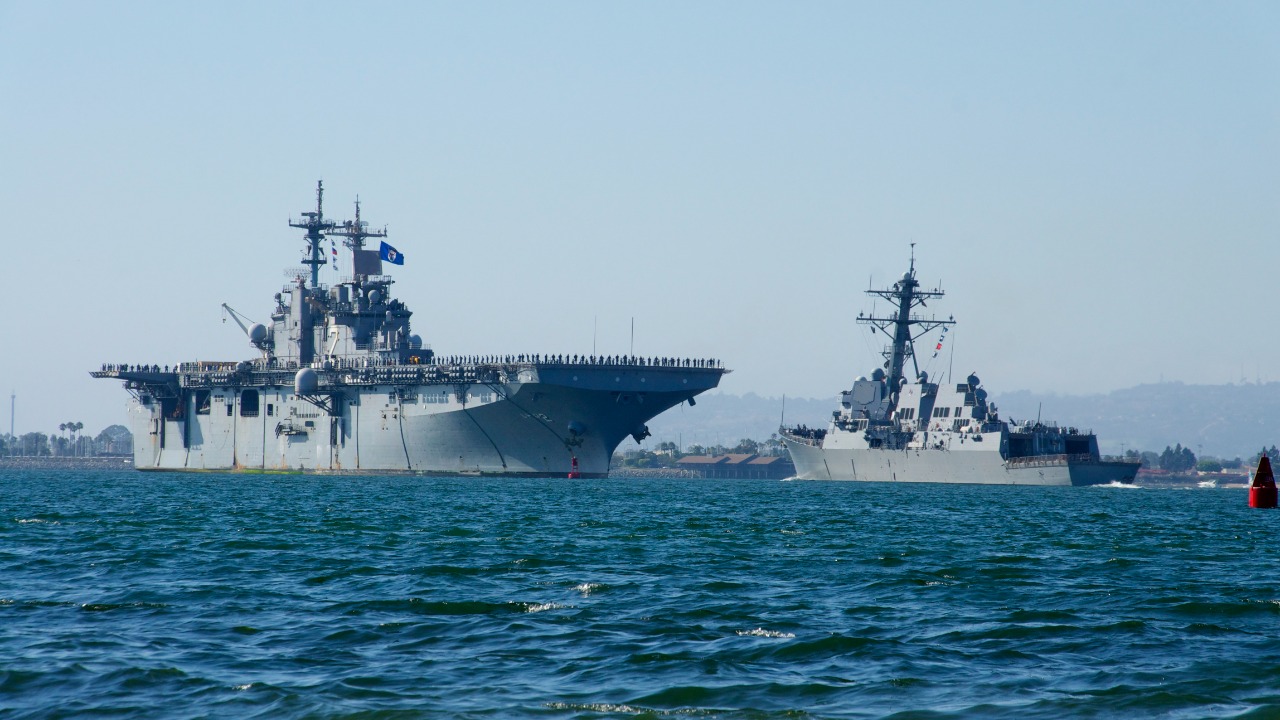
The USS Stockdale did not simply passively monitor a Russian vessel near Venezuela, it actively inserted itself between a sanctioned tanker and its destination, turning a routine sanctions run into a high-stakes confrontation. By maneuvering in the Caribbean to block a fuel delivery, the guided missile destroyer signaled that U.S. policy is shifting from paperwork and penalties to physical interdiction at sea, a far more visible and risky form of pressure on Russia and its partners. That choice reflects a calculation in Washington that the cost of letting these shipments proceed, both in terms of sanctions credibility and regional influence, now outweighs the risks of a naval standoff.
Reporting on the incident describes the USS Stockdale moving to obstruct a Russian tanker that was attempting to deliver fuel to the government of Nicolás Maduro, a move framed as part of a sharper maritime push in the Caribbean to choke off Russian shipments to the Maduro government and cut into Venezuela’s heavy crude oil production capacity. The decision to deploy a U.S. Navy warship in this way underscores how central the Caribbean has become to the contest over sanctions enforcement, with the USS Stockdale at the center of a deliberate effort to disrupt Russia’s ability to sustain Maduro’s rule.
How a Russian tanker’s U-turn exposed the “shadow fleet”
The Russian tanker at the heart of this episode was not an ordinary commercial ship, it was part of a sprawling sanctions-busting network that Moscow has built to keep its oil flowing despite Western restrictions. When the vessel, identified as the Seahorse, was forced into a U-turn in the Caribbean after encountering a U.S. destroyer, the maneuver exposed how vulnerable this so-called shadow fleet becomes when confronted by a determined naval presence. The Seahorse’s retreat was not just a navigational adjustment, it was a public demonstration that even heavily sanctioned operators will back down when the risk of escalation at sea becomes too high.
Accounts of the encounter describe the tanker Seahorse, part of Russia’s expanding “shadow fleet,” sailing toward Venezuela when it was challenged by a U.S. destroyer and several accompanying Navy vessels, prompting the ship to reverse course in the Caribbean rather than push through. That reversal highlighted the limits of Russia’s sanctions evasion strategy, which relies on opaque ownership structures and risky routing but still depends on physical access to ports like those in Venezuela. The forced U-turn of the Seahorse showed that when confronted directly, even this hardened segment of Russia’s shipping network can be compelled to retreat.
Sanctions at sea: why Washington escalated enforcement
Washington’s decision to lean on naval power in the Caribbean reflects a broader frustration with the limits of financial sanctions alone. For years, Russian oil has continued to move through a maze of shell companies, reflagged tankers, and ship-to-ship transfers, blunting the impact of Western measures. By sending the USS Stockdale to physically block a delivery, U.S. policymakers are effectively acknowledging that paperwork and price caps are not enough, and that enforcement now requires visible, kinetic tools that can stop a cargo before it reaches a friendly port.
Reports on the Stockdale’s deployment describe it as part of a sharper U.S. maritime push in the Caribbean to cut off Russia’s fuel deliveries to Nicolás Maduro and to constrain Venezuela’s heavy crude oil production by targeting the imported fuel and diluents that keep that sector running. The same accounts emphasize that this is not a one-off gesture but a deliberate strategy to use naval assets to enforce sanctions in real time, rather than relying solely on after-the-fact penalties. By turning the Caribbean into an active enforcement zone, the United States is signaling that Russian shipments to Maduro will face direct challenges at sea, a shift captured in descriptions of the sharper maritime push that now defines U.S. policy in the region.
Venezuela’s $3 billion fuel lifeline and Maduro’s dependence
For Nicolás Maduro, Russian fuel shipments have not been a marginal convenience, they have been a financial lifeline worth roughly 3 billion dollars that helps keep his government afloat. Venezuela’s own refining system has been battered by years of underinvestment and mismanagement, leaving the country heavily dependent on imported fuel and diluents to sustain both domestic consumption and exports of heavy crude. When U.S. warships move to cut off that flow, they are not just enforcing sanctions in the abstract, they are targeting a revenue stream that Caracas relies on to pay loyalists, import food, and maintain a semblance of economic stability.
Commentary on the episode underscores that oil exports remain Venezuela’s major source of foreign currency and that the disruption of Russian fuel deliveries effectively slams shut a 3 billion dollar lifeline that Maduro has used to cushion the impact of sanctions. The same analysis notes that this revenue is central to the regime’s survival, which is why Caracas has leaned so heavily on Moscow’s support and on the shadow fleet that carries Russian barrels to Venezuelan ports. By forcing a confrontation at sea, the United States is directly challenging that arrangement, with one profile explicitly describing how it is their major source of foreign currency and how the USS Stockdale’s move comes just as Maduro’s $3B fuel lifeline slams shut.
Inside Russia’s “shadow fleet” and its global reach
Russia’s reliance on a shadow fleet to move oil to partners like Venezuela is not a side story, it is now central to how Moscow finances its war and cushions its own economy from sanctions. These ships, often older tankers with opaque ownership and dubious insurance, operate in legal gray zones, switching flags, disabling transponders, and conducting ship-to-ship transfers to obscure the origin and destination of their cargo. The Seahorse’s aborted run toward Venezuela fits squarely into this pattern, showing how these vessels push the limits of what coastal states and naval powers will tolerate.
Documentation of the shadow fleet’s activities describes convoys transiting chokepoints like the English Channel and recounts how, on one occasion, German Special Police forces seized and searched a vessel linked to this network, underscoring that European authorities are also grappling with the challenge. More recently, reports note that on 20 November 2025 a tanker in this system was pressured to shift course to Cuba, illustrating how diplomatic and naval pressure can redirect these ships even when they are far from European waters. The Seahorse’s encounter with the USS Stockdale near Venezuela is part of this same pattern, in which the Russian shadow fleet is being challenged not only in the English Channel but also in the Caribbean, where U.S. forces are now asserting their own red lines.
The Seahorse’s aborted approach and the message to Moscow
When the Seahorse turned away from Venezuela after its confrontation with a U.S. destroyer, the maneuver carried a message that went far beyond a single cargo. For Moscow, the incident showed that its tankers can be forced into costly detours or outright retreats when they encounter determined opposition, raising the risk profile of every voyage that relies on contested routes. For Washington, the episode demonstrated that a relatively modest show of force can disrupt a sanctions evasion run without firing a shot, relying instead on the implicit threat of escalation and the legal weight of sanctions regimes.
Detailed accounts explain that the Seahorse, a sanctioned Russian tanker, was sailing toward Venezuela when it met a U.S. Navy destroyer in the Caribbean and ultimately reversed course, beginning its return trip rather than risk a closer confrontation. The same reporting notes that the ship had been en route to Venezuelan waters when it encountered the U.S. vessel, and that the reversal came only after a tense period of maneuvering. In parallel, coverage of the broader pattern describes how a sanctioned Russian oil tanker bound for Venezuela was forced to make repeated U-turns after encountering a U.S. destroyer, underscoring that these are not isolated incidents but part of a sustained campaign. Together, the Seahorse’s retreat and the repeated U-turns described in these reports send a clear signal to Moscow that its shadow fleet will face mounting friction as it tries to sustain partners like Venezuela.
Maduro’s military rhetoric and the risk of miscalculation
Nicolás Maduro has responded to rising tensions with the United States by leaning into martial rhetoric, talking up “heavy weaponry” and framing the standoff as a defense of Venezuelan sovereignty. That language may play well with his domestic base, but it also raises the risk of miscalculation at sea, where a single misread maneuver between a Venezuelan patrol boat and a U.S. destroyer could escalate far beyond what either side intends. In a region crowded with commercial shipping and energy infrastructure, even a brief clash could have outsized economic and political consequences.
Reports on the Seahorse incident note that Venezuela’s Maduro has spoken of “heavy weaponry” in the context of rising tensions with the United States, a phrase that underscores how he is trying to project strength even as his government depends on foreign fuel deliveries to keep the economy running. The same accounts describe how a sanctioned Russian oil tanker reversed course while en route to Venezuela after encountering a U.S. Navy destroyer, highlighting the gap between Maduro’s combative rhetoric and the reality that his partners are not eager to risk a direct confrontation with U.S. forces. By juxtaposing Maduro’s talk of heavy arms with the tanker’s retreat from a U.S. Navy vessel, the episode reveals how much of Caracas’s defiance depends on partners that are themselves cautious when confronted by American warships.
When a Russian tanker still gets through
Even as the USS Stockdale and other U.S. ships have forced some Russian tankers to turn back, not every attempt has been thwarted. At least one sanctioned Russian shadow fleet tanker has managed to reach Venezuelan waters after evading a U.S. warship, a reminder that maritime enforcement is inherently imperfect and that determined operators can still find gaps in the cordon. For policymakers in Washington, that reality underscores the need to combine naval pressure with diplomatic work, intelligence sharing, and tighter controls on insurance and port services if they want to truly choke off the flow.
Energy market reporting notes that a sanctioned Russian shadow fleet tanker reached Venezuela’s waters after evading a U.S. warship, despite the heightened naval presence and the earlier forced reversals. The same coverage, written by By Alex Kimani, points out that these ships often operate with minimal safety oversight and face other operational issues, which adds another layer of risk when they slip through enforcement efforts. The fact that a Russian tanker could still reach Venezuela despite the presence of U.S. warships shows that while the Stockdale’s interception is a powerful symbol, it is not yet a comprehensive solution to the challenge of enforcing sanctions at sea.
What the Caribbean standoff means for the next phase of sanctions
The confrontation near Venezuela marks a turning point in how sanctions are enforced and contested, especially in the Caribbean, where energy routes, political alliances, and naval power now intersect more visibly than at any time in recent memory. By sending the USS Stockdale to physically block a Russian tanker, Washington has moved from largely invisible financial tools to overt displays of force that carry both deterrent value and escalation risk. For Russia and Venezuela, the episode is a warning that the old playbook of quiet workarounds and shadow fleets will face growing resistance, even far from European waters.
At the same time, the mixed results of these efforts, from the Seahorse’s U-turn to the Russian tanker that still reached Venezuelan waters, show that sanctions enforcement at sea will be a long, contested process rather than a clean victory. The Caribbean is now a theater where the Russian shadow fleet, U.S. destroyers, and Maduro’s embattled government will continue to test each other’s resolve, with each interception or successful delivery reshaping expectations on all sides. As I weigh the evidence from the Stockdale’s interception, the Seahorse’s retreat, and the tankers that slipped through, it is clear that the end of Maduro’s 3 billion dollar fuel lifeline is not a single moment but an unfolding campaign, one that will keep the Caribbean at the center of global energy and security debates for months and years to come.
More From TheDailyOverview
- Tennessee loses $2.6B megafactory and faces major layoffs
- Retired But Want To Work? Try These 18 Jobs for Seniors That Pay Weekly
- What to do with your pennies after the U.S. stops minting them
- Home Depot CEO warns of a troubling customer trend in stores

Grant Mercer covers market dynamics, business trends, and the economic forces driving growth across industries. His analysis connects macro movements with real-world implications for investors, entrepreneurs, and professionals. Through his work at The Daily Overview, Grant helps readers understand how markets function and where opportunities may emerge.