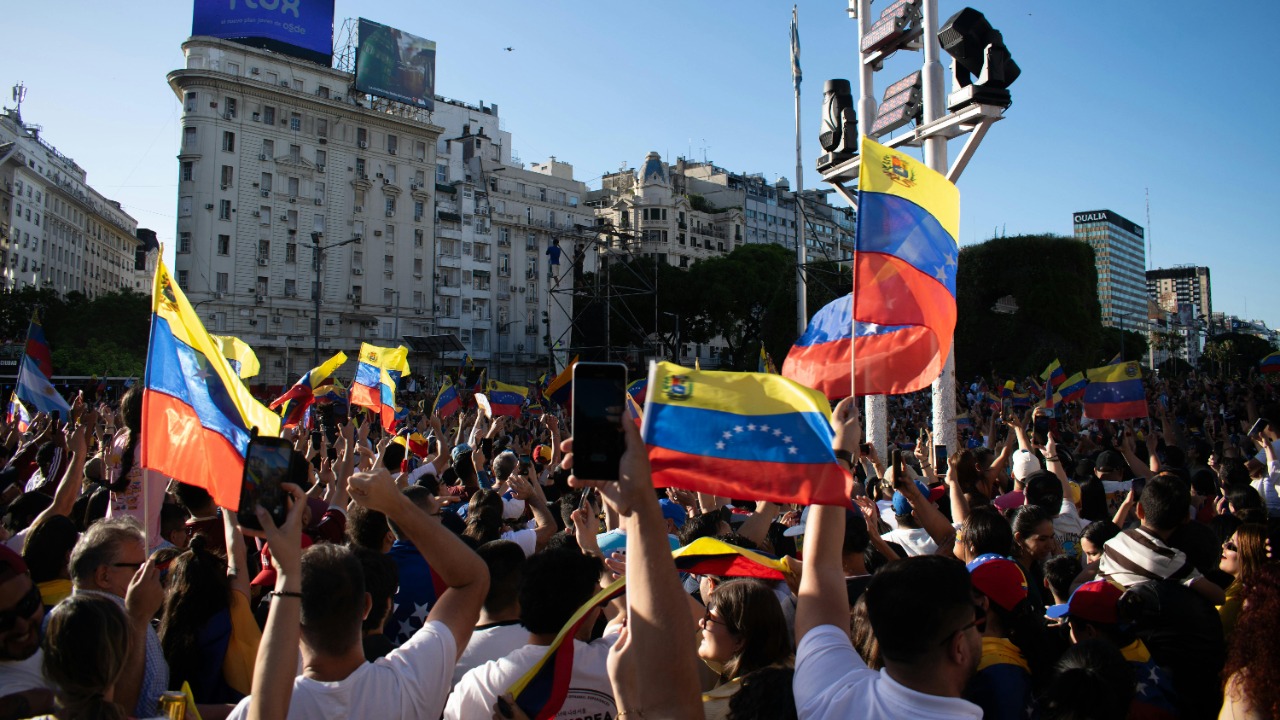
Venezuela’s political crisis is colliding with a global energy system that still runs on oil, and that collision is already shaping decisions in Washington, Houston, and communities along the Gulf Coast. As turmoil deepens, the country’s vast reserves are no longer a distant geopolitical talking point but a live question for American drivers, workers, and neighborhoods that live in the shadow of refineries. I want to unpack why experts say Americans cannot simply tune out what happens to Venezuelan crude, even if the impact at the gas pump is not immediate.
Venezuela’s turmoil and why it matters in the United States
The stakes in Venezuela start with the basic fact that it sits on one of the largest oil troves on the planet, yet its economy is in free fall and its politics are in open crisis. International sanctions on the Venezuelan government and a deep economic collapse have already slashed output from what was once one of the world’s top producers, turning a potential energy powerhouse into a fragile state whose instability spills across borders. When I look at the current chaos, I see not just a domestic power struggle but a contest over who will ultimately control that resource base and on what terms.
That is why the idea of Control of Venezuela has moved from think-tank papers into active policy debate in the United States. International pressure and sanctions have not only weakened the Venezuelan economy, they have also reshaped global supply patterns, forcing refiners to find substitutes for the heavy crude that used to flow reliably from Venezuelan ports. In that context, every new twist in Caracas, from street protests to elite defections, becomes a factor in how traders, oil executives, and American officials assess future supply security.
Trump’s high-risk plan to seize and revive Venezuelan oil
President Donald Trump has chosen to treat Venezuela’s oil sector as both a strategic prize and a lever of foreign policy, floating a plan to seize and revitalize the industry under United States direction. The logic is straightforward: if Washington can stabilize production and redirect exports, it could tighten its grip on a key source of heavy crude while sidelining rivals that have stepped into the vacuum. Yet when I look at the technical decay of Venezuela’s fields, the legal minefield of expropriated assets, and the political backlash such a move would trigger, it is clear that any attempt to execute this strategy is fraught with risk.
Experts who have examined the proposal point out that there is Strong demand for the kind of heavy crude Venezuela produces, which is essential for diesel fuel, asphalt, and other fuels that underpin the modern economy. That demand is precisely why Trump’s team sees an opportunity, but it is also why any misstep could roil markets and invite counter moves from countries that currently buy Venezuelan barrels. The plan is not just about pumping more oil, it is about rewriting the rules of who benefits from that production and how it fits into the global oil market.
Energy Secretary Chris Wright and the new U.S. playbook
To turn presidential rhetoric into operational reality, Trump has leaned heavily on Energy Secretary Chris Wright, a figure who now sits at the center of the United States strategy for Venezuela. Trump publicly stated, “I have asked Energy Secretary Chris Wright to execute this plan, immediately,” signaling that the White House expects swift movement rather than a slow, bureaucratic review. Wright, for his part, has talked about a potential increase of 30 to 50 in production capacity if conditions on the ground can be stabilized and investment can flow back into neglected infrastructure.
When I listen to Wright, I hear a technocrat who believes that engineering and capital can overcome years of mismanagement, but I also hear an undercurrent of urgency that reflects political timelines in Washington more than geological realities in Venezuela. Trump’s directive puts Wright in the position of negotiating with Venezuelans and oil executives at the same time, trying to reassure companies that their assets will be protected while convincing local actors that a new arrangement will not simply replicate past exploitation. The fact that global oil demand had fallen around 1 percent before this crisis only adds pressure to show that any intervention will deliver tangible benefits rather than just shifting barrels from one ledger to another.
Shaky ground: why U.S. oil majors are not rushing back
Even with the White House signaling an open door, the largest United States oil companies are treating Venezuela with caution rather than enthusiasm. Years of nationalizations, unpaid debts, and contract disputes have left a long trail of grievances, and executives know that any new deal will be judged against that history. I see a clear gap between political talk of a rapid turnaround and corporate assessments that the country’s oil industry is simply too fragile to justify a quick return.
Reporting on the ground describes the Venezuela oil industry as being on “Shaky ground,” with fields that have been starved of maintenance and facilities that no longer meet modern standards. It is no surprise that U.S. oil companies won’t rush to re-enter, as experts say the combination of legal uncertainty and physical decay makes any large-scale investment a gamble. That hesitation underscores a central tension in Trump’s strategy: the United States government can promise support, but it cannot force private firms to commit billions of dollars into a sector they view as structurally risky.
Maduro’s fall, asset battles, and the lure of heavy crude
The potential overthrow of Nicolás Maduro is often framed as a human rights and democracy story, but for American oil companies it is also about the chance to recover assets seized during his rule. Firms that once operated joint ventures or held concessions in Venezuela have spent years writing down those investments, pursuing arbitration, or simply waiting for a political opening. If a new government emerges that is friendlier to foreign capital, I expect a wave of legal and commercial maneuvering as companies try to reclaim what they lost.
Trump has already hinted that “We’re going to have our very large United States oil companies, the biggest anywhere in the world, go in, spend billions of dollars, and build it back up,” a vision that rests on the idea that a post-Maduro Venezuela will welcome that capital. Analysts note that Maduro overthrow could help companies recover assets seized by Venezuela, especially in projects that tap the country’s vast heavy crude reserves. Those reserves are not easy to extract, according to the EIA, but they are precisely the kind of resource that can anchor long term supply contracts if political risk can be reduced.
Why experts say Americans cannot ignore the oil stakes
For many Americans, Venezuela might feel distant, yet experts are warning that the country’s turmoil and oil reserves are directly tied to U.S. interests. The heavy crude that comes from Venezuelan fields feeds refineries that produce diesel for freight trucks, jet fuel for airlines, and asphalt for the roads those vehicles travel on. When I connect those dots, it becomes clear that what happens in Caracas can influence everything from shipping costs to airline ticket prices, even if the link is not always visible at the gas station.
National security specialists have been blunt that the Venezuela chaos deepens at a time when rivals like Russia are eager to expand their influence in the Western Hemisphere. Another Venezuela chaos deepens segment highlighted how one Expert from a Heritage Foundation National Securit team argued that Americans cannot ignore the possibility that Maduro loyalists could flee to Russia or that Moscow could gain greater leverage over Venezuelan exports. In that framing, the oil fields are not just economic assets, they are strategic terrain in a broader contest over who sets the rules of the global energy system.
Why oil prices and U.S. gas costs are barely budging
Despite the drama of military incursions and high level pronouncements, global oil prices have barely moved, and American gas prices have not plunged. The reason is that markets care about actual barrels, not just headlines, and Venezuela’s current output is too small and too uncertain to shift the balance on its own. When I look at the data, I see a world awash in alternative supplies, from U.S. shale to Middle Eastern producers, which blunts the immediate impact of any single country’s turmoil.
Analysts tracking the situation emphasize that Key Takeaways include the point that Experts don’t expect recent U.S. military action in Venezuela to impact American gas prices anytime soon, because the country’s output is simply too low to materially impact global oil markets. One market watcher put it bluntly, saying, “We continue with that quarantine, and we expect to see that there will be changes, not just in the way the oil industry operates, but also in the way that the frackers have unleashed,” a reminder that U.S. shale producers can ramp up quickly if prices spike. That perspective helps explain why oil prices are barely moving after the Venezuelan incursion, even as political rhetoric heats up.
Who pays the price at home: Black Gulf Coast communities
While national debates focus on geopolitics and gas prices, the communities most directly affected by any surge in Venezuelan imports are often left out of the conversation. Along the Gulf Coast, especially in places like Port Arthur, Texas, residents already live with the health and environmental burdens of heavy industry. Some activists say they fear the recent push to bring more Venezuelan crude into the United States will mean more pollution in neighborhoods that are already overexposed.
A gas flare at an oil refining plant near Port Arthur, Texas has become a symbol of that concern, as Some residents and advocates warn that expanding capacity for heavier crude could worsen air quality and health outcomes in Black Gulf Coast communities. Environmental researchers note that Venezuelan crude oil is much worse for the environment than the typical lighter grades used in the U.S. today, and that “Burning” those heavier barrels produces more pollution. One advocate put it plainly, saying that the focus is on who bears the risk and who reaps the reward, a question that goes to the heart of environmental justice.
The long game: exports, China, and what comes next
Even if the United States succeeds in reshaping Venezuela’s oil sector, it will be competing with other buyers that have built deep ties during years of sanctions. However, the country only exports about half a million barrels a year, with most going to China and only 150,000 g heading toward markets that might be redirected. That limited base means any rapid shift in flows will require not just new contracts but also new infrastructure and political guarantees that future governments will honor the deals.
Industry executives describe the situation as However part of a “long game,” in which inexpensive oil could eventually lead to higher production if political stability is restored. One analyst noted that “We could see more oil” coming to market if sanctions are eased and investment returns, but only if trust can be rebuilt between Caracas and foreign partners. In that sense, the future of Venezuelan production is not just a question of geology or engineering, it is a test of whether a country that has been at the center of so many resource battles can chart a more stable path that serves both its own citizens and a world still hungry for energy.
More From TheDailyOverview

Grant Mercer covers market dynamics, business trends, and the economic forces driving growth across industries. His analysis connects macro movements with real-world implications for investors, entrepreneurs, and professionals. Through his work at The Daily Overview, Grant helps readers understand how markets function and where opportunities may emerge.

