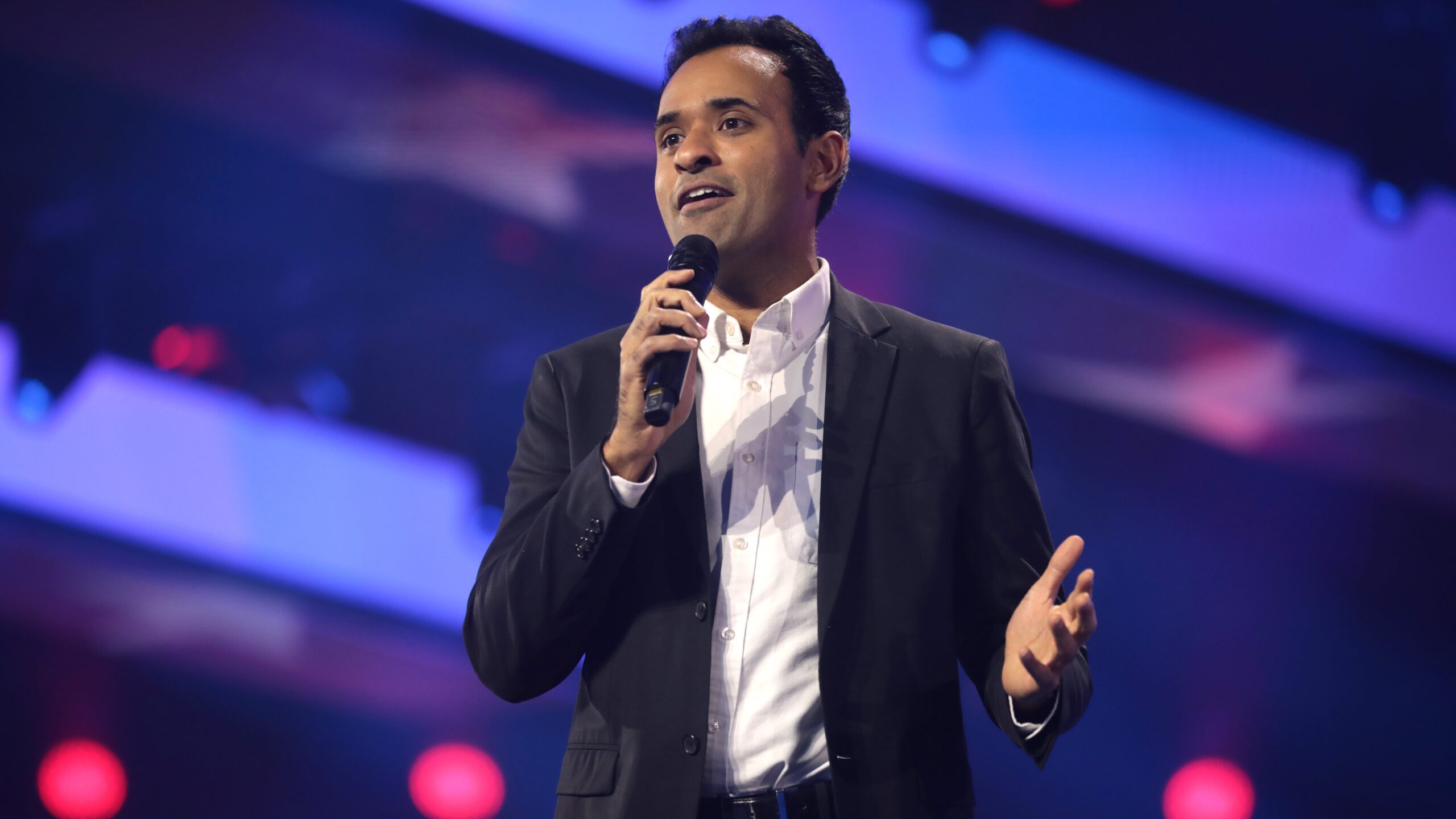
Vivek Ramaswamy is running for Ohio governor on a sweeping promise to wipe out state income taxes and sharply cut property taxes, casting himself as a crusader against what he portrays as a bloated government. Critics have responded by branding him an “anti-tax fairy,” arguing that his numbers do not come close to adding up and that his rhetoric hides painful tradeoffs. The clash over his plan is quickly becoming a test of whether Ohio voters will reward bold-sounding pledges even when the underlying math looks more like fantasy than fiscal policy.
Ramaswamy’s Ohio tax crusade in plain terms
At the center of Ramaswamy’s pitch is a simple, crowd-pleasing line: no state income tax and dramatically lower property taxes, all without sacrificing core services. In his campaign for governor, he has repeatedly vowed to eliminate Ohio’s income taxes and to “dramatically reduce” property tax bills, presenting the shift as a way to supercharge growth and keep more money in residents’ pockets, a message that has been highlighted in coverage of his campaign promises. Supporters hear a businessman applying private-sector discipline to government, while skeptics see a candidate leaning on slogans that ignore the basic structure of how Ohio pays its bills.
Those concerns are sharpened by the fact that this is not Ramaswamy’s first sweeping tax blueprint. On the national stage, he floated ideas like a 12 Percent Flat Tax and even flirted with a national sales tax modelled on the so-called Fair Tax, concepts that would have required enormous changes to federal revenue streams and that drew scrutiny from analysts at Tax Policy Center. The throughline is a candidate who consistently promises to slash taxes first and fill in the details later, trusting that growth and disruption will somehow close the gap.
The “anti-tax fairy” label and what critics mean
It is in this context that Ohio commentators have started calling Ramaswamy an “anti-tax fairy,” a jab that captures their view that he is sprinkling political pixie dust rather than offering a serious governing program. One letter to the editor argued that his Ohio tax plan is a “fairytale,” warning that the state’s government, already tightly controlled by Republicans, cannot simply wish away the revenue needed to run schools, maintain roads, and support vulnerable residents, a critique laid out in detail in a recent letter. The writer’s point is not just that Ramaswamy is anti-tax, but that he is selling the idea that Ohio can have Scandinavian-level services with Texas-style tax rates, without acknowledging the tradeoffs.
Another critic extended the metaphor, describing him as an “anti-tax fairy” who keeps reappearing with the same promises despite the structural realities of Ohio’s budget, and asking bluntly when voters will stop accepting “magical” pledges from their leaders, a sentiment captured in a separate opinion letter. I read that frustration as less about ideology and more about credibility: if a candidate will not level with voters about what must be cut, borrowed, or shifted to make the numbers work, then the plan is not a roadmap, it is a campaign prop.
How the numbers collide with Ohio’s budget reality
When I look at the structure of Ohio’s finances, the gap between Ramaswamy’s rhetoric and reality becomes clearer. By national standards, Ohio property tax bills are not especially high, in part because the state’s real estate values sit well below the U.S. average, a point underscored in an editorial that noted the state’s relatively modest property tax burden. That means there is less “fat” to trim than Ramaswamy suggests. Slashing property taxes on top of eliminating income taxes would blow a hole in local and state budgets that cannot be patched with efficiency slogans.
Ramaswamy has gestured at spending cuts and work requirements as partial offsets. When he launched his gubernatorial bid, he paired his no-income-tax pledge with calls for work requirements for Medicaid and other welfare programs, promising to make able-bodied adults work in order to receive Medicaid benefits. But even aggressive tightening of social programs would not come close to replacing the revenue lost from eliminating income taxes and cutting property taxes, especially in a state where schools and counties lean heavily on those streams. The math problem is not ideological, it is arithmetic.
From national flat taxes to Ohio: a pattern of magical thinking
Ramaswamy’s Ohio agenda does not exist in a vacuum, it reflects a broader pattern from his national political forays. During his presidential run, he floated a 12 Percent Flat Tax and mused about replacing the income tax with a Fair Tax style national sales levy, ideas that would have shifted the federal tax base dramatically and that analysts warned would require very high consumption tax rates to keep revenue stable, as detailed in assessments of his Percent Flat Tax proposals. He coupled those ideas with sweeping claims about deregulation and growth, arguing that once the economy hit his preferred growth targets, the numbers would sort themselves out.
Yet even in those national plans, he identified relatively few concrete spending cuts beyond slashing the federal civilian workforce, which accounts for about 5 percent of federal spending, a limitation that analysts highlighted when reviewing his economic agenda. The pattern is familiar: taxes are specific and dramatic, while offsets are vague and politically easier to promise than to enact. When that approach is imported to Columbus, it risks leaving Ohio with a structural deficit that would eventually force either deep cuts to schools and local governments or a quiet reintroduction of other, less transparent taxes and fees.
Trump-era inspiration and the missing fine print
Ramaswamy has been explicit that he sees himself as part of a broader movement of conservative disruptors. In a televised appearance, he praised how other leaders can follow the Trump model and “bring the same vision to their jurisdictions,” framing his own bid as an effort to bring that approach to Ohio and aligning himself with President Trump. The message is that bold tax cuts and aggressive deregulation can unleash growth without painful tradeoffs, a narrative that resonates with voters who feel overtaxed and underserved.
But the Trump comparison also highlights what is missing from Ramaswamy’s state-level pitch. At the federal level, large deficits can be financed through borrowing in a way that states like Ohio cannot easily replicate under balanced-budget rules. When critics ask which law he would change or which programs he would cut to make his numbers work, they are pointing to this structural constraint, a question that has been raised directly in coverage of his Ohio agenda. Without clear answers, the promise to end income taxes and shrink property taxes looks less like a plan and more like a branding exercise built on the aura of Trump-era disruption rather than on a detailed blueprint for governing.
More From TheDailyOverview
*This article was researched with the help of AI, with human editors creating the final content.

Julian Harrow specializes in taxation, IRS rules, and compliance strategy. His work helps readers navigate complex tax codes, deadlines, and reporting requirements while identifying opportunities for efficiency and risk reduction. At The Daily Overview, Julian breaks down tax-related topics with precision and clarity, making a traditionally dense subject easier to understand.

