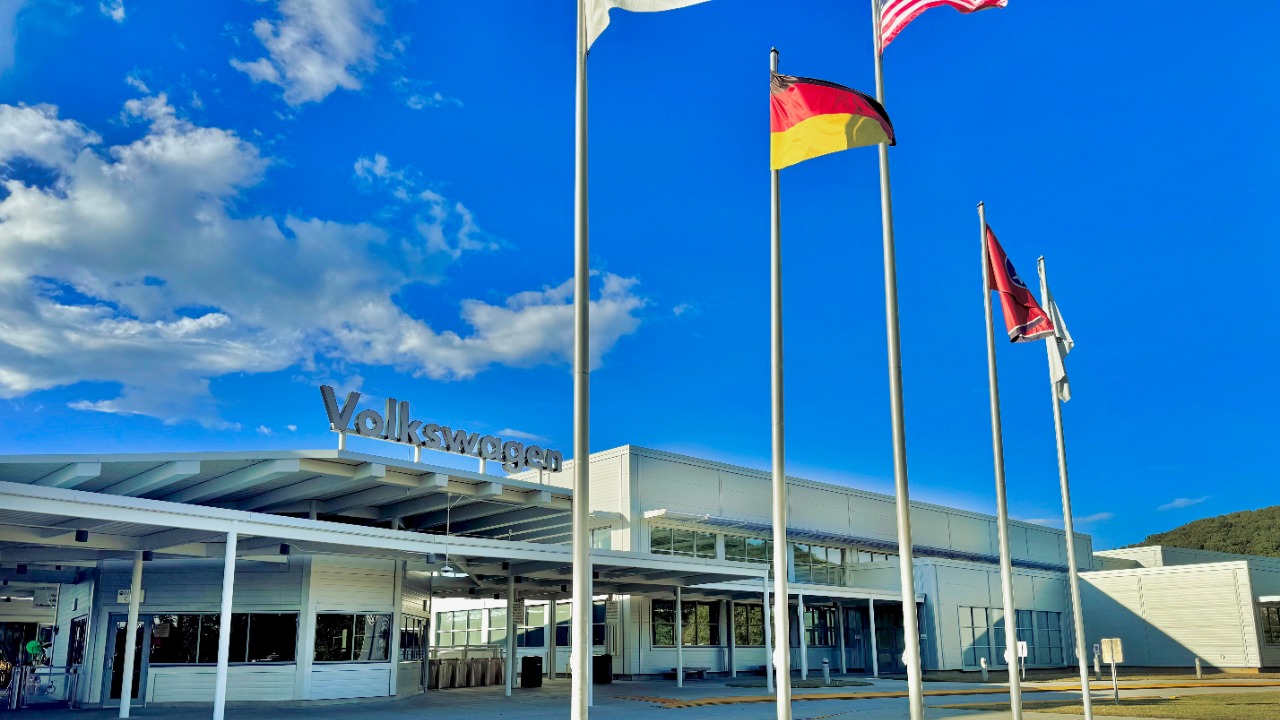
Volkswagen has turned a routine investment review into a high stakes warning shot at Washington, signalling it could walk away from a new United States factory after President Donald Trump’s latest tariff moves. The clash pits one of Europe’s biggest industrial employers against a White House that has made aggressive trade policy central to its economic strategy. What looks like a single plant decision is in fact a test of how far global carmakers will go to shield their margins from a more protectionist America.
At the heart of the dispute is a proposed Audi facility that Volkswagen had been weighing as part of its broader North American expansion. The company now says the project no longer adds up financially under current import duties and is openly tying any green light to a cut in tariffs. That stance puts thousands of potential U.S. manufacturing jobs, and a chunk of the country’s electric vehicle ambitions, on the line.
Volkswagen’s tariff ultimatum
Volkswagen’s leadership has moved from quiet lobbying to explicit conditionality, telling policymakers that a new U.S. Audi plant will not proceed unless the tariff burden is reduced. The Volkswagen CEO has framed the decision as a straightforward calculation, arguing that the German group cannot justify the capital outlay while higher duties inflate the cost of imported components and squeeze returns on any locally built Audi models. In interviews, Oliver Blume has stressed that Volkswagen needs near term cost relief and clearer long term policy signals before it can lock in a fresh wave of U.S. spending, making tariff cuts a precondition rather than a nice to have.
That message has been amplified in German and international business circles, where executives describe the Trump administration’s tariff shock as a direct threat to cross border supply chains. Reports citing the Volkswagen CEO, including analysis by Chris Gattringer, underline that the company is reassessing parts of its five year investment plan in light of the new trade costs and currency swings that have eroded the appeal of dollar denominated projects. The warning is not limited to one site, it is a signal that a German industrial heavyweight is prepared to re route capital away from the United States if the policy environment does not shift.
Inside the stalled Audi factory plan
The most visible casualty of this standoff is the proposed Audi factory that Volkswagen AG had been exploring as a way to deepen its premium footprint in North America. Executives had floated the idea of a dedicated plant to assemble Audi vehicles for the U.S. market, a move that would have reduced reliance on imports and potentially sheltered the brand from future trade frictions. According to detailed briefings, Volkswagen AG now says it will not go ahead with that Audi facility unless tariffs are cut enough to make the investment economically viable, a position that has been reiterated in several briefings.
William Wilkes has reported that, in internal discussions, the group has effectively frozen preparatory work on the Audi project while it waits to see whether Washington softens its stance. The company has told trade specialists that a “reduction of tariffs” is essential before it can sign off on the plant, a line that has been echoed in legal and financial analyses of the plan’s feasibility. In parallel, coverage of the situation notes that Volkswagen AG is weighing alternative locations and that the Audi brand’s global production network gives it options if the United States proves too costly, reinforcing the credibility of its threat to walk away from the Audi plant.
Trump’s tariff shock and the politics of carmaking
President Donald Trump’s latest tariff moves are the backdrop to Volkswagen’s brinkmanship, and they reflect a broader shift in how the White House views global car supply chains. The administration has leaned on higher duties as a tool to pressure trading partners and to encourage more domestic production, arguing that foreign manufacturers should build more vehicles on U.S. soil if they want access to American consumers. For a company like Volkswagen, which has long balanced imports with local assembly, the sudden jump in trade costs has upended the finely tuned economics of its North American strategy and forced a rethink of where to place its next big factory.
Trade focused reporting notes that Volkswagen’s concerns are not only about headline tariff rates but also about policy unpredictability, including the risk that future measures could target specific segments such as electric vehicles or components sourced from particular countries. Analysts have pointed out that the depreciation of some currencies against the dollar has compounded the impact of tariffs, making U.S. investments relatively more expensive compared with options in other regions. In that context, the company’s warning that it may pull its plans for a major Audi factory in the United States if tariffs are not cut is as much a commentary on political risk as it is on immediate cost pressures, a point underscored in detailed coverage of how Volkswagen is reassessing its exposure.
Scout Motors shows a different path into the U.S.
While the Audi project is on ice, Volkswagen is still pushing ahead with another major American bet through its Scout Motors brand. The group has positioned Scout Motors as a way to tap into U.S. demand for rugged electric SUVs and pickups, and it has committed to building a large manufacturing site in South Carolina to anchor that push. Company materials describe how Volkswagen Launches New Scout Brand To Be Built In partnership with local authorities, with the Scout Motors site in South Carolina intended to produce a new generation of off road focused electric vehicles tailored to American tastes, a strategy outlined in detail in the Scout Motors launch overview.
Construction updates show that the Scout Motors Production Center is designed for serious scale, with plans stating that at full capacity the Production Center will be capable of building up to 200,000 vehicles annually, or roughly 40 vehicles every hour. Earlier project milestones detail how Scout Motors broke ground on a $2B electric vehicle plant in South Carolina after navigating environmental reviews, underscoring that Volkswagen is still willing to invest heavily in the United States when the economics and incentives line up. That contrast with the Audi hesitation highlights how targeted tariffs can skew corporate decisions toward some projects and away from others.
Chattanooga, Blythewood and the geography of risk
The tariff debate is also reshaping how Volkswagen thinks about specific U.S. locations, from established hubs to emerging EV clusters. In Tennessee, questions have been raised about whether Audi could eventually produce cars in Chattanooga, where an under construction Scout Motors facility in South Carolina has already become a reference point for what a modern EV plant can look like. When asked directly, Blume has been cautious, indicating that any move to build Audi vehicles in Chattanooga would depend on a more predictable trade environment and on the success of the Scout Motors rollout, a linkage that has been explored in coverage of how tariffs hamper Volkswagen’s plans for U.S. investment.
Further east, in Blythewood, South Carolina, the picture is more upbeat. Reports note that the Scout Motors facility in Blythewood, South Carolina continues at full pace, with the main 1.3 m square foot assembly building rising even as the trade environment remains volatile. Industry updates add that Key Takeaways from recent briefings include confirmation that Preproduction Scout vehicles are set to begin rolling down the line at a new factory in South Carolina in 2026, with tooling already being installed in the paint shop, details that have been shared in dedicated Scout development reports. The divergence between a paused Audi plant and a surging Scout Motors complex shows how geography, product mix and policy all intersect in Volkswagen’s U.S. risk map.
More From TheDailyOverview
*This article was researched with the help of AI, with human editors creating the final content.

Grant Mercer covers market dynamics, business trends, and the economic forces driving growth across industries. His analysis connects macro movements with real-world implications for investors, entrepreneurs, and professionals. Through his work at The Daily Overview, Grant helps readers understand how markets function and where opportunities may emerge.


