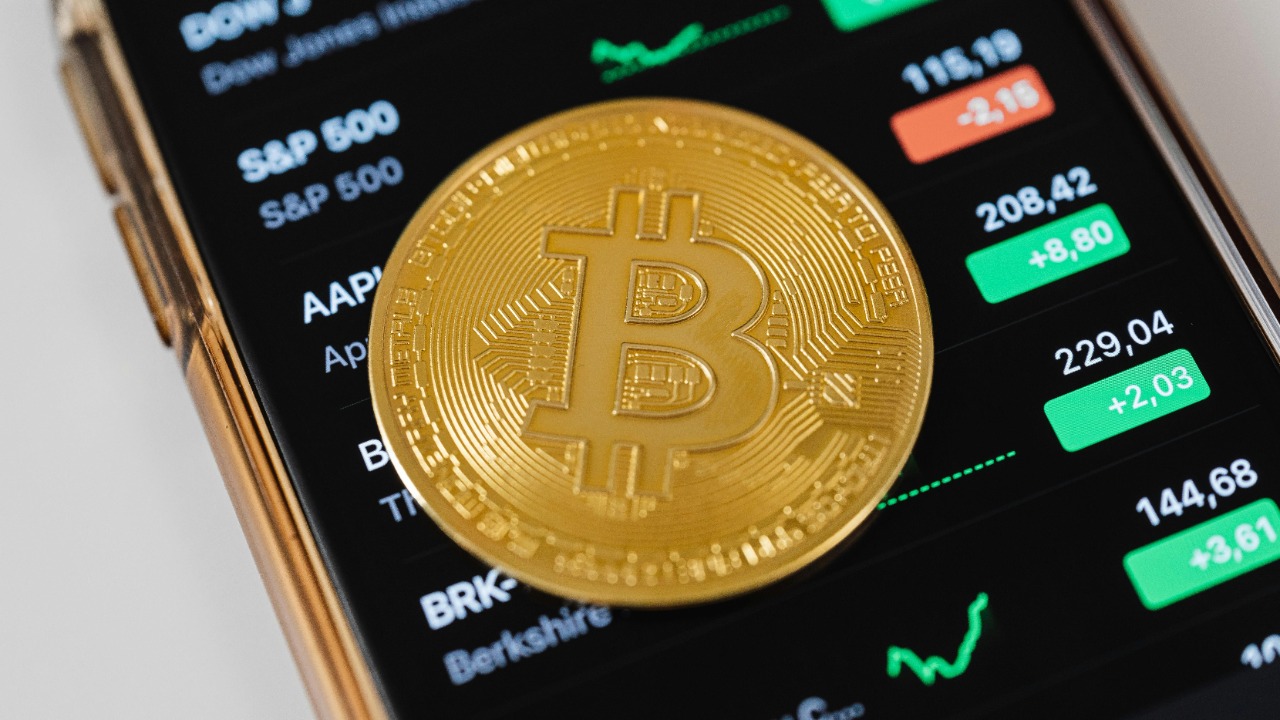
Wall Street’s latest bout of turbulence has a new scapegoat: Bitcoin. As stock indexes whipsawed and liquidity briefly thinned, traders and strategists rushed to connect the dots between a sharp crypto selloff and the violent swing in equities, arguing that the same speculative forces driving digital coins are now hardwired into the broader market.
I see a more complicated story. Bitcoin’s crash clearly rattled risk appetite, but it also exposed how deeply traditional finance has embraced crypto, how fragile sentiment has become after years of easy money, and how quickly blame shifts when volatility returns to stocks.
How Bitcoin became a convenient culprit for equity chaos
When stocks lurch lower in a single session, Wall Street instinctively looks for a trigger, and Bitcoin has become an easy one to point to. The narrative is simple and emotionally satisfying: a sudden plunge in a notoriously volatile token spooks investors, margin calls ripple through leveraged portfolios, and equity markets buckle under the pressure. That story fits neatly with the idea that speculative excess in crypto has infected everything from tech giants to meme stocks.
The reality is that the relationship between Bitcoin and stocks has evolved over time, shaped by policy and positioning rather than pure coincidence. Research on crypto prices moving more in sync with stocks after extraordinary central bank crisis responses shows that Bitcoin, stocks move together more tightly when liquidity is abundant and investors crowd into the same trades. That backdrop makes it easier for Wall Street to argue that a Bitcoin slump is not just noise but a genuine shock to the same risk-on complex that powers growth shares and high-beta names.
The new correlation regime: from fringe asset to macro barometer
For years, Bitcoin was pitched as a hedge against the traditional financial system, a digital alternative that would zig when Wall Street zagged. That promise has faded as institutional money has poured in and crypto has been folded into the same macro playbook that drives equities. Analysis of Bitcoin correlation to the stock market notes that the Bitcoin market often feels the effects when the stock market wobbles or takes a nosedive, and that shift has been especially visible around Oct 16, 2024 and Oct 17, 2024 when cross-asset selling intensified. In that environment, Bitcoin’s moves are less an independent signal and more a high-beta reflection of the same macro fears hitting equities.
That shift is not just anecdotal. Work on whether cryptocurrency and stock market prices are correlated has tracked how Bitcoin’s return profile increasingly lines up with equity benchmarks, especially during stress episodes. Earlier research on crypto’s ripple effects found that Bitcoin volatility explains about one key portion of equity market swings, a relationship that became more pronounced as observed in early 2021 and was highlighted on Jan 10, 2022, even if the summary shorthand “202” understates the complexity. The more Bitcoin trades like a high-octane tech stock, the more its crashes and rallies show up in the same portfolios that dominate index performance.
Volatility, leverage and the mechanics of contagion
Blaming Bitcoin for a wild stock session only makes sense if there is a clear transmission channel, and volatility is the first piece of that puzzle. As a relatively new asset class, crypto continues to be highly volatile and, therefore, riskier than traditional assets, a point underscored in analysis of why crypto is so volatile. Generally, the more volatile and speculative an asset, the more leverage investors are tempted to use, and the more brutal the unwind when prices move against them. When Bitcoin drops sharply, leveraged traders can be forced to liquidate not just coins but also stocks and exchange-traded funds to meet margin calls.
That is where contagion becomes visible on trading screens. In recent sessions, market commentators in Market Talk segments have warned that Bitcoin’s steep drop may spill over into the stock market, highlighting how a sudden move in one corner of the risk universe can force de-risking elsewhere. When Bitcoin slumps, especially around moments like Nov 20, 2025, the combination of thin liquidity, algorithmic trading and cross-asset margining can turn what looks like a crypto-specific event into a broader equity air pocket. I see that as less about Bitcoin’s intrinsic value and more about the plumbing of modern markets.
When meme-style speculation jumps from tokens to tickers
The line between crypto speculation and stock market froth has blurred to the point where they often feel like the same trade. Retail enthusiasm that once chased obscure tokens has migrated into single-name equities, especially those with a compelling story and a history of sharp moves. The recent behavior of government-sponsored enterprise shares is a case in point: coverage of Fannie and Freddie shares mimicking meme-stock mania on Nov 21, 2025 described wild swings that looked more like a crypto chart than a sober financial stock. Retail traders are now fleeing as equity markets are gripped by volatility and crypto assets suffer their worst rout in months, a sign that the same crowd that once piled into dog-themed coins is now whipsawing legacy names.
That crossover matters for how blame is assigned. When Retail investors treat both Bitcoin and distressed financial stocks as lottery tickets, the resulting price action can be violent in both directions. Ackman’s theory for the pullback in those shares, and the debate about what is likely coming next, shows how quickly narratives can flip from euphoria to panic when liquidity dries up. In that context, pointing to Bitcoin as the cause of a stock market swing misses the deeper issue: a market structure that rewards short-term momentum, amplifies social-media driven trades and leaves both tokens and tickers vulnerable to the same boom-and-bust cycle.
Why Wall Street keeps pointing the finger at Bitcoin
There is a psychological comfort in blaming a single, exotic asset for a messy market move. Bitcoin, with its opaque origins and extreme price history, fits the role perfectly. When volatility spikes, it is easier for Wall Street to say that a Bitcoin crash knocked stocks off course than to confront more uncomfortable drivers like stretched valuations, slowing earnings or policy uncertainty. The habit of treating Bitcoin as a macro villain also reflects how quickly it has moved from the fringes to the center of portfolio construction, especially for hedge funds and high-frequency traders.
At the same time, the data show that Bitcoin is now embedded in the same risk ecosystem as equities, not standing apart from it. Work on crypto’s tighter alignment with stocks since Jan 10, 2022, the evidence from Oct that the Bitcoin market often reacts when the stock market wobbles, and the growing body of research updated through Oct 27, 2025 all point in the same direction: Bitcoin is no longer a separate world. It is one more volatile instrument in a complex web of trades that includes tech giants, meme favorites and leveraged exchange-traded products. When that web is stressed, I see Bitcoin’s plunge less as the original sin and more as a highly visible symptom of a market that has grown comfortable living on the edge.
More From TheDailyOverview
- Dave Ramsey warns to stop 401(k) contributions
- 11 night jobs you can do from home (not exciting but steady)
- Small U.S. cities ready to boom next
- 19 things boomers should never sell no matter what

Elias Broderick specializes in residential and commercial real estate, with a focus on market cycles, property fundamentals, and investment strategy. His writing translates complex housing and development trends into clear insights for both new and experienced investors. At The Daily Overview, Elias explores how real estate fits into long-term wealth planning.

