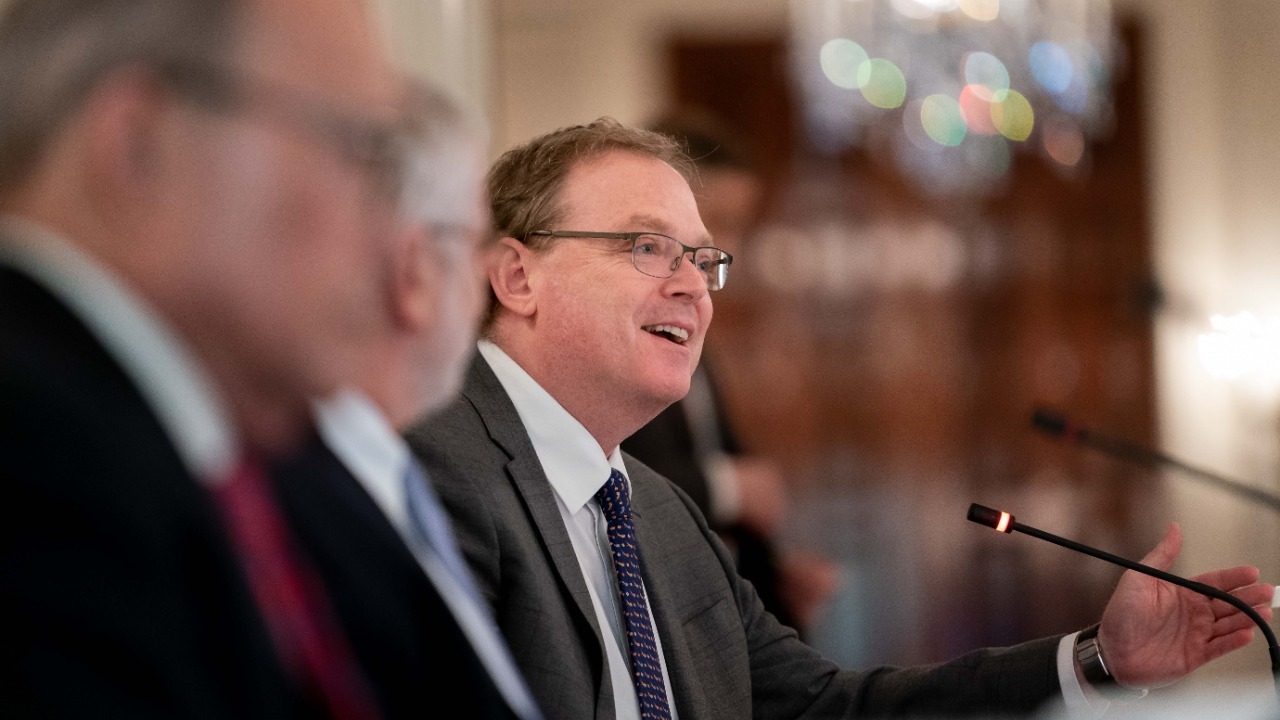
Wall Street is mounting an unusually public effort to keep President Donald Trump from installing longtime ally Kevin Hassett as the next chair of the Federal Reserve, turning a normally discreet vetting process into a full scale lobbying campaign. The fight is not just about personalities, it is about whether the central bank will prioritize Trump’s push for rapid rate cuts over the market’s demand for credibility on inflation and long term borrowing costs.
At stake is who will replace Jerome Powell and how far the next Fed chief will go in aligning monetary policy with the White House’s political and economic agenda, a question that has already rattled bond markets and sharpened tensions between Trump’s inner circle and major investors. I see the backlash to Hassett as a revealing test of how much influence Wall Street still has over a president who has made attacking the “establishment” a core part of his brand.
Wall Street’s quiet campaign goes loud
The most striking feature of this battle is how openly major financial players are trying to derail Kevin Hassett’s ascent before Trump makes his final call. Instead of the usual back channel whispers, senior figures across Dec trading desks and big banks are warning that putting Hassett in charge of the Fed would inject political risk into every decision on interest rates and financial stability. Their message, relayed through calls to the White House and the Treasury, is that markets will punish any move that looks like a shortcut to cheaper money rather than a disciplined response to data, a concern that has already surfaced in detailed accounts of how Wall Street moves are aimed at stopping Trump from picking him for the Fed.
In my view, the fact that these objections are surfacing in public suggests that private outreach has not been enough to shift Trump’s thinking. When bankers and asset managers start airing their fears about a potential Fed chair in the press, they are signaling that they see a real chance the president will ignore traditional vetting channels and lean on personal loyalty instead. That is why the push to block Hassett has become a coordinated effort among Wall Street bosses and corporate leaders who normally prefer to stay out of personnel fights, a pattern that also emerges in reporting that Dec market players are mobilizing to keep Trump from picking Kevin Hassett as the next Fed chief.
Trump signals a choice while hopefuls circle Powell’s job
Trump has made clear that he wants a Fed chair who will move aggressively to cut borrowing costs, and he has already said he has picked the person who will replace Jerome Powell, even as the formal announcement lags. That declaration instantly intensified the jockeying among HOPEFULS EYEING POWELL’S JOB INTENSIFY, with advisers and allies trying to frame themselves as the safest pair of hands for a president who prizes loyalty but also watches the stock market as a barometer of success. In that context, Hassett’s emergence as a frontrunner is not surprising, given his long service as a Trump economic adviser and his willingness to echo the president’s complaints about what he sees as overly tight monetary policy, a dynamic reflected in coverage of how hopefuls eyeing Powell’s job have stepped up their campaigns.
From my perspective, Trump’s early signaling has boxed markets into a guessing game that is already affecting expectations for rates and inflation. By hinting that he has settled on a candidate while allowing names like Hassett to dominate the conversation, the president has effectively tested how far investors will tolerate a more politicized Fed. The sharp reaction to the idea of Hassett in the top job shows that this trial balloon has real consequences, especially as affordability pressures and concerns about the cost of mortgages and car loans are front of mind for both voters and traders.
Who Kevin Hassett is, and why he matters to Trump
Kevin Hassett is not a random pick from the economics profession, he is a Longtime Trump ally whose relationship with the president stretches back through earlier stints as a top adviser and public defender of Trump’s economic record. Over the years he has built a reputation as a conservative economist comfortable on television and in political combat, someone who can translate complex policy into what one account memorably described as Trumpian gobbledygook that resonates with the president’s base. That history explains why Hassett is emerging as the most important name in the Fed succession chatter, with some observers describing him as widely seen as the successor to Jerome Powell if Trump follows his instincts rather than Wall Street’s warnings, a characterization that tracks with profiles asking Who is Kevin Hassett and why the Trump insider is set to shake up the Fed.
In my reading, Hassett’s appeal to Trump rests on more than personal loyalty. He has consistently argued for lower interest rates and has been willing to criticize central bankers who, in his view, move too slowly to support growth, positions that dovetail neatly with Trump’s long running frustration with Jerome Powell. That alignment makes Hassett a uniquely powerful symbol in this fight, because his potential appointment would signal not just a change in personnel but a deliberate shift toward a Fed chair who sees his mission as delivering on Trump’s promise of cheaper money, even if that unnerves investors who prize the central bank’s independence.
Why bond investors are spooked
Bond markets have reacted sharply to the prospect of Hassett taking over the Fed, and the anxiety is not hard to understand. Investors who buy and trade government debt are intensely sensitive to any hint that the central bank might cut rates too quickly, stoking inflation or undermining the value of long term bonds. Reports that Bond investors warned of Hassett as a potential Fed chair over rate cut fears capture the core concern, namely that his perceived closeness to Trump and his enthusiasm for easier policy could push the Fed away from its 2 percent target in ways that would be hard to reverse, a risk that has already been flagged in detailed accounts of how bond investors warned of Hassett as a potential Fed chair.
From my vantage point, the bond market’s reaction is a practical check on political enthusiasm for rapid rate cuts. When yields jump on the mere rumor of a more dovish Fed chair, it raises borrowing costs for the government, corporations, and households, undercutting the very goal of making money cheaper. That is why the warnings from Dec bond desks carry weight in Washington, even if Trump bristles at the idea that investors are trying to veto his personnel choices. The message is simple but powerful, if the Fed looks like it is being steered toward short term political goals, the long end of the market will demand a higher premium to lend.
Wall Street sounds the alarm directly to Washington
Beyond the bond market’s pricing signals, Investors have taken the unusual step of sounding the alarm directly to policymakers about the risks they see in a Hassett led Fed. According to detailed accounts, some of the largest players have warned the Treasury that naming Hassett would be read as a sign that Trump wants a compliant central bank that will deliver rate cuts on demand, rather than one that weighs inflation and employment data independently. Those conversations, which have been described as part of a broader effort in Dec to raise red flags about the president’s preferred candidate, show how far Wall Street is willing to go to keep the Fed from becoming an extension of the White House, a concern captured in reports that Wall Street Sounds Alarm On Kevin Hassett As Trump Eyes Him For Fed Chair and that investors have taken their case straight to the Treasury.
In my assessment, this direct outreach reflects a calculation that the Treasury can act as a moderating force on Trump’s instincts, especially if officials there emphasize how a credibility shock at the Fed would complicate the government’s own borrowing plans. The fact that these warnings are being framed in terms of concrete market risks, rather than abstract lectures about central bank independence, suggests that Wall Street understands the language that resonates in this White House. The pitch is not that Hassett is unqualified, but that his appointment could trigger a sell off that would hurt Trump politically by pushing up mortgage rates, car loan costs, and corporate financing spreads just as he heads into another intense phase of economic policymaking.
Rising odds, rising yields
Every time Kevin Hassett’s name has surfaced as a serious contender for the Fed job, markets have reacted in ways that underscore how sensitive investors are to the prospect of a more politically aligned central bank. Analysts tracking the moves have noted that his rising odds to be the next Fed boss have coincided with shifts in bond yields and inflation expectations, as traders price in the possibility of faster rate cuts followed by a potential inflation overshoot. One detailed account of this pattern, framed around how Kevin Hassett’s rising odds to be Fed boss have spooked markets, highlights how investors are reading his public comments on rates and his appearances at White House events as signals of where Trump wants policy to go.
To my eye, the market’s reaction is less about Hassett’s technical skills and more about the narrative his appointment would cement. Traders are effectively asking whether a Fed led by a Longtime Trump ally would be willing to hike rates again if inflation flared back up, or whether political pressure would keep policy looser for longer. The fact that yields have moved on speculation alone shows how much credibility is at stake, and it explains why Wall Street is trying to head off the appointment before it becomes a fait accompli that the market then has to digest in real time.
Can Hassett deliver what Trump wants?
Even some of the investors most skeptical of Hassett’s potential appointment concede that he has an accomplished resume, but they question whether he can actually deliver the rapid pace of interest rate cuts that President Donald Trump appears to want. One influential voice, PGIM’s Peters, has argued that Kevin Hassett may not have the ability to push through the kind of aggressive easing Trump has hinted at without triggering a backlash from other Fed officials and the broader market, a view that underscores the limits of any one chair’s power inside a committee driven institution. That skepticism is captured in analysis noting that Kevin Hassett may not have the ability to deliver the rapid cuts Trump would like on his own.
From my standpoint, this is a crucial nuance in the debate. Trump may see Hassett as a reliable ally who will push for lower rates, but the Fed chair still has to build consensus among other governors and regional bank presidents who are deeply invested in protecting the institution’s credibility. If markets believe that Hassett would face internal resistance, they may doubt that he can fully align policy with Trump’s wishes, which in turn could blunt some of the political appeal of appointing him in the first place. That tension between presidential expectations and institutional constraints is one reason why some on Wall Street argue that Trump would be better served by a candidate who commands broader respect inside the Fed system, even if that person is less personally loyal.
Hassett pushes back as markets question his credibility
Kevin Hassett has not been passive in the face of this scrutiny, and he has tried to rebut the idea that he would be a rubber stamp for Trump’s most aggressive rate cut ambitions. In public comments, Hassett has remained coy about his chances of getting the job while pointing to what he describes as a strong Treas market and a still fragile economic backdrop as reasons to move carefully, a framing meant to reassure investors that he understands the risks of moving too fast. Those remarks, which have been highlighted in coverage noting that Hassett, while remaining coy about his prospects, has pushed back on criticisms, are part of a broader effort to present himself as a responsible steward rather than a political operative.
In my reading, Hassett’s defense underscores how aware he is of the credibility gap he faces with parts of the market. By emphasizing the fragility of the economic end and the importance of a strong Treasury market, he is effectively speaking the language of investors who worry about inflation and debt sustainability. Whether that is enough to overcome the perception that he is too close to Trump is another question, but it shows that Hassett understands the stakes of the debate and is trying to position himself as someone who can balance the president’s priorities with the Fed’s institutional mandate.
What this fight reveals about Trump, Wall Street, and the Fed
The clash over Kevin Hassett’s potential appointment lays bare a deeper struggle over who gets to shape U.S. monetary policy in the Trump era. On one side is a president who has never hidden his desire for lower interest rates and who now sees an opportunity to install a Longtime Trump ally at the top of the Fed, someone he believes will be more responsive to his political and economic agenda. On the other side is a Wall Street establishment that, while often aligned with Republican tax and regulatory priorities, is drawing a line at what it sees as a direct threat to the central bank’s independence and the bond market’s confidence in long term price stability, a concern that has driven Dec efforts by Wall Street bosses and corporate leaders to intervene.
From my perspective, the outcome of this fight will send a powerful signal about the balance of power between the White House, the markets, and the Fed. If Trump ultimately backs away from Hassett in response to investor pressure, it will suggest that Wall Street still has significant leverage when it speaks with a unified voice about systemic risks. If he presses ahead despite the warnings, it will mark a new phase in the politicization of monetary policy, one in which the president is willing to test how far he can push the central bank toward his preferred path on rates, even at the cost of higher yields and market volatility. Either way, the campaign to block Hassett has already exposed the fault lines that will define the next chapter of U.S. economic policy.
More From TheDailyOverview
- Tennessee loses $2.6B megafactory and faces major layoffs
- Retired But Want To Work? Try These 18 Jobs for Seniors That Pay Weekly
- What to do with your pennies after the U.S. stops minting them
- Home Depot CEO warns of a troubling customer trend in stores

Grant Mercer covers market dynamics, business trends, and the economic forces driving growth across industries. His analysis connects macro movements with real-world implications for investors, entrepreneurs, and professionals. Through his work at The Daily Overview, Grant helps readers understand how markets function and where opportunities may emerge.