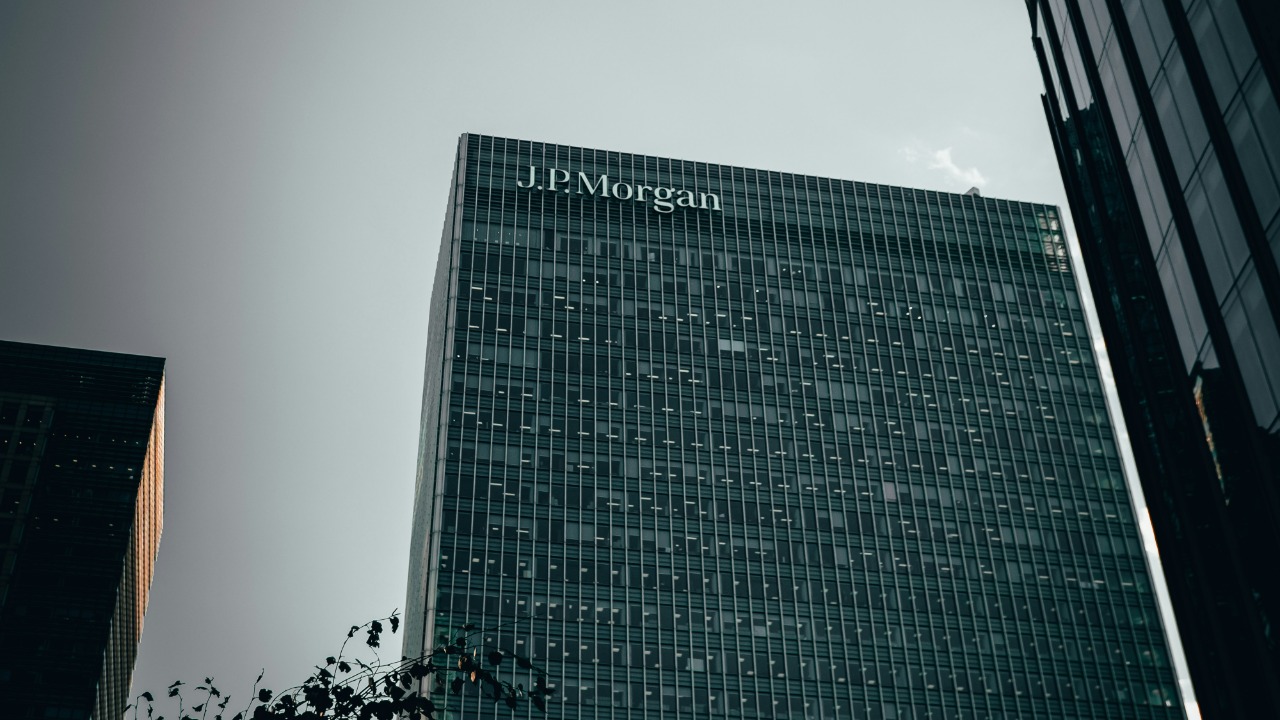
Wall Street is confronting a cyber incident that cuts to the core of how modern finance actually runs, through sprawling data vendors that sit between banks and the real economy. A hack at a major real estate technology provider has forced some of the biggest lenders in the United States to trace where their information flows, which clients might be exposed, and how far the damage could spread through the financial system.
Instead of a direct hit on a marquee bank, the attackers appear to have gone after the connective tissue of the mortgage and commercial property markets, exposing how much risk is concentrated in a handful of lightly visible service firms. The scramble to understand the breach is now a test of whether Wall Street’s defenses are built for a world where a single compromised vendor can ripple across loan books, securitizations, and investor portfolios in a matter of hours.
The vendor breach that blindsided big lenders
The incident centers on SitusAMC, a New York City based technology and services provider that sits deep in the plumbing of the real estate finance industry. According to detailed sector reporting, the US financial sector is facing the impact of a cyberattack on this New York City based firm, which supports a wide range of real estate lenders and investors and has become a critical node in the mortgage data supply chain for the US financial sector and New York City. By targeting a vendor that aggregates and processes loan information rather than a single bank, the attackers effectively struck at a shared infrastructure layer that many institutions rely on but do not fully control.
What makes this breach especially unsettling is that SitusAMC’s role is both technical and deeply embedded in day to day dealmaking, from underwriting commercial mortgage backed securities to servicing residential loans. The firm’s systems touch properties across major markets, including high profile commercial hubs such as New York City real estate, which means any compromise of its data could expose granular details about borrowers, collateral, and transaction structures. I see that as the core reason Wall Street is treating this as more than a routine cyber incident: it is a direct challenge to the assumption that outsourcing data handling automatically reduces risk.
JPMorgan, Citi and Morgan Stanley race to trace exposure
Major lenders moved quickly once the breach surfaced, but their first task has been basic: figuring out exactly what information was in the affected systems. Reporting from Nov 24, 2025, makes clear that JPMorgan, Citi, and Morgan Stanley, among other lenders, warned of possible client data exposure after learning that their vendor had been compromised and that the scope of compromised information remains under investigation for JPMorgan, Citi and Morgan Stanley. That uncertainty is itself a risk, because banks must decide how aggressively to notify clients and regulators before they have a complete forensic picture.
Earlier coverage from Nov 23, 2025, underscores how quickly the alarm spread across Wall Street once the hack became public. Banks that rely on SitusAMC for loan analytics and servicing scrambled to assess whether their own systems were touched and which counterparties might be affected, a process that required cross checking internal records against the vendor’s compromised environment while cyber teams worked to contain the intrusion as Wall Street scrambled to assess fallout. From my vantage point, that scramble highlights a structural problem: when critical data lives in a third party’s environment, even the most sophisticated banks can find themselves temporarily blind to what attackers may have seen or stolen.
Chase, Citi and Morgan Stanley confront the third party risk problem
The breach has also thrown a spotlight on how concentrated vendor risk has become in real estate finance. Coverage from Nov 23, 2025, notes that a recent cyberattack on SitusAMC, described as a technology vendor for real estate lenders, has potentially affected Chase, Citi, and Morgan Stanley, among others that depend on its platforms for loan processing and analytics as Chase, Citi and Morgan Stanley assess fallout. When a single provider underpins workflows across multiple global banks, a successful intrusion can instantly become a sector wide event rather than a contained corporate problem.
In response, the affected institutions are working closely with SitusAMC and other partners to understand what was accessed and to tighten controls, but the episode exposes a deeper challenge in how banks vet and monitor their vendors. Even as they invest heavily in their own cyber defenses, firms like Chase, Citi, and Morgan Stanley remain exposed to the security practices of outside providers that may not have the same budgets or regulatory scrutiny. I see this as a turning point in the conversation about third party risk, where boards and regulators will likely push for more granular oversight of how vendors store, encrypt, and share sensitive loan data across the real estate ecosystem.
Why a real estate data hack hits systemic nerves
Real estate is not just another asset class for Wall Street, it is a backbone of the US financial system, and that is why a breach at a specialized vendor can trigger such broad concern. The US financial sector’s reliance on firms like SitusAMC to aggregate and model mortgage performance means that a compromise of their systems can affect everything from how banks price new loans to how investors value existing securities backed by office towers, apartment complexes, or single family homes in a way that highlights growing risks. If attackers obtained detailed loan tapes or property level information, they could potentially infer which borrowers are under stress or which portfolios are most exposed to a downturn, information that would be highly sensitive in volatile markets.
There is also a privacy dimension that goes beyond institutional balance sheets. Real estate data often includes names, addresses, income details, and other personal identifiers for borrowers, as well as proprietary information about landlords and developers. When that information is centralized in a vendor’s systems, a single breach can expose thousands of individuals and companies at once, raising questions about how consent and data minimization should work in complex financing chains. From my perspective, the hack is forcing Wall Street to confront not only the operational risk of outsourcing but also the ethical and reputational stakes of entrusting so much personal and commercial data to third parties that sit outside the traditional banking perimeter.
What comes next for Wall Street’s cyber playbook
As the investigation continues, the immediate priority for banks is to close any gaps and reassure clients, but the longer term implications are likely to reshape how deals are structured and how data flows are governed. I expect to see more granular contractual requirements around cybersecurity in vendor agreements, including real time visibility into incidents, stricter encryption standards, and clearer obligations for rapid notification when something goes wrong. The fact that institutions as large as JPMorgan, Citi, and Morgan Stanley are still working to determine the full scope of possible client data exposure after the SitusAMC breach suggests that current information sharing arrangements are not sufficient for the speed and scale of modern attacks given how they warned of possible exposure.
Regulators are likely to take a hard look at this incident as a case study in systemic cyber risk, particularly because it originated in a vendor that serves multiple systemically important institutions rather than in a bank itself. I would not be surprised to see new guidance that treats certain third party providers as critical infrastructure, subjecting them to more rigorous examinations similar to those applied to large banks. For Wall Street, the lesson is stark: in a world where attackers can exploit the weakest link in a complex supply chain, cybersecurity is no longer just about defending your own perimeter, it is about mapping and securing every shared platform that underpins the flow of capital from Main Street properties to global markets as the scramble across Wall Street already shows.
More From TheDailyOverview
- Dave Ramsey warns to stop 401(k) contributions
- 11 night jobs you can do from home (not exciting but steady)
- Small U.S. cities ready to boom next
- 19 things boomers should never sell no matter what

Elias Broderick specializes in residential and commercial real estate, with a focus on market cycles, property fundamentals, and investment strategy. His writing translates complex housing and development trends into clear insights for both new and experienced investors. At The Daily Overview, Elias explores how real estate fits into long-term wealth planning.

