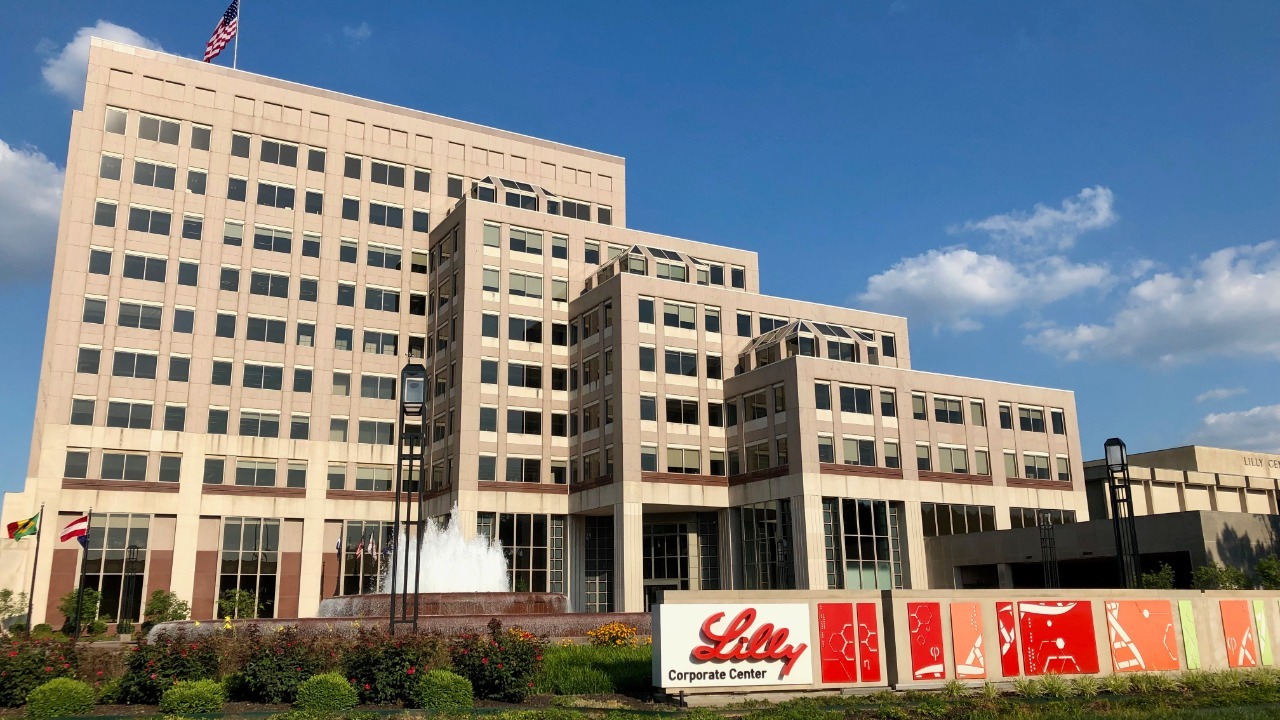
Wall Street is betting that Eli Lilly can turn its obesity and diabetes franchise into one of the most powerful growth engines in global pharmaceuticals, with analysts projecting revenue to climb more than 21% and adjusted earnings to rise more than 40% by 2026. Those expectations rest on a mix of surging demand for GLP-1 drugs, aggressive manufacturing investments, and a pipeline that aims to keep the company ahead of rivals. The stakes are enormous, not only for investors but for how the next generation of metabolic medicines is financed and delivered.
I see those forecasts as ambitious but grounded in a clear shift in how payers, patients, and policymakers view obesity treatment, and in how quickly Eli Lilly has already scaled its flagship products. The question now is whether the company can execute on its capacity buildout, defend its pricing power, and broaden its portfolio fast enough to justify the market’s optimism.
Why analysts see 21% revenue growth and 40% profit growth by 2026
Analysts are effectively pricing Eli Lilly as a high-growth company rather than a mature drugmaker, and the numbers they are using are explicit. Projections compiled earlier this month point to Eli Lilly delivering more than 21% revenue growth and over 40% adjusted earnings growth in 2026, a pace more typical of a software platform than a century-old pharmaceutical group. Those expectations are rooted in a view that the global obesity drug market can expand to $150 billion, a figure that, if realized, would reshape the revenue mix of every company with a credible GLP-1 portfolio.
On the back of that market thesis, major banks have reiterated bullish calls on the stock. One influential firm recently reaffirmed a buy rating on Eli Lilly, citing a roughly 25% growth outlook after the company used an early Feb investor event to lay out its 2026 ambitions. In that presentation, Lilly emphasized that it manufactures and markets medicines worldwide across diabetes, obesity, immunology, and neurology, but it is the obesity franchise that is expected to drive the bulk of incremental growth.
Obesity drugs Mounjaro and Zepbound are doing the heavy lifting
The core of the bullish case is simple: Eli Lilly’s GLP-1 drugs are already scaling faster than most investors expected. Management has disclosed that sales of Mounjaro and Zepbound more than doubled year over year, a surge that helped the stock rally sharply around the latest earnings release. That performance came against a FactSet revenue estimate of $17.9 billion, underscoring how quickly demand is outstripping earlier models and forcing analysts to revise their top-line assumptions higher.
Earlier this year, Eli Lilly used its quarterly update to highlight just how central these drugs have become to its story. The company reported that its GLP-1 portfolio is gaining share in obesity and diabetes, and that its growth in this category is only getting started as Novo Nordisk prepares for a potential slowdown in 2026. Both Novo Nordisk and are expanding in markets such as China, Brazil, and Canada, but Eli Lilly’s guidance suggests it expects to capture a disproportionate share of incremental volume as new capacity comes online.
Q4 results and 2026 guidance reset expectations
The latest quarterly numbers gave investors a concrete proof point that the growth narrative is not just theoretical. In its most recent report, Eli Lilly crushed Q4 estimates and paired that beat with upbeat 2026 guidance that framed the next two years as a step change in scale rather than a gradual ramp. The company’s commentary on that Wednesday call made clear that management sees a long runway for its obesity and diabetes franchise, with executives signaling confidence that supply constraints will ease as new plants and lines are commissioned, a message that helped Eli Lilly reset the bar for what investors should expect.
Independent analysis of those results highlighted just how dramatic the recent acceleration has been. In a detailed breakdown of What We Thought of Eli Lilly, Earnings, one research group noted that Eli Lilly LLY reported increases of 43% in revenue and 42% in non-GAAP earnings per share, driven largely by global demand for oral obesity therapies and supported by growth in areas like immunology and neurology. That kind of broad-based expansion gives the 21% revenue and 40% profit targets more credibility, because it shows the company is not entirely dependent on a single product line.
Capacity buildout from INDIANAPOLIS to Lehigh Valley
To sustain those growth rates, Eli Lilly has to solve a very practical problem: making enough drug. The company has been racing to expand manufacturing, including a major investment in the Lehigh Valley that was announced less than a week before it updated investors on its 2026 outlook. Local reporting from INDIANAPOLIS, Ind to Pennsylvania has framed that Lehigh Valley project as part of a broader push by Eli Lilly to add capacity across the United States, with the company signaling that it is preparing for a “blockbuster 2026” as those facilities ramp.
Those bricks-and-mortar investments are not just about meeting near-term demand, they are also a strategic hedge against policy and supply chain risk. By building out multiple sites, including the new Lehigh Valley location and expansions around its home base in INDIANAPOLIS, Eli Lilly is positioning itself to respond more flexibly to any changes in trade rules, pricing negotiations, or raw material bottlenecks. That matters in an environment where the Trump administration is actively engaged in drug pricing discussions and where large buyers are scrutinizing how companies allocate production between U.S. and international markets, a backdrop that was referenced in coverage of Lilly’s recent deal with the.
How Wall Street is reacting to the stock’s surge
The market has not been slow to price in this growth story. Eli Lilly’s share price jumped last week after the latest drug data and guidance, with the stock closing up 3.53% on one of the key trading days as investors digested the implications for long-term earnings power. Commentators argued that it does not look too late to buy the stock, pointing to the combination of strong GLP-1 momentum and a still-developing obesity market as reasons why Eli Lilly, and the ticker LLY, could continue to outperform even after such a sharp run.
At the same time, there has been some short-term volatility as traders lock in profits. Eli Lilly and Co, which trades on the NYSE under the symbol LLY, saw its stock trade lower on a Thursday session, a move that one analyst attributed to profit-taking after the shares had rallied roughly 10% around the earnings release. That same analysis argued that Eli Lilly’s 2026 outlook helped push back demand fears, in part by highlighting a potential $1 billion contribution from the oral GLP-1 candidate Orforglipron, which would diversify the revenue base beyond injectable therapies.
Competition with Novo Nordisk and the GLP-1 land grab
Any forecast for Eli Lilly’s growth has to be viewed in the context of its rivalry with Novo Nordisk, which helped pioneer the GLP-1 category. Recent earnings coverage has underscored how the two companies’ outlooks are starting to diverge, with Eli Lilly projecting continued acceleration while Novo Nordisk braces for a potential decline in 2026 as some of its early tailwinds fade. Analysts have noted that GLP-1 growth is only getting started for Eli Lilly, particularly as it gains share in obesity and diabetes indications where Novo Nordisk once had the field largely to itself.
That competitive dynamic is playing out across geographies and product formats. Both Novo Nordisk and Eli Lilly are pushing deeper into markets like China, Brazil, and Canada, while also racing to bring oral GLP-1 options to market that could appeal to patients who are reluctant to use injections. If Eli Lilly can execute on its oral pipeline, including Orforglipron, and maintain its current momentum in injectables such as Mounjaro and Zepbound, it will be better positioned to capture a larger slice of the projected $150 billion obesity market and justify the 21% revenue and 40% earnings growth that Wall Street is modeling.
What could derail the bullish 2026 scenario
For all the optimism, I see several risks that could cause Eli Lilly to fall short of the most aggressive forecasts. Supply remains the most immediate constraint, and any delays in bringing new facilities like Lehigh Valley fully online could limit how quickly the company can convert demand into revenue. Pricing pressure is another wild card, particularly as payers and policymakers scrutinize the budget impact of GLP-1 drugs and as the Trump administration weighs additional measures to rein in pharmaceutical spending, a factor that has already surfaced in discussions around Lilly’s recent policy deal.
Execution on the pipeline is just as critical. The bullish case assumes that candidates like Orforglipron deliver on their promise and that Eli Lilly can continue to expand into adjacent areas such as immunology and neurology, which were cited as contributors to the recent 43% revenue and 42% non-GAAP earnings growth. If any of those programs stumble, or if safety concerns emerge around long-term GLP-1 use, the company could face a reset in expectations. For now, management’s strong growth forecast, which envisions full-year revenue rising by roughly 25% to a range that impressed investors when Eli Lilly laid it out, suggests that the company believes it can navigate those risks and deliver the kind of 2026 performance Wall Street is counting on.
More From The Daily Overview
*This article was researched with the help of AI, with human editors creating the final content.

Grant Mercer covers market dynamics, business trends, and the economic forces driving growth across industries. His analysis connects macro movements with real-world implications for investors, entrepreneurs, and professionals. Through his work at The Daily Overview, Grant helps readers understand how markets function and where opportunities may emerge.

