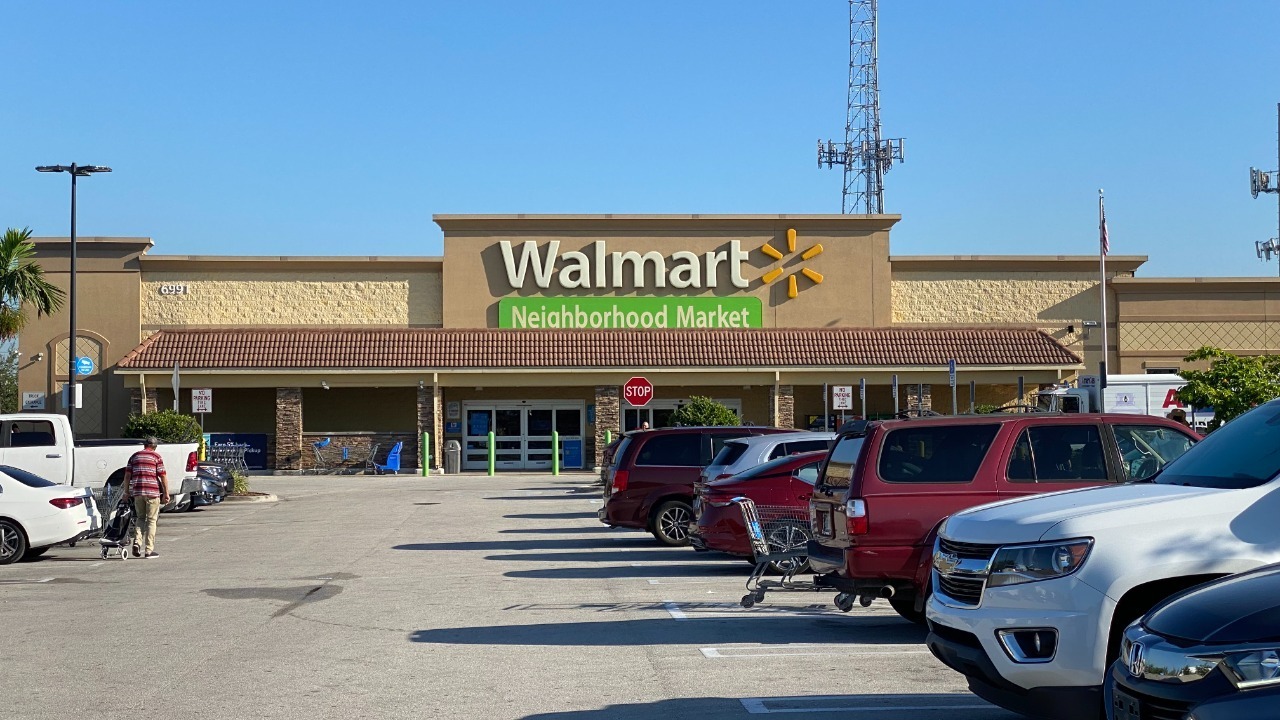
For 13 consecutive years, Walmart sat atop the Fortune 500 as America’s largest company by revenue, a streak that became almost routine in corporate rankings. That run has now ended. The 71st annual edition of the Fortune 500 shows the retail giant losing its crown, a shift that raises hard questions about whether sheer scale in physical retail can still guarantee dominance in an economy increasingly shaped by digital commerce and hybrid business models.
Walmart’s $681 Billion Was Not Enough
Walmart’s financial performance in its most recent fiscal year was far from weak. The company’s annual filing for the fiscal year ended January 31, 2025, reports total revenues of $680,985 million, or roughly $681 billion. That figure includes net sales across its U.S. stores, Sam’s Club locations, and international operations, plus membership and other income streams. By any normal measure, those numbers represent a massive enterprise. Yet they were not large enough to hold the top position on this year’s list, underscoring how quickly the definition of corporate scale is changing.
The Fortune 500 ranking relies on the most recent fiscal-year results available for each company, meaning Walmart’s January 2025 figures served as its entry. Walmart had occupied first place for 13 straight years, a tenure that began in 2012 and persisted through supply chain disruptions, a pandemic, and inflation cycles. The consistency of that reign made its end all the more notable. When a company generates nearly $681 billion in annual revenue and still loses the top ranking, it suggests the top spot is increasingly influenced by companies with multiple large revenue lines beyond traditional store-based retail.
Why Physical Retail Hit a Ceiling
Walmart’s revenue model depends heavily on foot traffic, grocery sales, and a vast global store footprint. That model generates enormous top-line numbers, but its growth rate has natural limits. Store openings require capital, zoning approvals, and years of planning. Same-store sales growth tends to track inflation and population shifts rather than producing the kind of exponential expansion that digital platforms can achieve. Walmart has invested heavily in e-commerce, building out curbside pickup, delivery networks, and a growing online marketplace, yet those digital operations still represent a fraction of total revenue, and the company’s brick-and-mortar core grows incrementally rather than explosively.
The broader pattern here is worth examining through a different lens than the usual narrative of “online beats offline.” Physical retail is not dying; Walmart’s $681 billion in revenue proves that. But the ceiling on growth in physical retail is lower than the ceiling in businesses that combine e-commerce, cloud computing, advertising, and subscription services under one roof. A company that can layer multiple high-margin revenue streams on top of a massive logistics network has a structural advantage in annual revenue growth that a primarily store-based retailer cannot easily replicate. That asymmetry, not any single quarter’s results, explains why Walmart’s long reign ended and why the Fortune 500 increasingly rewards hybrid models that monetize both attention and infrastructure.
The Fortune 500 as a Barometer of Economic Shifts
The 71st Fortune 500 has historically served as a snapshot of which industries and business models dominate the American economy at any given moment. In the mid-20th century, oil companies and automakers routinely claimed the top spots. General Motors held the number one position for decades before losing it. Energy giants like ExxonMobil cycled in and out of the top rank during periods of high oil prices. Walmart’s 13-year streak reflected the era of mass-market consumer retail, when the company’s ability to offer low prices at enormous scale made it the defining American corporation and a bellwether for middle-class spending.
Each transition at the top of the list has corresponded to a deeper economic realignment. When GM lost its perch, it reflected the decline of American manufacturing dominance relative to global competition. When energy companies fell from the top, it often tracked commodity price swings and shifting energy policy. Walmart’s displacement follows a similar logic: the economy’s center of gravity has moved toward companies whose revenue comes from a broader mix of digital and physical operations. The ranking change does not mean Walmart is in decline; rather, it means the definition of “biggest” now favors a different kind of scale, one that is less tied to store counts and more to data, software, and recurring services.
What Walmart’s Demotion Means for Consumers
For the average shopper, Walmart’s slip in the rankings will not change the price of eggs or the availability of household goods at the nearest Supercenter. The company remains a dominant force in U.S. retail and operates more physical locations than any major rival. Its grocery business alone accounts for a significant share of American food retail, anchoring small towns and suburbs where few other national chains operate at comparable scale. None of that changes because of a list position, and in many communities Walmart’s role as a low-price anchor remains as entrenched as ever.
But the shift does carry indirect consequences. When a company loses its status as the top-ranked U.S. firm, it faces increased pressure from investors and analysts to accelerate growth. That pressure can translate into faster expansion of delivery services, more aggressive pricing in e-commerce, and greater investment in automation and technology. Walmart has already been moving in this direction, building out its third-party marketplace, expanding its advertising platform, and testing drone delivery in select markets. The loss of the Fortune 500 crown may intensify those efforts, which could ultimately benefit consumers through faster delivery, wider online selection, and more competitive pricing against digital-first rivals that have long defined convenience in urban and suburban markets.
Global Crosswinds and the Limits of Scale
Walmart’s changing status also has to be understood against a backdrop of geopolitical and economic volatility that shapes global supply chains. International tensions and conflicts can disrupt shipping lanes, commodity prices, and consumer confidence in ways that ripple directly into big-box retail. Diplomatic efforts such as renewed talks over the war in Ukraine highlight how fragile global trade routes remain, especially for food, energy, and basic goods that flow through contested regions. A retailer that depends on predictable container traffic and stable sourcing costs is increasingly exposed to events far beyond domestic consumer sentiment.
At the same time, the persistence of conflict, including reports that Ukrainian drones have struck assets deep inside Russia, underscores how quickly regional shocks can upend forecasts for inflation, fuel costs, and currency movements. For Walmart, which prices itself as an everyday low-cost leader, these swings compress margins and make long-term planning more complex. The fact that a company of its size can be knocked from the top of the Fortune 500 during such a turbulent period is a reminder that even extraordinary scale is no guarantee of insulation from global risk, especially when competitors may be less tied to physical goods and more to digital services that are relatively shielded from supply disruptions.
Can Walmart Reclaim the Top Spot?
The question of whether Walmart can return to number one depends on whether its hybrid strategy, combining physical stores with digital commerce, can generate the kind of revenue acceleration needed to outpace a competitor whose growth engine runs on multiple cylinders. Walmart’s 13-year dominance was built on steady, reliable expansion rather than spectacular surges. Reclaiming the crown would likely require a different mix: faster growth in advertising revenue, deeper penetration of financial services, and potentially a more aggressive international e-commerce push that leverages its logistics expertise beyond traditional retail categories.
There is a credible case that Walmart’s physical footprint could become an advantage rather than a constraint if the company can fully integrate stores into a broader digital ecosystem. Supercenters can double as fulfillment hubs, health clinics, and financial service outposts, turning real estate into a platform rather than a cost center. Whether that is enough to retake the top spot on the Fortune 500 is uncertain, especially as rivals continue to expand in cloud computing, entertainment, and high-margin software. What is clear is that Walmart’s loss of the number one ranking marks a turning point: the era when physical retail alone could define corporate supremacy has ended, and the next chapter will be written by those that best blend bricks, bytes, and services into a single, scalable engine of growth.
More From The Daily Overview
*This article was researched with the help of AI, with human editors creating the final content.

Grant Mercer covers market dynamics, business trends, and the economic forces driving growth across industries. His analysis connects macro movements with real-world implications for investors, entrepreneurs, and professionals. Through his work at The Daily Overview, Grant helps readers understand how markets function and where opportunities may emerge.

