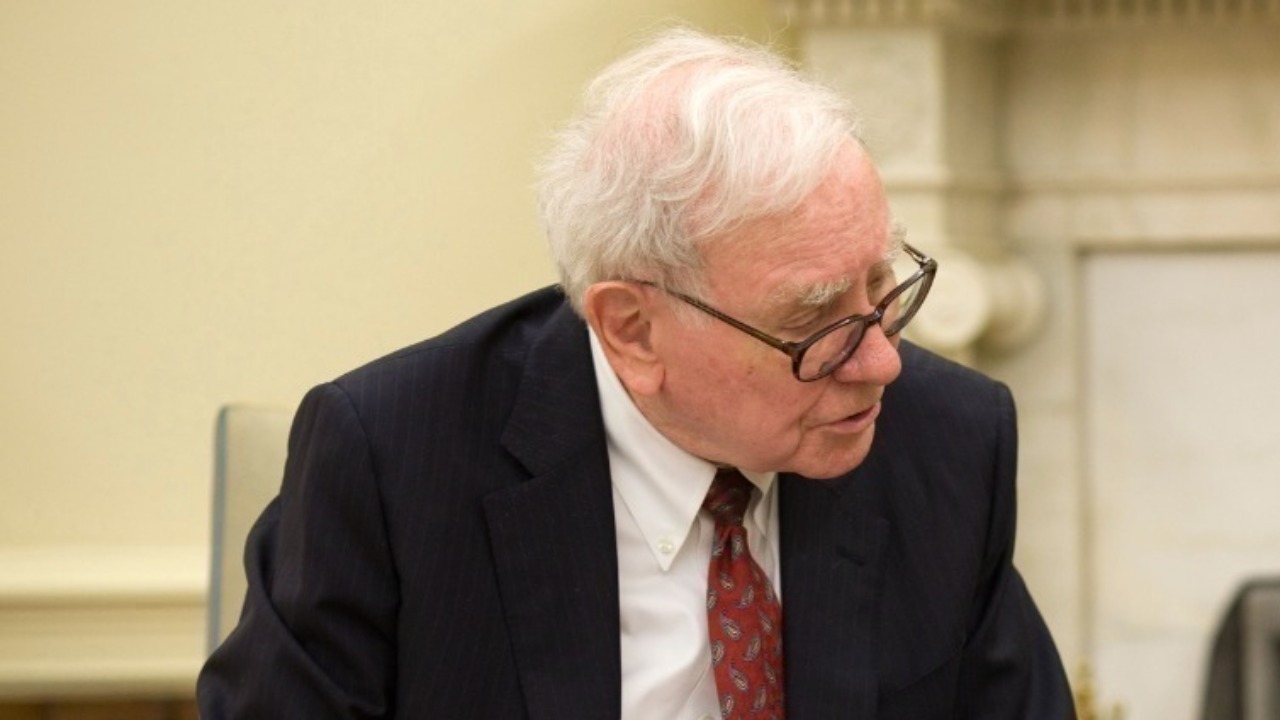
Warren Buffett has spent a lifetime dissecting complex businesses, yet when it comes to his own family’s money, he wants almost all of it in one plain-vanilla investment. In instructions tied to his estate, he has said that 90% of the cash left to his wife should go into a simple stock index fund, with the remaining slice in ultra-safe bonds. For an “80-something” billionaire who could pick almost any asset on earth, that choice is a powerful endorsement of low-cost, set‑and‑forget investing.
What Buffett actually told his wife to do
Buffett has been unusually explicit about how he wants his wealth handled if he dies before his spouse. He has described leaving directions in his will that the bulk of her inheritance be placed in a low-fee fund that simply tracks the broad U.S. market, with a small balance in short-term government debt for stability. The idea is not to chase the next hot stock, but to give his wife a portfolio that can quietly compound without demanding constant decisions from her or from future trustees.
In those instructions, the “Sage of Omaha” framed his guidance in strikingly simple terms, even as an “80-something” investor who has spent decades analyzing individual companies. He said that 90% of the money should go into a basic S&P 500 index fund and 10% into short-term government bonds, a split that reflects his belief that most families are better served by broad diversification and rock-bottom fees than by elaborate strategies. That clarity, captured in accounts that describe how Assuming the Buffett outlives his wife, is part of why his personal estate plan has become a reference point for ordinary investors.
The 90/10 rule and why it is so radical
Buffett’s so‑called 90/10 rule is disarmingly straightforward. He has said that 90% of a long‑term portfolio can sit in a low-cost S&P 500 index fund, with the remaining 10% in short-term government bonds, creating a blend of growth and safety that does not depend on anyone’s stock‑picking skill. For someone widely known as the “Oracle of Omaha,” that is a quiet admission that even legendary investors expect broad, low-fee exposure to beat most active strategies over time.
Analysts who have unpacked this approach emphasize that the “90” and “90%” allocations are not magic numbers, but they do capture Buffett’s conviction that the U.S. market, represented by the 500 largest companies, has historically rewarded patient owners. The short-term bond slice is there to cover near‑term cash needs and cushion market shocks, so the stock portion is not sold at the worst possible moment. That balance is why detailed breakdowns of Key Takeaways from Warren Buffett’s rule often stress that it is less about precision and more about discipline.
Why his “one simple investment” is an index fund
Buffett has repeatedly argued that most savers should skip individual stocks entirely and instead buy a low-cost fund that mirrors the S&P 500. He has described this as his “Top Pick for Most Investors Isn” a Stock, but rather a broad basket of American businesses that automatically adjusts as winners and losers rotate in and out. In his view, that kind of index fund is “This Simple Fund” that is “Hard To Beat” over decades, especially once fees and taxes are factored in.
When he laid out his wife’s inheritance plan, Buffett made it clear that he wanted her money in a basic S&P 500 index product, not in the kind of concentrated bets he makes at Berkshire Hathaway. He has said that, at the end of the day, “At the” core of successful investing for nonprofessionals is owning a slice of the entire market at minimal cost, then leaving it alone. That philosophy underpins his public praise for a plain index fund as the best default choice for retirement savers, a stance echoed in analyses of his Warren Buffett advocacy for simple, diversified exposure.
The Vanguard twist and how regular investors can copy it
Buffett has not only specified the type of fund he wants for his wife, he has also pointed to a particular provider. In his estate instructions, he suggested that the 90% stock allocation go into a low-cost S&P 500 index fund from Vanguard, a firm known for its focus on investor-owned structures and minimal fees. That preference has led some commentators to highlight a specific Vanguard ETF as the closest off‑the‑shelf version of his blueprint, especially for investors who want to automate contributions through a brokerage app like Fidelity, Robinhood, or Vanguard’s own platform.
Recent analysis of his comments notes that Warren Buffett advocates for a 90 stock allocation in a simple index product and has explicitly said, “I suggest Vanguard’s” solution for that role. That has drawn attention to one Jan discussion of how a single Vanguard ETF can mirror his preferred mix when paired with a short-term Treasury Bill ETF. For everyday investors, the practical takeaway is that copying Buffett’s plan does not require exotic products, only a willingness to stick with a broad index fund and a modest bond buffer through thick and thin.
What his plan means for anyone expecting an inheritance
Buffett’s instructions to his wife also double as a roadmap for families grappling with inheritances of any size. When a windfall arrives, the temptation is to rush into big purchases or speculative trades, but his approach suggests slowing down, parking a small slice in safe bonds, and then putting the majority into a diversified index fund that can grow quietly in the background. That mindset can be especially useful for heirs who are not experienced investors and do not want to spend their lives monitoring markets.
Financial educators often echo this advice, urging beneficiaries to first stabilize their finances, then build a long-term plan that leans on low-cost funds rather than complex products. Guidance on what to do with an inheritance typically stresses paying down high-interest debt, setting aside an emergency fund, and then using broad index funds to invest the rest in line with personal goals and risk tolerance. That kind of step‑by‑step framework is reflected in resources that walk through what to do when a large sum lands unexpectedly, and it dovetails neatly with Buffett’s own preference for simplicity over showmanship.
Buffett’s estate plan also underscores how consistent his public and private views have been. In a widely cited shareholder letter, he explained that he had instructed the trustee for his wife’s inheritance to put 90% of the cash into a low-cost S&P 500 index fund and 10% into short-term government bonds, and he added that he believed this mix would outperform the majority of professionally managed funds. That letter, which some accounts link to a Jan discussion of his guidance, has since become a touchstone for investors who prefer evidence over hype. For anyone planning their own legacy, the message is blunt: if the Oracle of Omaha trusts a simple index fund with his family’s future, it is at least worth asking whether a similar, low-cost structure should anchor their own portfolio too.
More From TheDailyOverview

Nathaniel Cross focuses on retirement planning, employer benefits, and long-term income security. His writing covers pensions, social programs, investment vehicles, and strategies designed to protect financial independence later in life. At The Daily Overview, Nathaniel provides practical insight to help readers plan with confidence and foresight.